 Librería Samer Atenea
 Kálamo Books
 Librería Elías (Asturias)
 Librería Kolima (Madrid)
 Librería Proteo (Málaga)
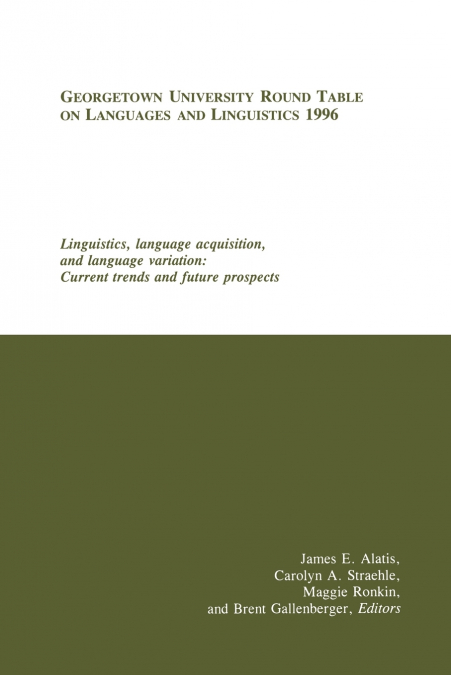
Welcoming RemarksJames E. AlatisOn behalf of the Center for Applied LinguisticsCharles A. FergusonOn behalf of the Georgetown University BicentennialCharles L. Currie, S.J.Presentation of Bicentennial Medals to Henry and Renéeacute;e KahaneJames E. AlatisThe last forty years: Real progress or not:Sir John Lyons, LittD., F.B.A.Language teachingThe integration of language and content instruction for language minority and language majority studentsG. Richard Tucker and JoAnn CrandallPractice makes less imperfect: Users’ needs and their influence on machine translation developmentVeronica LawsonAcquisition vs. learning in reading pronunciation by adult EFL studentsRobert LadoDiscourse and text: A narrative view of the foreign language lessonClaire J. KramschLanguage teaching and theories of languageCharles A. FergusonCohesion and coherence in the presentation of machine translation productsMuriel VasconcellosSecond language acquisition: do we really want a unified theory?Richard LutzLess commonly taught languages: The current situationKarin C. RydingTowards a rationale for language teaching technologyPeter StrevensESL program evaluation: Realities and perspectivesAli Hajjaj and Balkees Al-NajjarDiscourse frames and the cycle of instructionFrederick Bosco and Anna De MeoTeaching language and culture: Old problems, new approachesRoss SteeleThe role of language in the immigrant’s lifeHenry KahaneNew trends in foreign language teaching: Teaching English in the Italian medical school curriculumMaria IbbaLexical search strategies in L2: A developmental analysisIrene ThompsonInteraction and communication in the language class in an age of technologyWilga M. RiversLanguage TestingTechnological, methodological, and assessment challenges: Can the foreign language teacher survive? Ray T. CliffordMultipurpose language tests: Is a conceptual and operational synthesis possible?John L. D. ClarkTesting English as a world language: Issues in assessing nonnative proficiencyPeter H. LowenbergOral proficiency in the less commonly taught languages: What do we know about it?Richard T. ThompsonLanguage proficiency testing with limited English-proficient studentsJ. Michael O’Malley‘Passages’: Life, the universe and language proficiency assessmentThea C. BruhnLanguage testing in the secondary schools: Past experience and new directionsRebecca M. ValetteWho is in charge in the learner-curriculum-testing connection? Heidi ByrnesLanguage technologyAssessment, articulation, accountability: New roles for the language labSue K. OttoThe synergism of technology and theory in classroom second language acquisition researchNina GarrettSemantic subclasses of temporal nounsMichael ZarechnakFrom wire recorder to satellite dish: The impact of technology on language teachingProtase E. WoodfordChallenging teachers and harnessing technologyJune K. PhillipsBuilding on the past: New directions in CAI/ILFrank OttoLanguage learning, cultural understanding, and the computer Judith G. FrommerNew developments in knowledge-based machine translationSergei NirenbergCulture in the language class: Videos to bridge the gapRicardo M. PaivaUsing unification grammars for analysis and synthesisMargaret KingTesting and technology in Germany revisited: What is left? What can be hoped for?Reinhold FreudensteinNew directions of machine translationMakato NagaoMachine translation: Achievements, problems, promiseWinfred P. LehmannLanguage teaching