Geology of Cuba

Geology of Cuba

Manuel Enrique Pardo Echarte

233,68 €
IVA incluido
Disponible
Editorial:
Springer Nature B.V.
Año de edición:
2022
Materia
Geología y la litosfera
ISBN:
9783030678005
233,68 €
IVA incluido
Disponible

Selecciona una librería:

  • Librería Samer Atenea
  • Librería Aciertas (Toledo)
  • Kálamo Books
  • Librería Perelló (Valencia)
  • Librería Elías (Asturias)
  • Donde los libros
  • Librería Kolima (Madrid)
  • Librería Proteo (Málaga)

The evolution of geological cartography in Cuba in its more than 135 years of history has been possible through the consultation of numerous archival reports, publications, maps and personal interviews with different authors and geologists of vast experience. A brief critical analysis is made of the increase in the degree of geological knowledge of the country since the elaboration of the Geological Sketch of the Cuban Island at a scale of 1: 2 000 000 (Fernández de Castro, 1883), first of Cuba and of Ibero-America, until the most recent Digital Geological Map of Cuba at scale 1: 100 000 (Pérez Aragón, 2016). Cuba and its surroundings are a geological mosaic in the southeast corner of the North American plate with rocks from many different origins, from Proterozoic to Quaternary, extended along the southern border of the plate. From the Eocene, this belt has been dissected by several great faults, related to the development of some great oceanic depressions (Cayman trough and Yucatan basin). The fossil record of Cuba, which covers approximately the last 200 million years of life on Earth, is rich in very varied fossils, witnessing a wide diversity of organisms, both animals and plants, that inhabited the Antillean and Caribbean region; and that constitute the inheritance of the biological diversity that the current Cuban archipelago exhibits. As a result of the preparation of the Cuban Metallogenic Map at scale 1: 250 000, forty-one models and eight sub-models of metallic mineral deposits were identified. These models, of descriptive-genetic type, together with the analysis of their spatial distribution and their relationship with geology, allowed the identification and mapping of ten mineral systems, linked to the geodynamic environments present in the Cuban territory. Cuba has large deposits of limestone, loam, dolomite, kaolin, gypsum and anhydrite, rock salt, marbles, sands and clays of different types, zeolites, peat, therapeutic peloids and many more. There are manifestations of decorative and precious rocks such as jasper, jadeite, different varieties of quartz and even xylopals. A compilation of geochemical data of oceanic basalt samples from previous works, together with data of analyzed samples during this study in order to discuss geochemical criteria based on immobile element (proxies for fractionation indices, alkalinity, mantle flow and subduction addition), provide a comprehensive ophiolite classification according to their tectonic setting. This book addresses different facets of the geological knowledge of Cuba: history of its cartography, marine geology, fossil record, stratigraphy, tectonics, classification of its ophiolites, quaternary deposits, metallogeny and minerageny.
Artículos relacionados

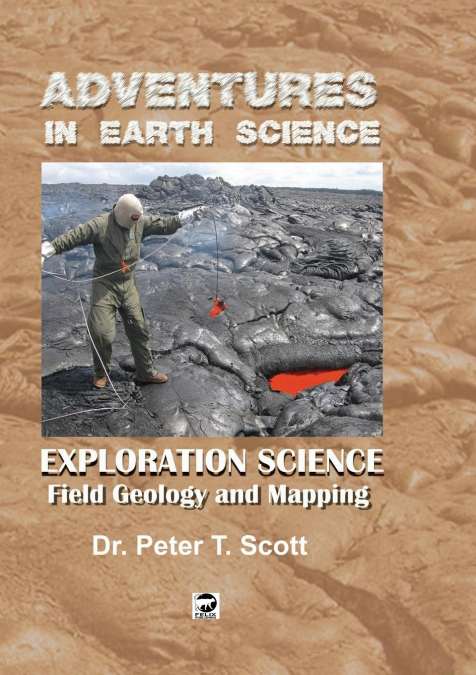
  • Exploration Science
    Dr Peter T Scott
    About Exploration ScienceHave you wondered what the science of geology is all about?Together we will explore of the surface and sub-surface of the Earth, the sub-branches of geology, including mineralogy, petrology (rocks), palaeontology (fossils), geochemistry, seismology (earthquakes), engineering geology, and many more.The scientific method used by all scientists as well as ...
    Disponible

    30,12 €

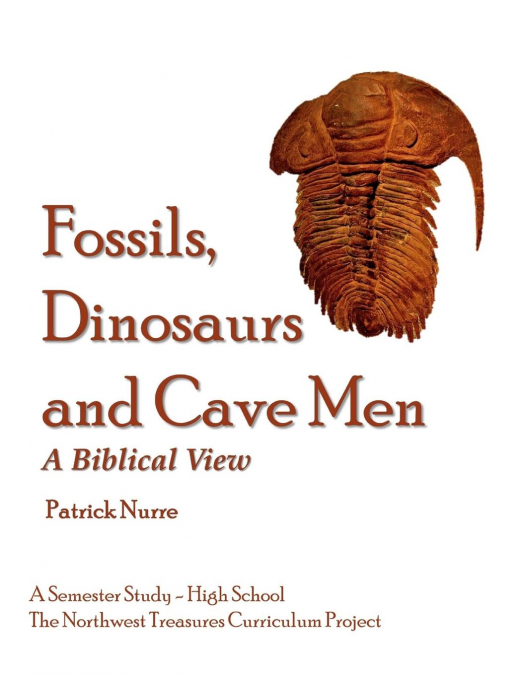
  • Fossils, Dinosaurs and Cave Men
    Patrick Nurre
    This textbook is a high school, semester study of the differences between the Biblcal and secular views of fossils, dinosaurs, and cave men.  Topics include the cause and mechanism for a global flood, the geologic time table, living fossils, the Tower of Babel, modern classification of dinosaurs, and more.  Students will also learn to interpret the geologic column from a Biblic...
    Disponible

    43,86 €

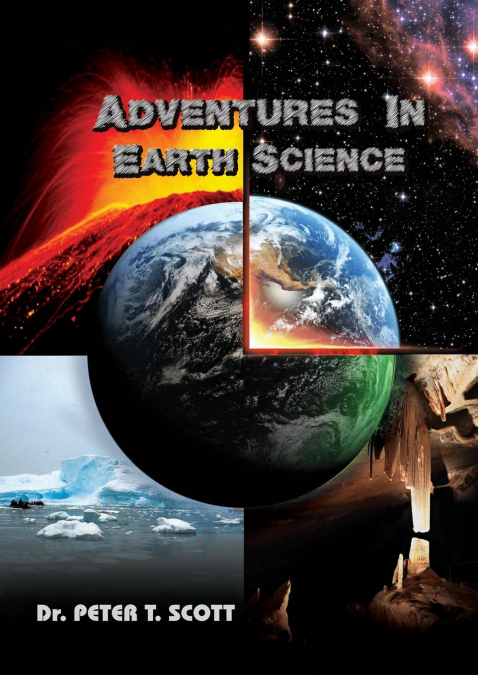
  • Adventures in Earth Science
    Dr Peter T Scott
    ADVENTURES in EARTH SCIENCE is not just an in-depth textbook but a series of adventures across seven continents and beyond in the sciences of astronomy, geology, meteorology and oceanography. It has been written with over forty years of experience in studying, researching and teaching earth science. Whilst it has been designed for senior high school and junior university or col...
    Disponible

    142,25 €

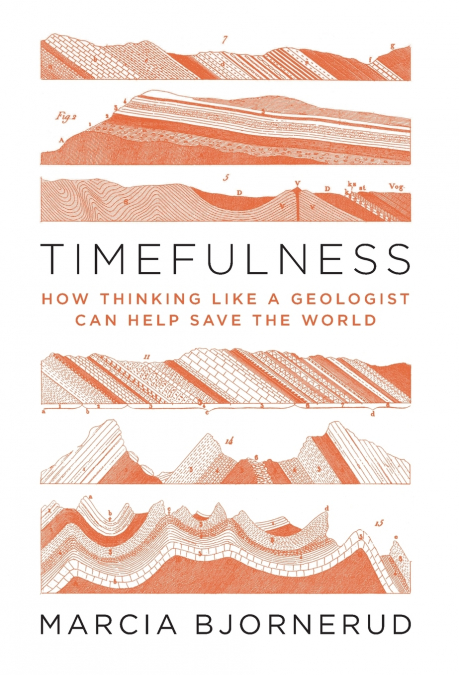
  • Timefulness
    Marcia Bjornerud
    Why an awareness of Earth’s temporal rhythms is critical to our planetary survivalFew of us have any conception of the enormous timescales in our planet’s long history, and this narrow perspective underlies many of the environmental problems we are creating for ourselves. The passage of nine days, which is how long a drop of water typically stays in Earth’s atmosphere, is somet...
    Disponible

    53,36 €

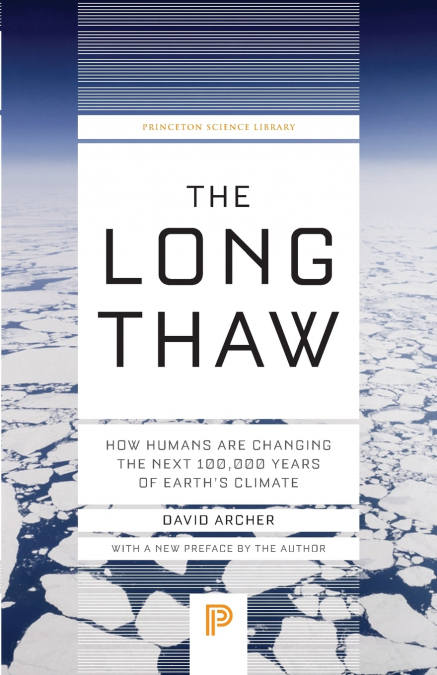
  • The Long Thaw
    David Archer
    Why a warmer climate may be humanity’s longest-lasting legacyThe human impact on Earth’s climate is often treated as a hundred-year issue lasting as far into the future as 2100, the year in which most climate projections cease. In The Long Thaw, David Archer, one of the world’s leading climatologists, reveals the hard truth that these changes in climate will be 'locked in,' ess...
    Disponible

    24,10 €

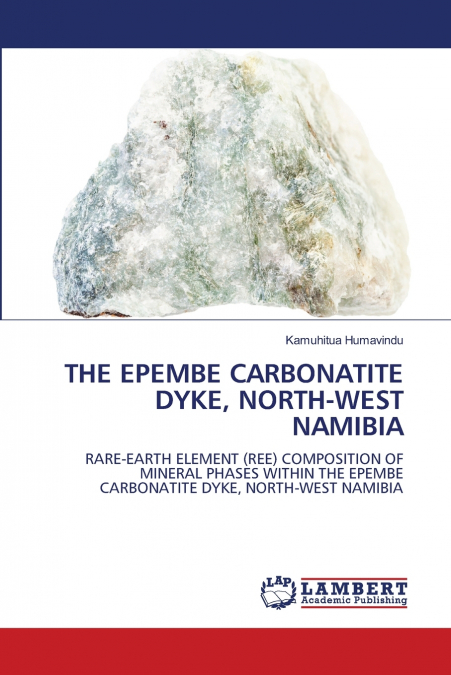
  • THE EPEMBE CARBONATITE DYKE, NORTH-WEST NAMIBIA
    Kamuhitua Humavindu
    This book gives a bright perspective on the nature of carbonatites along with different magmatic and hydrothermal processes that affect the distribution of these dykes. In the past there has been several debates on the enrichment mechanisms of rare-earth elements, making it a significant book especially now with the increase in technology. The research is filled with exciting f...
    Disponible

    75,64 €