Librería Samer Atenea
 Kálamo Books
 Librería Elías (Asturias)
 Librería Kolima (Madrid)
 Librería Proteo (Málaga)
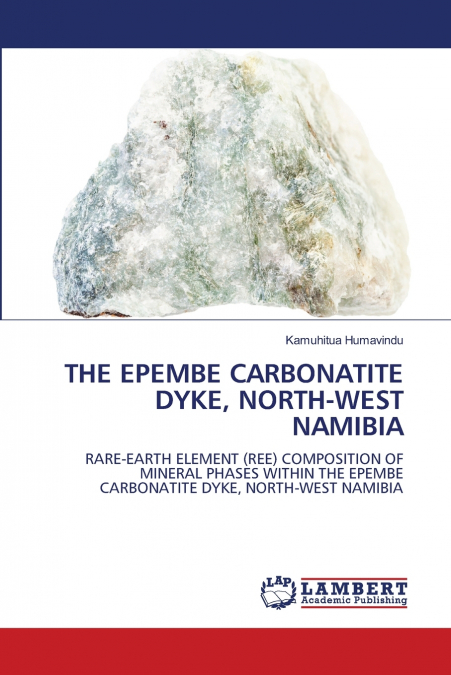
The rocks of the East Mojave National Scenic Area (EMNSA) record a history of dynamic geologic events that span more than 1,800 million years (m.y.). These geologic events contributed significantly to development of the spectacular vistas and panoramas present in the area today. The oldest rocks underlie much of the northern part of the EMNSA. These rocks were subjected to extreme pressures and temperatures deep in the Earth’s crust about 1,700 million years ago (Ma). They were subsequently intruded by granitic magmas from about 1,695 to 1,650 Ma, by additional granitic magmas at about 1,400 Ma and, later, at about 1,100 Ma, by iron-rich magmas that crystallized to form dark igneous rocks termed diabase. Unusual potassium- and magnesium-rich rocks, emplaced at about 1,400 Ma, crop out in a few places within and near the EMNSA. Their distinctive composition results from very small degrees of partial melting of mantle peridotite that was highly enriched in incompatible trace elements. At Mountain Pass, just outside the northeast boundary of the EMNSA, the potassium- and magnesium-rich rocks are accompanied by a rare type of carbonatite, an igneous rock composed of carbonate minerals, that contains high-grade rare earth element mineralization. Subsequent to these igneous-dominated events, sedimentary strata began to be deposited at about 1,000 Ma; mostly sandstone and shale were deposited initially in marine and, less commonly, in continental environments along the west edge of the core of the North American continent. Sedimentation eventually culminated in the widespread deposition of thick marine limestones from about 400 to about 245 Ma. These limestones represent a continental-shelf environment where shallow-water limestone formed to the east and deeper water limestone formed to the west. The end of the formation of these sedimentary deposits probably was caused by uplift of the shelf, which marked the beginning of a long period of tectonic upheaval. At about 170 Ma, widespread emplacement of coarse-grained granitic magmas began again in the region; some of these magmas also erupted as volcanic rocks. Additional episodes of magmatism took place at about 100 Ma and at 75 Ma. Most of the metallic-mineral occurrences in the EMNSA are associated with the igneous rocks that range in age from 170 to 75 Ma. During each of these magmatic events, the previously deposited sedimentary strata were buckled and broken as the entire region, part of a continental-scale fold and thrust belt, underwent crustal shortening and compression. A period of tectonic quiescence characterized the region from about 65 Ma to about 20 Ma. The quiet period ended abruptly with widespread volcanism along the southern and eastern parts of the EMNSA. The major gold deposits in the Castle Mountains are associated with this episode of volcanism. During this volcanic outburst, the crust extended laterally in several areas that border the EMNSA: along the lower Colorado River 65 km to the east, in the Kingston Range 20 km to the north, and in the central Mojave Desert 75 km to the southwest. This extensional deformation is characterized by the superposition of upper-crustal rocks over midcrustal rocks along large flat-lying faults, several of which project beneath rocks now exposed at the surface in the EMNSA. The near-surface rocks of the EMNSA, however, apparently escaped much of this intense extensional deformation. High-angle faults, which cut several of the mountain ranges, possibly have undergone several periods of movement, which date back to approximately 70 to 100 Ma. Some faults are of local importance to the physiographic development of the mountain ranges and intervening basins, and, in places, the faults seem to have localized various kinds of ore bodies and mineral occurrences. Volcanism and extensional deformation waned from 14 to 11 Ma. By approximately 10 Ma, widespread erosion had produced broad erosional dome-shaped mountains in the n