
Genome-Based Diagnostics

Genome-Based Diagnostics

AA.VV

34,32 €
IVA incluido
Disponible
Editorial:
National Academies Press
Año de edición:
2013
Materia
Oncología
ISBN:
9780309269599
34,32 €
IVA incluido
Disponible

Selecciona una librería:

  • Librería Samer Atenea
  • Librería Aciertas (Toledo)
  • Kálamo Books
  • Librería Perelló (Valencia)
  • Librería Elías (Asturias)
  • Donde los libros
  • Librería Kolima (Madrid)
  • Librería Proteo (Málaga)

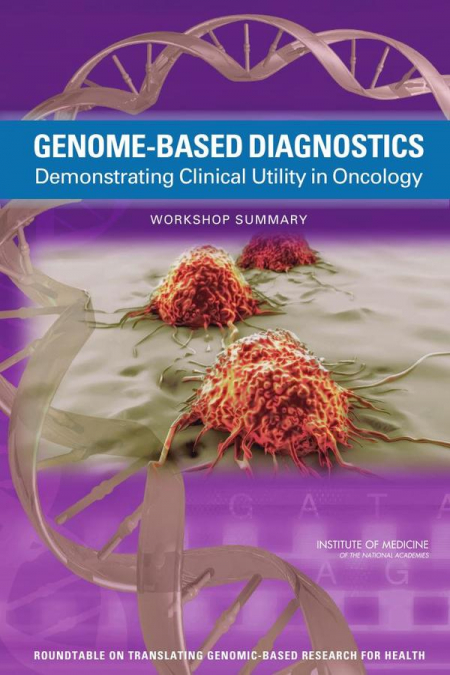
Genome-Based Diagnostics: Demonstrating Clinical Utility in Oncology is the summary of a workshop convened in May 2012 by the Roundtable on Translating Genomic-Based Research for Health and the Center for Medical Technology Policy of the Institute of Medicine to foster the identified need for further sustained dialogue between stakeholders regarding the clinical utility of molecular diagnostics. The workshop brought together a wide range of stakeholders, including patients, health care providers, policy makers, payers, diagnostic test developers, researchers, and guideline developers, to identify the challenges and opportunities in advancing the development and use of molecular diagnostic tests designed to guide the treatment and management of patients with cancer. The sequencing of the human genome has greatly accelerated the process of linking specific genetic variants with disease. These findings have yielded a rapidly increasing number of molecular diagnostic tests designed to guide disease treatment and management. Many of these tests are aimed at determining the best treatments for specific forms of cancer, making oncology a valuable testing ground for the use of molecular diagnostic tests in medicine in general. Nevertheless, many questions surround the clinical value of molecular diagnostic tests, and their acceptance by clinicians, payers, and patients has been unpredictable. A major limiting factor for the use of these tests has been the lack of clear evidence of clinical utility. Genome-Based Diagnostics assesses the evidentiary requirements for clinical utility of molecular diagnostics used to guide treatment decisions for patients with cancer; discusses methodologies related to demonstrating these evidentiary requirements that meet the needs of all stakeholders; and considers innovative, sustainable research collaborations for generating evidence of clinical utility involving multiple stakeholders.


Artículos relacionados

  • Geographic Information Systems and Public Health
    Andrew Curtis
    ...
  • Cases on Healthcare Information Technology for Patient Care Management
    Health care organizations have made investments in health information technologies such as electronic health records, health information exchanges, and many more, which have increased the importance of Health Information Technology studies. Cases on Healthcare Information Technology for Patient Care Management highlights the importance of understanding the potential challenges ...
  • Healthcare Information Technology Innovation and Sustainability
    Joseph Tan
    Healthcare Information Technology Innovation and Sustainability: Frontiers and Adoption presents research in the emerging field on information systems and informatics in the healthcare industry. By addressing innovative concepts and critical issues through case studies and experimental research, this reference source is useful for practitioners, researchers and academics aiming...
  • Social, Economic, and Political Perspectives on Public Health Policy-Making
    Presently, the healthcare industry is grappling with many challenges both nationally and globally, including escalating costs, a move to a preventative care environment and a technology savvy patient with high expectations. To accommodate the changing health demands of the current global population, public healthcare policy must undergo a critical analysis. Social, Economic, an...
  • Modern Concepts and Practices in Cardiothoracic Critical Care
    Adam S Evans / Gregory E Kerr / Insung Chung
    With an increase in admission to intensive care units, medical professionals must search for the best practices and procedures to provide efficient medical care to each patient. Despite medical advances, there is still a need for well-trained cardiovascular intensivists to meet the needs of patients. Modern Concepts and Practices in Cardiothoracic Critical Care brings together ...
  • Reshaping Medical Practice and Care with Health Information Systems
    Ashish Dwivedi
    Technology has become an integral part of our daily interactions, even within the hospitals and healthcare facilities we rely on in times of illness and injury. New technologies and systems are being developed every day, advancing the ways that we treat and maintain the health and wellbeing of diverse populations. Reshaping Medical Practice and Care with Health Information Syst...