

 Librería Samer Atenea
 Kálamo Books
 Librería Elías (Asturias)
 Librería Kolima (Madrid)
 Librería Proteo (Málaga)
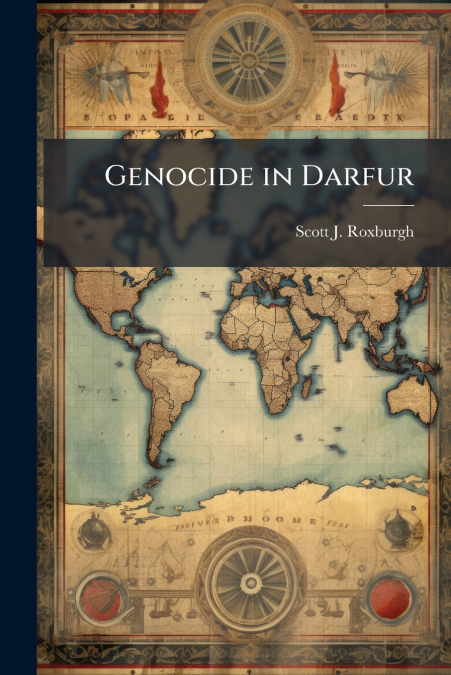
In 2003 a deadly internal conflict broke out in the Sudanese province of Darfur between the government of Sudan (GoS), government-backed Arab proxy militias known as the Janjaweed, and two rebel insurgent groups the Sudan Liberation Army/Movement (SLA/M) and the Justice and Equality Movement (JEM). The crisis erupted when the rebel insurgency emerged and demanded an end to chronic economic marginalization, regional development, and power-sharing vis--vis other parts of Arabruled Sudan. The conflict has resulted in 400,000 deaths, more than 2 million forcibly displaced refugees, and approximately 3.5 million men, women, and children reliant on international aid for survival. In 2004, President George W. Bush recognized the atrocities occurring in Darfur as genocide and vowed to quickly end the bloodshed. Unfortunately, American expressions of concern have proven ineffective and inadequate in scope and corresponding decisive actions to stop the killing have yet to materialize. This paper suggests three main factors or spoilers that help explain the Bush Administrations unwillingness to intervene directly in Darfur: Chinese interests in Sudan; U.S. post-9/11 security relations with the Sudanese government; and the Bush Administrations reluctance to jeopardize a U.S. brokered peace-keeping accord that ended a 22-year-old Sudanese civil war in January 2005. The paper concludes that, regardless of spoilers, the U.S. has the capability to accomplish the following four practical measures to quickly end the genocide in Darfur: strengthen the understaffed African Union (AU) force already in Darfur until a United Nations (U.N.) force can be deployed; push for the immediate deployment of an already-authorized U.N. peacekeeping force; enforce a no-fly zone in the Darfur region of Sudan; and increase humanitarian aid and ensure unfettered access for delivery.This work has been selected by scholars as being culturally important, and is part of the knowledge base of civilization as we know it. This work was reproduced from the original artifact, and remains as true to the original work as possible. Therefore, you will see the original copyright references, library stamps (as most of these works have been housed in our most important libraries around the world), and other notations in the work.This work is in the public domain in the United States of America, and possibly other nations. Within the United States, you may freely copy and distribute this work, as no entity (individual or corporate) has a copyright on the body of the work.As a reproduction of a historical artifact, this work may contain missing or blurred pages, poor pictures, errant marks, etc. Scholars believe, and we concur, that this work is important enough to be preserved, reproduced, and made generally available to the public. We appreciate your support of the preservation process, and thank you for being an important part of keeping this knowledge alive and relevant.





