Genetics, Development, and Evolution

Genetics, Development, and Evolution

Francisco J. Ayala / G. Ledyard Stebbins / J. Perry Gustafson

133,52 €
IVA incluido
Disponible
Editorial:
Springer Nature B.V.
Año de edición:
2012
Materia
Fauna: mamíferos
ISBN:
9781468451399
133,52 €
IVA incluido
Disponible

Selecciona una librería:

  • Librería Samer Atenea
  • Librería Aciertas (Toledo)
  • Kálamo Books
  • Librería Perelló (Valencia)
  • Librería Elías (Asturias)
  • Donde los libros
  • Librería Kolima (Madrid)
  • Librería Proteo (Málaga)

One outstanding question in biology is the problem of devel­ opment: how the genetic instructions encoded in the DNA become expressed in the morphological, physiological, and behavioral features of multicellular organisms, through an ordered sequence of events that extend from the first cell division of the zygote to the adult stage and eventual death. The problem is how a one­ dimensional array of instructions is transformed into a four­ dimensional entity, the organism that exists in space and time. Understanding this transformation is, nevertheless, necessary for mastering the process of evolution. One hundred and twenty-five years after The Origin of Species, we have gained some understanding of evolution at the genetic level. Genetic information is stored in the linear sequence of nucleotides in the DNA. Gene mutations, chromosomal reorganiza­ tions, and a host of related processes introduce variation in the sequence and the amount of DNA. The fate of these variations is determined by interactions within the genome and with the outside environment that are largely understood. We have recently gained a glimpse of how the genome of eukaryotes is organized and will learn much more about it in the future, now that we have the research tools for it.
Artículos relacionados

  • Incremental Structures and Wear Patterns of Teeth for Age Assessment of Red Deer
    Tina Dudley Furniss-Roe
    The ability to age animals accurately is of great importance both to archaeologists and to wildlife managers. Archaeologists are also particularly interested in the ability to determine the season of death of mammals, in order to reach a greater understanding of how man was exploiting or responding to his environment. A number of methods of age determination are available to wi...
    Disponible

    69,22 €

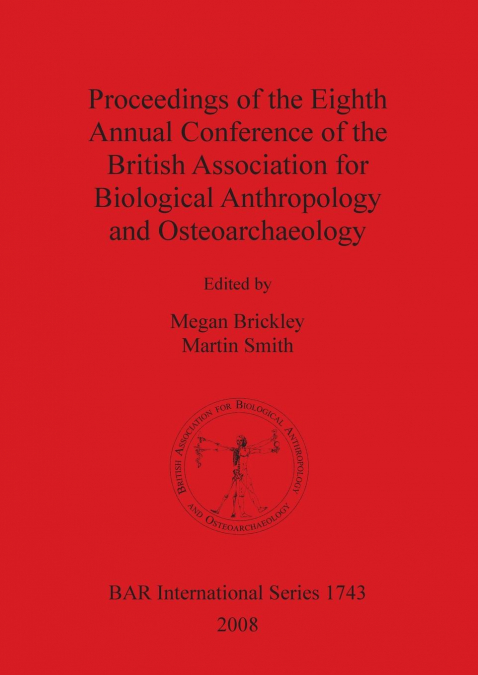
  • Proceedings of the Eighth Annual Conference of the British Association for Biological Anthropology and Osteoarchaeology
    13 papers presented at the Eighth Annual Conference of the British Association for Biological Anthropology and Osteoarchaeology, held at the University of Birmingham in September 2006.    ...
    Disponible

    61,28 €

  • Alaska’s Bears
    Bill Sherwonit
    Alaska is truly bear country. It is the only one of America’s fifty states to be inhabited by all three of North America’s ursine species: black, polar bear, and brown bear (also known as grizzly). Alaska’s Bears is a handy guidebook to the bears of Alaska, a book that slips easily into a jacket pocket or a day pack, and that provides entertaining armchair reading when you’re n...
  • Elephant Seals
    Bernard J. Le Boeuf
    ...
  • Reproductive Physiology of Marsupials
    C. H. Tyndale-Biscoe / CHTyndale-Biscoe / Hugh Tyndale-Biscoe / Marilyn Renfree
    ...
    Disponible

    113,30 €

  • The Natural History of Weasels and Stoats
    C. M. King / Carolyn M. King / Roger A. Powell
    ...
    Disponible

    128,52 €