Librería Samer Atenea
 Kálamo Books
 Librería Elías (Asturias)
 Librería Kolima (Madrid)
 Librería Proteo (Málaga)
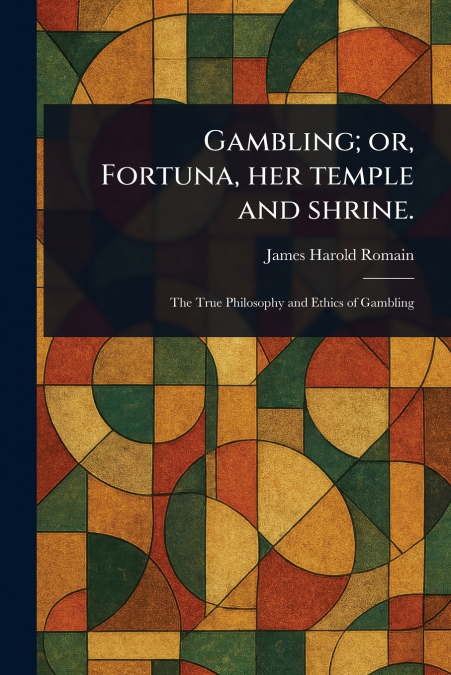
In this unusual nineteenth-century study, James Harold Romain examines gambling not simply as a vice to be condemned, but as a persistent human activity rooted in ideas of chance, choice, instinct and social custom. Drawing on the history of Fortuna worship, including the celebrated shrine at Præneste, as well as biblical, civic and classical examples, Romain asks what gambling reveals about human conduct and the moral meaning of uncertainty.The book moves from the ethics of chance to the relationship between gambling and ordinary commercial risk, challenging the assumption that every wager is inherently sinful or criminal. Romain also scrutinises gambling law and sumptuary legislation, arguing that prohibition may be inconsistent with human nature and difficult to enforce. His proposed alternative-licensed and supervised gambling under defined conditions-makes this a distinctive contribution to debates about gambling regulation, public morality and the limits of state power. This Alpha Editions republication will interest readers exploring gambling history, moral philosophy, classical religion and nineteenth-century social thought.