Rhianna C. Rogers / Rhianna CRogers
 Librería Samer Atenea
 Kálamo Books
 Librería Elías (Asturias)
 Librería Kolima (Madrid)
 Librería Proteo (Málaga)
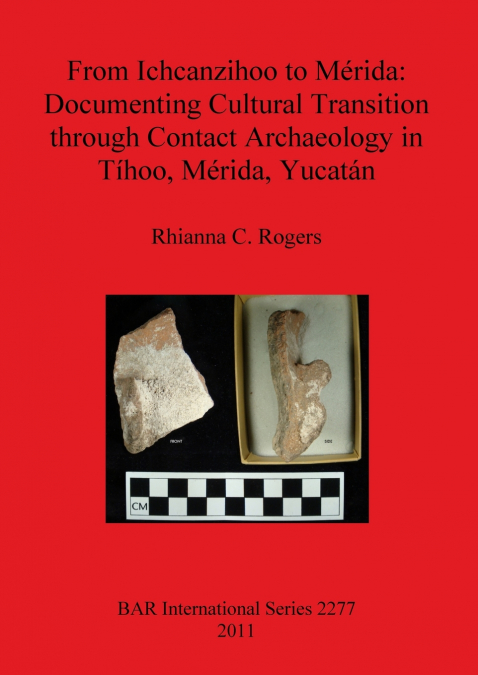
This study is concerned with the role material culture played in transformation and/or retention of Maya authority, just prior to and after Spanish contact (A.D. 1100-1800s). As one of the last standing structures in the Maya site of Tíhoo, now buried beneath the Spanish capital city Mérida, the Ciudadela collection represents a rare glimpse into a significant, yet understudied, Type 1 archaeological site. Included in this project are a general examination of Maya studies in the Northwestern Yucatán Corridor and the resultsof a preliminary classification and discussion of materials represented in the YUC 2 assemblage. Results of the archaeological component of this study illustrated that there was little change in production of indigenouspottery after the fall of Mayapan (ca. A.D. 1441-1461), as inhabitants of precolumbian Tíhoo continued to use preexisting wares from their former capital, particularly those within the Mayapan Red Ware and Mayapan Unslipped Ware classifications, wellinto the Colonial period. In the Post-Colonial period, a significant change in wares occurred as native inhabitants incorporated foreign ceramic types into their society. Ceramics from Spain, Italy, and England, and porcelains from China and Japan,combined with colonial Mexican Majolica and preexisting Mayapan wares, illustrating the interaction of native inhabitants with European immigrants and their import goods. Although the YUC 2 collection supported the transformation of material cultureafter Spanish contact, the research in this text illustrates that Maya, through religious practices, militaristic resistance, and oral/written traditions, were able to retain significant aspects of their precolumbian power into the colonial era and beyond.This study is concerned with the role material culture played in transformation and/or retention of Maya authority, just prior to and after Spanish contact (A.D. 1100-1800s). As one of the last standing structures in the Maya site of Tíhoo, now buried beneath the Spanish capital city Mérida, the Ciudadela collection represents a rare glimpse into a significant, yet understudied, Type 1 archaeological site. Included in this project are a general examination of Maya studies in the Northwestern Yucatán Corridor and the resultsof a preliminary classification and discussion of materials represented in the YUC 2 assemblage. Results of the archaeological component of this study illustrated that there was little change in production of indigenouspottery after the fall of Mayapan (ca. A.D. 1441-1461), as inhabitants of precolumbian Tíhoo continued to use preexisting wares from their former capital, particularly those within the Mayapan Red Ware and Mayapan Unslipped Ware classifications, wellinto the Colonial period. In the Post-Colonial period, a significant change in wares occurred as native inhabitants incorporated foreign ceramic types into their society. Ceramics from Spain, Italy, and England, and porcelains from China and Japan,combined with colonial Mexican Majolica and preexisting Mayapan wares, illustrating the interaction of native inhabitants with European immigrants and their import goods. Although the YUC 2 collection supported the transformation of material cultureafter Spanish contact, the research in this text illustrates that Maya, through religious practices, militaristic resistance, and oral/written traditions, were able to retain significant aspects of their precolumbian power into the colonial era and beyond.