From Flora to Function

From Flora to Function

George Malaperdas

73,39 €
IVA incluido
Disponible
Editorial:
Eliva Press
Año de edición:
2026
Materia
Ciencias de la tierra/geociencias
ISBN:
9789999338837
73,39 €
IVA incluido
Disponible

Selecciona una librería:

  • Librería Samer Atenea
  • Kálamo Books
  • Librería Elías (Asturias)
  • Librería Kolima (Madrid)
  • Librería Proteo (Málaga)

From Flora to Function: Mapping and Assessing Terrestrial Ecosystems offers a powerful and integrative exploration of how plant biodiversity shapes the structure, function, and resilience of terrestrial landscapes.Blending ecological theory with cutting-edge geospatial science, the book demonstrates how biodiversity can be documented, mapped, analyzed, and translated into actionable knowledge. Through the use of GIS, remote sensing, spatial modeling, and ecosystem service assessment frameworks, readers learn how to visualize complex ecological patterns and transform data into informed conservation and planning decisions.Structured across six comprehensive chapters, the book guides readers from the fundamentals of ecosystem structure and plant biodiversity to advanced methods for spatial mapping, ecosystem service valuation, and decision-support systems. It introduces a multidimensional framework of floristic diversity: taxonomic, functional, phylogenetic, spatial, and structural, showing how each dimension contributes to ecosystem integrity and adaptive capacity. Real-world case studies and applied methodologies make the concepts both accessible and practical.A central theme of the book is integration: linking biodiversity with ecosystem services, science with policy, and mapping with management. By overlaying biodiversity patterns with carbon sequestration, water regulation, pollination potential and landscape connectivity, the book demonstrates how conservation strategies can maximize both ecological and societal benefits. It also addresses contemporary challenges like climate change and land-use transformation while offering tools for adaptive, evidence-based planning.More than a scientific reference, this work is a bridge between knowledge and action. It equips ecologists, conservation practitioners, spatial planners, policymakers, and students with the conceptual clarity and echnical tools needed to understand and manage ecosystems in a rapidly changing world. For anyone seeking to understand how plant life underpins ecosystem resilience and how mapping can guide sustainable futures this book provides both inspiration and practical direction.

Artículos relacionados

  • Polarimetric SAR Techniques and Applications
    Carlos López-Martínez / Juan Manuel Lopez-Sanchez
    An increasing number of spaceborne Synthetic Aperture Radar (SAR) systems have been equipped with polarimetric capabilities: ALOS and ALOS-2, Radarsat-2, TerraSAR-X, Envisat-ASAR, Sentinel-1a/b, etc. Future mission will still present this type of diversity: RCM, SAOCOM, Cosmo-Skymed 2nd generation or PAZ. Polarimetry allows sensitivity to the structural and geometric properties...
    Disponible

    59,61 €

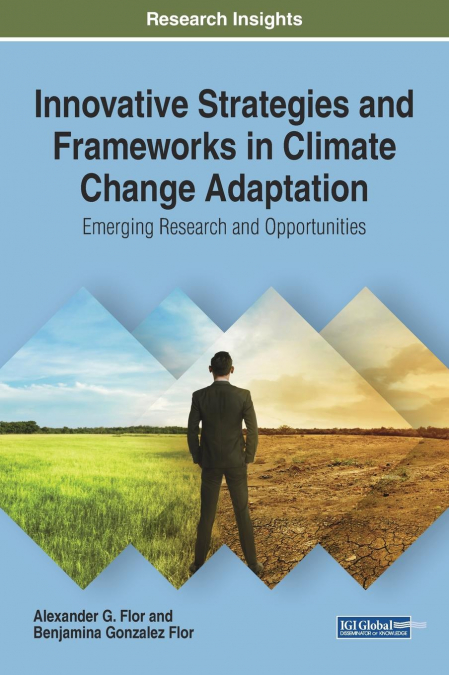
  • Innovative Strategies and Frameworks in Climate Change Adaptation
    Alexander G. Flor / Alexander GFlor / Benjamina Gonzalez Flor
    The changes the earth is currently undertaking has been at the forefront of scientific discourse in recent years. Humans as a species have needed to react to these changes and shift their behavior accordingly. Innovative Strategies and Frameworks in Climate Change Adaptation: Emerging Research and Opportunities is a critical scholarly resource that examines the relationship bet...
  • Air Quality Monitoring and Forecasting
    Air quality is personal. Its management is highly so. Asthmatic or air-pollutant-sensitive individuals depend on accurate air quality forecasts to help manage their daily activities.  However, the adverse effects of poor air quality on public health and visibility extend far beyond the daily time horizon. Pneumonic and cardiac vascular responses of individuals in all age groups...
    Disponible

    59,74 €

  • Application of Artificial Neural Networks in Geoinformatics
    Saro Lee
    Recently, a need has arisen for prediction techniques that can address a variety of problems by combining methods from the rapidly developing field of machine learning with geoinformation technologies such as GIS, remote sensing, and GPS. As a result, over the last few decades, one particular machine learning technology, known as artificial neural networks, has been successfull...
    Disponible

    59,81 €

  • Coastal Sea Levels, Impacts and Adaptation
    Extreme sea levels can lead to hazardous events, such as coastal flooding, erosion, or salt water intrusion, with-wide ranging environmental, societal, and economic consequences. In combination with climate-driven sea-level rise, and, potentially, additional changes in storminess, dynamic wave contributions, and tidal dynamics, the adverse consequences of extreme oceanographic ...
    Disponible

    75,97 €

  • Application of Plant Biotechnology in Forestry
    The aim of this reprint is to immerse the reader in the latest biotechnological approaches employed in forestry. From rejuvenation through clonal propagation to somatic embryogenesis, the cryopreservation of germplasm, and the use of molecular techniques and genetic engineering, we aim to unravel the potential and promise of these cutting-edge technologies. In this reprint, lea...

Otros libros del autor

  • Introduction to Mapaganda
    George Malaperdas
    Mapaganda meaning how maps, scribbles and generally depictions are used to influence the general public. The word is compound from the words Map and Propaganda. By critically analyzing maps and understanding their historical context, we can gain a deeper understanding of how cartography has been employed as a means of political power and work towards a more equitable and just w...
    Disponible

    49,87 €