Librería Samer Atenea
 Kálamo Books
 Librería Elías (Asturias)
 Librería Kolima (Madrid)
 Librería Proteo (Málaga)
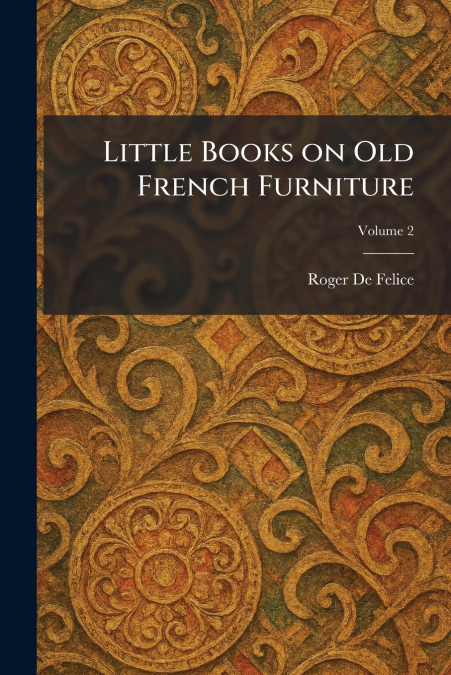
An intimate tour of Louis XV furniture: graceful, audacious, exacting. Quiet splendour in carved wood. Roger de Felice guides the reader through the formal vocabulary of the era, from sinuous cabriole legs and shell ornament to refined marquetry and gilt mounts, explaining how tastes of court and city shaped production. Structured as both an antique furniture guide and a discerning French decorative arts book, the narrative balances technical description with cultural context, offering clear accounts of makers’ methods, patronage and provincial workshop practice. Readers seeking clarity on Louis XV period style and rococo interior design will find lucid analysis; those interested in eighteenth-century furnishings can follow how function and fashion met in specific pieces. The text also traces the baroque to rococo transition and supplies measured comparison with contemporary English tendencies, so that questions of influence and divergence, including a useful chippendale era comparison, are put into view.Republished by Alpha Editions in a careful modern edition, this volume preserves the spirit of the original while making it effortless to enjoy today - a heritage title prepared for readers and collectors alike.Historically significant, de Felice’s study maps French craftsmanship history across workshops and decades, illuminating how techniques and tastes for 1700s France furniture evolved within a broader European antiques era. As much a resource for art historians as a collectors reference book, the work supplies comparative frameworks for attribution and provenance while retaining a readable voice for the non-specialist. Collectors and dealers readily appreciate its steady attention to form and function; casual readers equally enjoy the evocations of salon life and the social uses of furniture. Accessible to the curious yet precise enough to sit on the shelf of classic-literature collectors, this edition invites renewed attention to an era when artisans translated courtly ideals into the intimate objects of everyday life.