 Librería Samer Atenea
 Kálamo Books
 Librería Elías (Asturias)
 Librería Kolima (Madrid)
 Librería Proteo (Málaga)
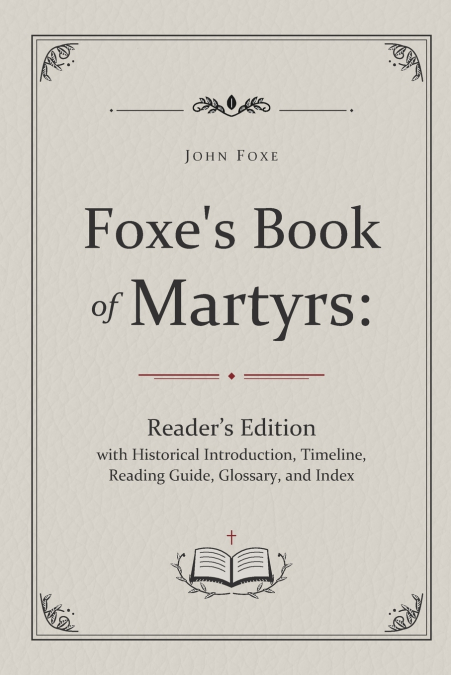
John Foxe’s Acts and Monuments, first published in English in 1563, became one of the best-known Protestant accounts of religious persecution. This 594-page Reader’s Edition presents all 23 chapters of a later historical compilation published under Foxe’s name. Its scope stretches from the early Christian persecutions and the trials of the English Reformation to the prosecution of Quakers in colonial Massachusetts and the nineteenth-century account of Asaad Shidiak.The new editorial material helps readers distinguish Foxe’s own project from the later compilation, understand the institutions and beliefs at stake, and find individual accounts across a book that spans centuries.Historical introduction follows Foxe from his Protestant exile during Mary I’s reign to the publication of Acts and Monuments. It explains how he used testimony, letters, and church records to build his account of the Reformation.A note on this edition explains why the book includes events that took place after Foxe’s death and identifies the Protestant perspective that shapes the historical text.Historical timeline places the principal events and publications in chronological order, from the persecutions under Nero and Diocletian to the later missionary accounts.Four reading routes offer starting points through the early Christian persecutions, late medieval and Reformation trials, the Marian martyrs, and the later accounts.80-term glossary explains the religious, legal, and ecclesiastical vocabulary that can make the original difficult to follow. Entries such as abjuration, praemunire, and transubstantiation point to examples in the text.132-entry index directs readers to principal accounts and selected references, making it easy to locate a person, place, or subject within a long chapter.Set in a readable serif with woodcut-style chapter ornaments and a two-column index, this paperback is designed for sustained reading and quick reference. It gives students, teachers, and readers of religious history a way into the book and a reason to return to it.