George Gordon Byron Baron 1788- Byron
 Librería Samer Atenea
 Kálamo Books
 Librería Elías (Asturias)
 Librería Kolima (Madrid)
 Librería Proteo (Málaga)
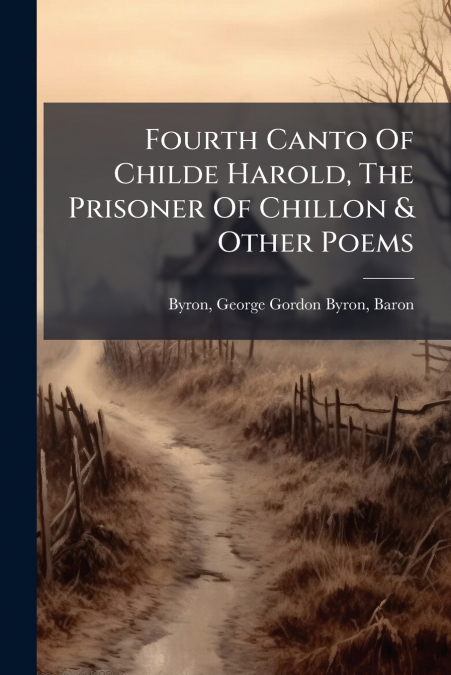
This collection brings together Lord Byron’s powerful 'Fourth Canto of Childe Harold’s Pilgrimage' with 'The Prisoner of Chillon' and other notable poems. Byron’s 'Childe Harold' stands as a landmark of Romantic poetry, exploring themes of exile, reflection, and the grandeur of nature as the titular character journeys through Europe. 'The Prisoner of Chillon,' inspired by the incarceration of François Bonivard in the Castle of Chillon, is a poignant narrative poem delving into themes of liberty, resilience, and the psychological impact of imprisonment. This volume showcases Byron’s lyrical skill, his exploration of profound emotions, and his engagement with contemporary political and philosophical ideas. It remains a testament to Byron’s enduring influence on English literature and continues to resonate with readers interested in Romanticism and the power of verse.This work has been selected by scholars as being culturally important, and is part of the knowledge base of civilization as we know it. This work was reproduced from the original artifact, and remains as true to the original work as possible. Therefore, you will see the original copyright references, library stamps (as most of these works have been housed in our most important libraries around the world), and other notations in the work.This work is in the public domain in the United States of America, and possibly other nations. Within the United States, you may freely copy and distribute this work, as no entity (individual or corporate) has a copyright on the body of the work.As a reproduction of a historical artifact, this work may contain missing or blurred pages, poor pictures, errant marks, etc. Scholars believe, and we concur, that this work is important enough to be preserved, reproduced, and made generally available to the public. We appreciate your support of the preservation process, and thank you for being an important part of keeping this knowledge alive and relevant.