
Foundation of Structural Perception

Foundation of Structural Perception

Mario Schipflinger

23,41 €
IVA incluido
Disponible
Editorial:
Published by Apollo (Mario Schipflinger)
Año de edición:
2026
Materia
Filosofía: metafísica y ontología
ISBN:
9783903679054
23,41 €
IVA incluido
Disponible

Selecciona una librería:

  • Librería Samer Atenea

  • Kálamo Books
  • Librería Elías (Asturias)
  • Librería Kolima (Madrid)
  • Librería Proteo (Málaga)

RTFM - Volume 2, Book 2.1: Foundation of Structural Perception establishes the perceptual baseline required to observe cognition as architecture rather than experience.Where Volume 1 dismantled narrative cognition, Book 2.1 focuses on perception itself. It removes interpretation, meaning attachment, emotional overlay, and identity-driven inference so that structure can be seen directly. The book does not introduce systems, models, or operating frameworks. Its sole function is to recalibrate perception to distinguish structure from subjective rendering.This volume treats perception as a mechanical interface. It explains why narrative cognition cannot see structure, how meaning overwrites architectural signals, and how constraint-based perception reveals system behavior without reference to intention, psychology, or belief. Concepts such as constraint, propagation, coherence, contradiction, and stability are introduced as perceptual primitives rather than theoretical ideas.RTFM Book 2.1 documents the transition from story-based observation to structure-first perception. It shows how internal noise decreases when interpretation slows, how predictability increases when constraints become visible, and how cognition stabilizes when narrative interference weakens. The text is deliberately non-persuasive and non-instructional. Nothing is framed as practice, technique, or improvement.Later sections describe early non-narrative states and the behavioral changes that appear when perception becomes structurally accurate. Readers learn to observe systems, interactions, and environments without psychological attribution, focusing instead on limits, boundaries, propagation paths, and coherence gradients. Familiar human behaviors are re-seen as mechanical outcomes rather than personal expressions.This book does not aim to produce insight or understanding. It removes interference so architecture becomes visible. RTFM - Book 2.1 provides the minimum stability required for operating-system-level cognition and serves as the mandatory foundation for all subsequent volumes in Volume 2.
Artículos relacionados

  • Formas tradicionales y ciclos cósmicos
    René Guénon
    Los artículos reunidos en el presente libro representan acaso el aspecto más "original" -también el más desconcertante para muchos lectores- de la obra de René Guénon. Se le hubiera podido dar el título Fragmentos de una historia desconocida, pero de una historia que engloba protohistoria y prehistoria por cuanto empieza con la Tradición primordial contemporánea de los comienzo...
    Disponible

    23,42 €

  • Símbolos de la Ciencia Sagrada
    René Guénon
    La civilización moderna aparece en la historia como una verdadera anomalía: de todas las que conocemos, es la única que se haya desarrollado en un sentido puramente material, la única también que no se apoye en ningún principio de orden superior. Este desarrollo material, que continúa desde hace ya varios siglos y que va acelerándose de más en más, ha sido acompañado de una reg...
    Disponible

    32,01 €

  • How to Master Your Karma
    Lynn Wylnn
    What is your karma? Wonder why you are here and where you are going? Want to live a prosperous life? This practical guide will reveal your karma and teach you how to Soul Walk. Soul Walking will present you with your karma, show you ways to correct it, and then teach you how to find the treasures of life so that you might use them to prosper and become successful. Follow the st...
    Disponible

    13,88 €

  • Unfinished
    John W. Galler
    What if the majority of society simultaneously withdrew their cash and investments globally, and stopped working to collapse imperialist insanity? This would actually force the much needed attention and urgency to decide what we could become next.At some point, we have to evolve as a species. Should we still insist on the current chaos that we can’t seem to escape, we could all...
    Disponible

    20,19 €

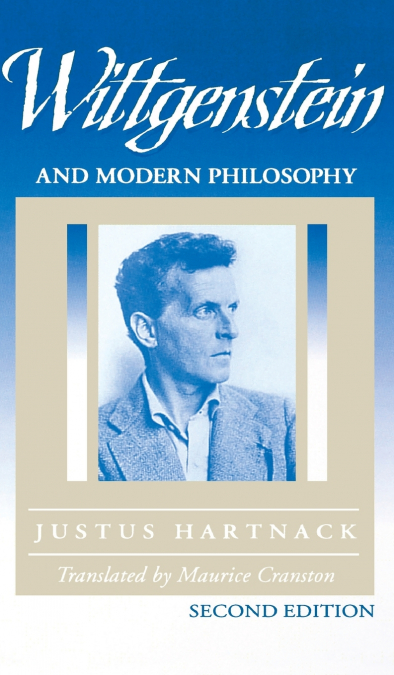
  • Wittgenstein and Modern Philosophy
    Justus Hartnack
    Justus Hartnack offers a concise and clear introduction to Wittgenstein and traces the influence of these works in the schools of logical positivism and analytical philosophy. A philosopher as great and at the same time as difficult as Wittgenstein has been the subject of innumerable studies, and universal agreement on how to interpret him cannot be expected. This is true of al...

Otros libros del autor

  • Do You Want to Update?
    Mario Schipflinger
    RTFM - Book 1 introduces a way of observing cognition without relying on narrative, interpretation, or personal belief.Rather than presenting arguments or explanations, the book functions as a field manual. It invites the reader to notice how meaning, identity, and internal storytelling arise, and how they shape perception before they are recognized as mechanisms. The focus is ...
    Disponible

    23,72 €

  • Applied Non-Narrative Cognition
    Mario Schipflinger
    RTFM - Book 5: Applied Non-Narrative Cognition moves from description to application, without introducing instruction, technique, or self-improvement framing.This volume examines how non-narrative cognition functions in practical contexts once structural clarity is stable. Rather than teaching methods, the book documents how cognition behaves when narrative, emotional signaling...
    Disponible

    23,46 €

  • Trans-Architectural Domain
    Mario Schipflinger
    RTFM · Volume 2 · Book 2.6 - Trans-Architectural Domain examines the threshold where architecture becomes capable of operating on itself.After dismantling narrative cognition and establishing structural perception, internal architecture, external architecture, integration, and origin-conditions (Books 2.1-2.5), this volume enters the Trans-Architectural Domain. Here, architectu...
    Disponible

    23,65 €

  • Meta-Architecture
    Mario Schipflinger
    RTFM · Volume 2 · Book 2.7 - Meta-Architecture: Architecture Operating Across Architectures completes the architectural domain by making architecture itself the object of observation.This volume does not extend architecture further. It establishes the conditions under which extension must stop.After dismantling narrative cognition (Volume 1) and establishing perception, interna...
    Disponible

    23,66 €

  • Internal Structural Formation
    Mario Schipflinger
    RTFM - Volume 2, Book 2.2: Internal Structural Formation introduces the internal operating system that becomes visible once narrative cognition has fallen silent.This book marks the first transition from perception to internal structure. Where Book 2.1 established non-narrative perception, Book 2.2 reveals the human operating system as an architectural system composed of module...
    Disponible

    23,21 €

  • External Structural Formation
    Mario Schipflinger
    RTFM - Volume 2, Book 2.3: External Structural Formation marks the transition from internal system visibility to the direct observation of external architecture.Where Book 2.1 recalibrated perception and Book 2.2 revealed the internal operating system, Book 2.3 extends structural readability beyond the individual. External behavior, interaction, and environments are no longer i...
    Disponible

    23,15 €