Fossil Fuels in the European Union

Fossil Fuels in the European Union

Kari Liuhto / Paweł Niedziółka / Zbigniew Korzeb

220,71 €
IVA incluido
Consulta disponibilidad
Editorial:
Springer Nature B.V.
Año de edición:
2024
Materia
Economía medioambiental
ISBN:
9783031567896

Selecciona una librería:

  • Librería Samer Atenea
  • Librería Aciertas (Toledo)
  • Kálamo Books
  • Librería Perelló (Valencia)
  • Librería Elías (Asturias)
  • Donde los libros
  • Librería Kolima (Madrid)
  • Librería Proteo (Málaga)

This book identifies scenarios for changes in transmission infrastructure, contracting, consumption patterns and fossil fuel financing policies, considering climate goals and the consequences of the conflict in Ukraine. The invasion of Ukraine by the Russian Federation has fundamentally changed the geopolitical situation, approaches to energy security issues, the EU’s energy (in)dependence and the implementation of previously outlined climate policies, including the planned gradual withdrawal from fossil fuels.This book presents the geopolitical architecture, energy mix, energy fuel supply structure, long-term energy policy and financing conditions of the oil and gas and sectors in the EU in the period preceding and following the Russian invasion of Ukraine. The authors consider the date of Russia’s attack on Ukraine as a symbolic caesura marking the beginning of the process of creating a new energy order in the EU. A novel part of the book is the attention it pays to the role of the credit and investment policy of the EU banking sector in relation to carbon-intensive sectors and to the significance of the financial system from the point of view of the effectiveness of international sanctions imposed on the Russian Federation, including, above all, sanctions related to the fossil fuel sector. The book is of interest to researchers and all those interested in learning about these subjects.
Artículos relacionados

  • Technological Change and the British Iron Industry, 1700-1870
    Charles K. Hyde
    This book describes technological change in an industry that played a central role in the Indsutrial Revolution. While earlier scholars have examined isolated aspects of ironmaking in the eighteenth- and nineteenth-century Britain, Charles Hyde surveys all aspects of its development. Costs, prices, profits, shrewd leaders, competition, new inventions, and productivity all figur...
    Disponible

    71,94 €

  • Corporate Governance in Asia
    ...
    Disponible

    72,99 €

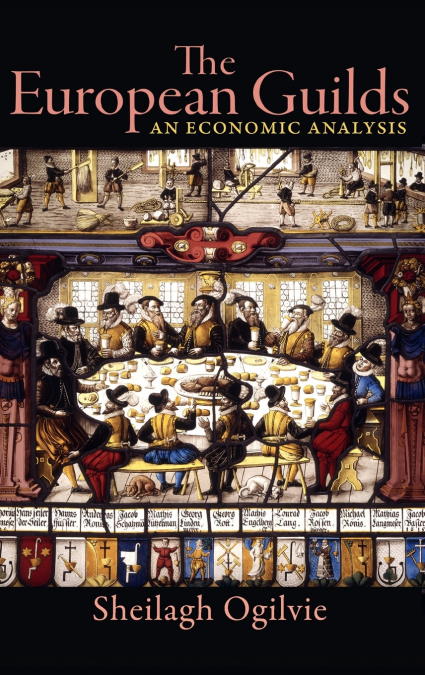
  • The European Guilds
    Sheilagh Ogilvie
    A comprehensive analysis of European craft guilds through eight centuries of economic historyGuilds ruled many crafts and trades from the Middle Ages to the Industrial Revolution, and have always attracted debate and controversy. They were sometimes viewed as efficient institutions that guaranteed quality and skills. But they also excluded competitors, manipulated markets, and ...
  • Technological Change and the British Iron Industry, 1700-1870
    Charles K. Hyde
    This book describes technological change in an industry that played a central role in the Indsutrial Revolution. While earlier scholars have examined isolated aspects of ironmaking in the eighteenth- and nineteenth-century Britain, Charles Hyde surveys all aspects of its development. Costs, prices, profits, shrewd leaders, competition, new inventions, and productivity all figur...
  • Technology Differences over Space and Time
    Francesco Caselli
    Technology Differences over Space and Time looks at how countries use their productive resources-such as workers, skills, equipment and structures, and natural resources. Francesco Caselli develops methods to assess the efficiency with which productive inputs are used, and how these efficiencies vary across countries and over time.Caselli finds that richer countries use skilled...
  • Cybersecurity Measures for Logistics Industry Framework
    Global supply chains are becoming more customer-centric and sustainable thanks to next-generation logistics management technologies. Automating logistics procedures greatly increases the productivity and efficiency of the workflow. There is a need, however, to create flexible and dynamic relationships among numerous stakeholders and the transparency and traceability of the supp...