
Inicio > Artes > Formelle und Informelle Gruppen
Formelle und Informelle Gruppen

Formelle und Informelle Gruppen

Anne Wießner

22,04 €
IVA incluido
Disponible
Editorial:
GRIN Verlag
Año de edición:
2011
Materia
Artes
ISBN:
9783640875948
22,04 €
IVA incluido
Disponible

Selecciona una librería:

  • Librería Samer Atenea
  • Librería Aciertas (Toledo)
  • Kálamo Books
  • Librería Perelló (Valencia)
  • Librería Elías (Asturias)
  • Donde los libros
  • Librería Kolima (Madrid)
  • Librería Proteo (Málaga)

Studienarbeit aus dem Jahr 2009 im Fachbereich Soziologie - Wirtschaft und Industrie, Note: 2,7, Technische Universität Chemnitz, Sprache: Deutsch, Abstract: Nach Korte/Schäfers 2007 ist die Gruppe das wichtigste soziale Gebilde. Jedes Individuum gehört zu meist vielen verschiedenen Gruppen. Die Gruppe verbindet das Individuum mit der Gesellschaft, sodass die Gruppe als „Paradigma der Vergemeinschaftung und Vergesellschaftung' gesehen wird (Korte/Schäfers 2007, S. 138). Die herausragende Bedeutung der Gruppe führt dazu, dass heutzutage auch für Unternehmen die hohe Relevanz der Gruppe nicht mehr wegzudenken ist, denn laut Kropp 1999 setzt sich das Unternehmen aus Gruppen zusammen (vgl. Kropp 1999, S. 371).Zunächst soll ein umfassender Überblick über die Gruppe sowie die zwei Formen formelle und informelle Gruppe (Teil I: Theorie) gegeben werden. Der II. Teil dieser Arbeit befasst sich mit der Reflexion des Planspiels „Ein Betrieb soll verlagert werden'. Dieses Spiel fand vom 17. bis 18. Dezember 2008 im Thüringer Weg 5 statt. In dieser Reflexion werden zunächst die verschiedenen Rollen des Spiels beschrieben. Danach soll auf die formellen und informellen Gruppen und Rollen, die im Planspiel beobachtbar waren, eingegangen werden. Des Weiteren beinhaltet der Reflexionsbericht eine persönliche Stellungnahme zum Planspiel.Ziel dieser Arbeit ist es, das Planspiel hinsichtlich formeller und informeller Gruppen und Rollen zu reflektieren und dem Leser eine Vorstellung von einem Planspiel zu vermitteln.


Artículos relacionados

  • Technological Change and the British Iron Industry, 1700-1870
    Charles K. Hyde
    This book describes technological change in an industry that played a central role in the Indsutrial Revolution. While earlier scholars have examined isolated aspects of ironmaking in the eighteenth- and nineteenth-century Britain, Charles Hyde surveys all aspects of its development. Costs, prices, profits, shrewd leaders, competition, new inventions, and productivity all figur...
    Disponible

    71,94 €

  • Corporate Governance in Asia
    ...
    Disponible

    72,99 €

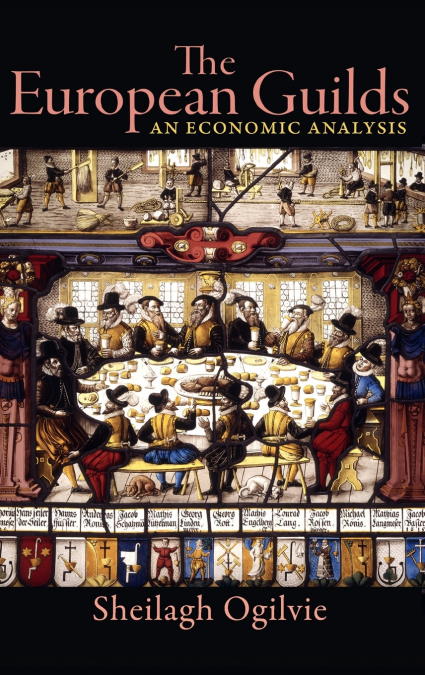
  • The European Guilds
    Sheilagh Ogilvie
    A comprehensive analysis of European craft guilds through eight centuries of economic historyGuilds ruled many crafts and trades from the Middle Ages to the Industrial Revolution, and have always attracted debate and controversy. They were sometimes viewed as efficient institutions that guaranteed quality and skills. But they also excluded competitors, manipulated markets, and ...
  • Technological Change and the British Iron Industry, 1700-1870
    Charles K. Hyde
    This book describes technological change in an industry that played a central role in the Indsutrial Revolution. While earlier scholars have examined isolated aspects of ironmaking in the eighteenth- and nineteenth-century Britain, Charles Hyde surveys all aspects of its development. Costs, prices, profits, shrewd leaders, competition, new inventions, and productivity all figur...
  • Technology Differences over Space and Time
    Francesco Caselli
    Technology Differences over Space and Time looks at how countries use their productive resources-such as workers, skills, equipment and structures, and natural resources. Francesco Caselli develops methods to assess the efficiency with which productive inputs are used, and how these efficiencies vary across countries and over time.Caselli finds that richer countries use skilled...
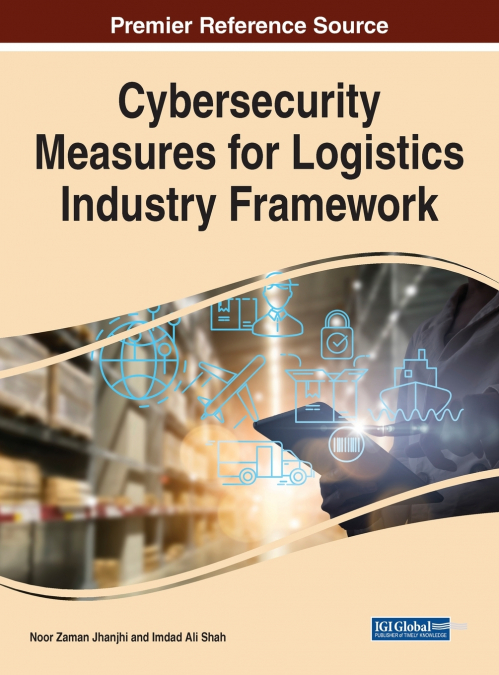
  • Cybersecurity Measures for Logistics Industry Framework
    Global supply chains are becoming more customer-centric and sustainable thanks to next-generation logistics management technologies. Automating logistics procedures greatly increases the productivity and efficiency of the workflow. There is a need, however, to create flexible and dynamic relationships among numerous stakeholders and the transparency and traceability of the supp...