
Förderung der Unterrichtsplanungskompetenz angehender Lehrkräfte durch den Einsatz (meta-)kognitiver Prompts in der reflexiven E-Portfolioarbeit

Förderung der Unterrichtsplanungskompetenz angehender Lehrkräfte durch den Einsatz (meta-)kognitiver Prompts in der reflexiven E-Portfolioarbeit

Serap Uzunbacak

148,34 €
IVA incluido
Disponible
Editorial:
Springer Nature B.V.
Año de edición:
2023
ISBN:
9783658430726
148,34 €
IVA incluido
Disponible

Selecciona una librería:

  • Librería Samer Atenea

  • Kálamo Books
  • Librería Elías (Asturias)
  • Librería Kolima (Madrid)
  • Librería Proteo (Málaga)

Unterrichtsplanungskompetenz gilt als Kernkompetenz angehender Lehrkräfte. In diesem Buch wird das Modell der professionellen Handlungskompetenz auf Grundlage von Elementen wirtschaftsdidaktischen Professionswissens konzeptualisiert. Dabei wird die Reflexion als grundlegender Bestandteil im Professionalisierungsprozess betrachtet.Es wird aufgezeigt, dass der Einsatz fachdidaktischer Prompts bei der Planung von wirtschaftsdidaktischem Unterricht eine Veränderung im Planungsvorgehen erzielt und mit einer Entwicklung der Reflexions- und Unterrichtsplanungskompetenz einhergeht. Das didaktische Potential von E-Portfolioarbeit wird dabei lernwirksam durch iterative und elaboriertere Unterrichtsplanung nutzbar.

Artículos relacionados

  • Technological Change and the British Iron Industry, 1700-1870
    Charles K. Hyde
    This book describes technological change in an industry that played a central role in the Indsutrial Revolution. While earlier scholars have examined isolated aspects of ironmaking in the eighteenth- and nineteenth-century Britain, Charles Hyde surveys all aspects of its development. Costs, prices, profits, shrewd leaders, competition, new inventions, and productivity all figur...
    Disponible

    79,14 €

  • Corporate Governance in Asia
    ...
    Disponible

    86,56 €

  • The European Guilds
    Sheilagh Ogilvie
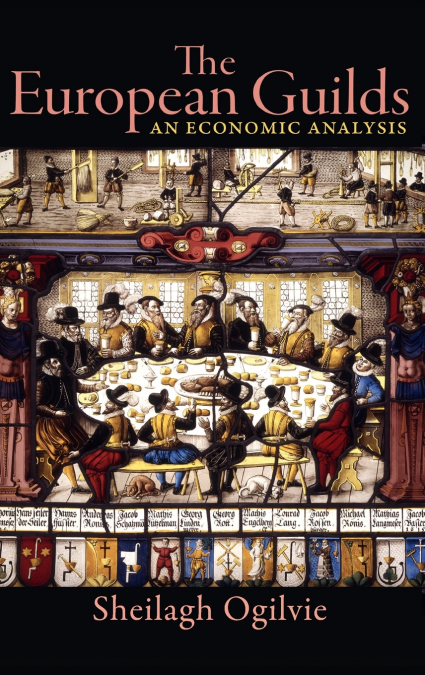
    A comprehensive analysis of European craft guilds through eight centuries of economic historyGuilds ruled many crafts and trades from the Middle Ages to the Industrial Revolution, and have always attracted debate and controversy. They were sometimes viewed as efficient institutions that guaranteed quality and skills. But they also excluded competitors, manipulated markets, and ...
  • Technological Change and the British Iron Industry, 1700-1870
    Charles K. Hyde
    This book describes technological change in an industry that played a central role in the Indsutrial Revolution. While earlier scholars have examined isolated aspects of ironmaking in the eighteenth- and nineteenth-century Britain, Charles Hyde surveys all aspects of its development. Costs, prices, profits, shrewd leaders, competition, new inventions, and productivity all figur...
  • Technology Differences over Space and Time
    Francesco Caselli
    Technology Differences over Space and Time looks at how countries use their productive resources-such as workers, skills, equipment and structures, and natural resources. Francesco Caselli develops methods to assess the efficiency with which productive inputs are used, and how these efficiencies vary across countries and over time.Caselli finds that richer countries use skilled...
  • Cybersecurity Measures for Logistics Industry Framework
    Global supply chains are becoming more customer-centric and sustainable thanks to next-generation logistics management technologies. Automating logistics procedures greatly increases the productivity and efficiency of the workflow. There is a need, however, to create flexible and dynamic relationships among numerous stakeholders and the transparency and traceability of the supp...