 Librería Samer Atenea
 Kálamo Books
 Librería Elías (Asturias)
 Librería Kolima (Madrid)
 Librería Proteo (Málaga)
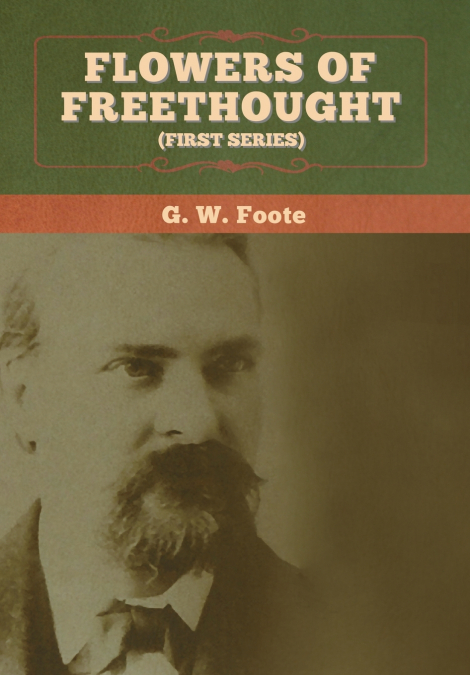
George William Foote (11 January 1850 – 17 October 1915) was an English secularist, freethinker, republican, writer and journal editor. George William Foote was born in Plymouth, the son of William Thomas Foot (a customs officer) and Ann Winzar.In his Reminiscences of Charles Bradlaugh he recalls coming to London in January 1868 with "plenty of health and very little religion". He was taken to Cleveland Hall by a friend, and "heard Mrs. [Harriet] Law knock the Bible about delightfully. She was not what would be called a woman of culture, but she had what some devotees of 'culchaw' do not posses—a great deal of natural ability..." A few weeks later Foote heard Charles Bradlaugh speaking at the hall. He became involved with the secularism, freethought and republicanism, joining the Young Men's Secular Association, the National Secular Society, and contributing to Bradlaugh's National Reformer.In 1877 Foote joined the anti-Bradlaughites in the breakaway British Secular Union. The split was caused by several factors: Bradlaugh's alleged autocratic style; Bradlaugh's association with Annie Besant; and Bradlaugh and Besant's involvement in promoting birth control and Neo-Malthusianism. The BSU was relatively short-lived, and Foote himself was reconciled to Bradlaugh within a few years, becoming an NSS vice-president from 1882.The Secularist: A Liberal Weekly Review (1876-1877), Foote's first attempt to launch his own publication, in collaboration with George Jacob Holyoake, did not last long. In May, 1881, Foote started a serial publication called The Freethinker, which is still published. As a result of contents of this journal, Foote was charged with blasphemy, and eventually imprisoned for one year with hard labour. On receiving his sentence from Mr Justice North (a devout Catholic), Foote said "with great deliberation" to the Judge "My Lord, I thank you; it is worthy of your creed". His description of this experience was published in 1886 as Prisoner for Blasphemy.Once released, Foote continued to be active promoting his ideals, writing books and pamphlets, lecturing, and debating. Foote was well-versed in literature, and had extensive knowledge of ancient and contemporary writers, and ecclesiastical history. In 1890 Foote succeeded Bradlaugh as President of the National Secular Society and remained in that role for twenty-five years.His death was related by Chapman Cohen in The Freethinker (31 October 1915):When I saw him on the Friday (two days) before his death he said, "I have had another setback, but I am a curious fellow and may get all right again." But he looked the fact of death in the face with the same courage and determination that he faced Judge North many years ago. A few hours before he died he said calmly to those around him, "I am dying." And when the end came his head dropped back on the pillow, and with a quiet sigh, as of one falling to sleep, he passed away. (wikipedia.org)