 Librería Samer Atenea
 Kálamo Books
 Librería Elías (Asturias)
 Librería Kolima (Madrid)
 Librería Proteo (Málaga)
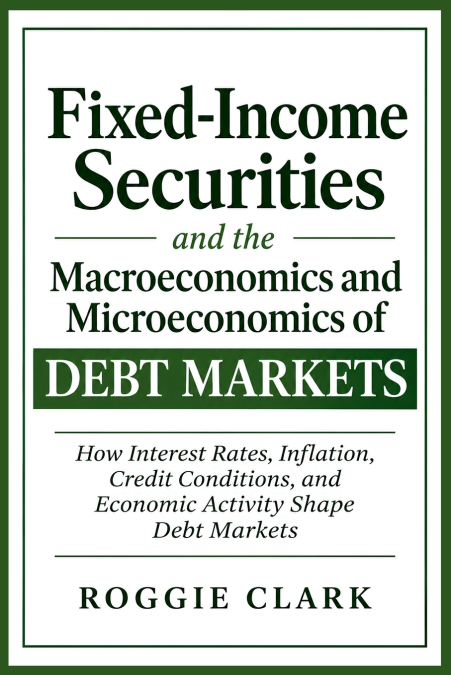
Fixed-income securities are an important part of the global financial system, influencing how governments borrow money, how businesses finance their operations, and how capital moves throughout the economy. From government bonds and corporate debt to interest rates and credit markets, these financial instruments play a significant role in shaping economic conditions at both the macroeconomic and microeconomic levels.This beginner-friendly guide introduces readers to the economic principles behind fixed-income securities and the debt markets in which they operate. Along the way, you will learn how bonds and other debt instruments function, why their prices and yields change, and how supply and demand, borrowing costs, and credit risk influence financial decisions.You will also discover how inflation, monetary policy, economic growth, and changing credit conditions affect fixed-income markets. The book explores the relationship between central bank decisions, government financing, corporate borrowing, and the financial pressures experienced by businesses and households.By examining both macroeconomics and microeconomics, this guide explains how broader economic forces influence debt markets and how individual financial decisions contribute to market activity. Readers will gain a clearer understanding of bond yields, credit ratings, yield curves, financial stability, and the economic relationships that connect borrowers, lenders, and financial institutions.This guide is designed for beginners, economics students, and readers interested in understanding how fixed-income securities operate within the broader economy. With straightforward explanations and practical economic examples, it provides an accessible introduction to the financial and economic forces shaping modern debt markets.