

 Librería Samer Atenea
 Kálamo Books
 Librería Elías (Asturias)
 Librería Kolima (Madrid)
 Librería Proteo (Málaga)
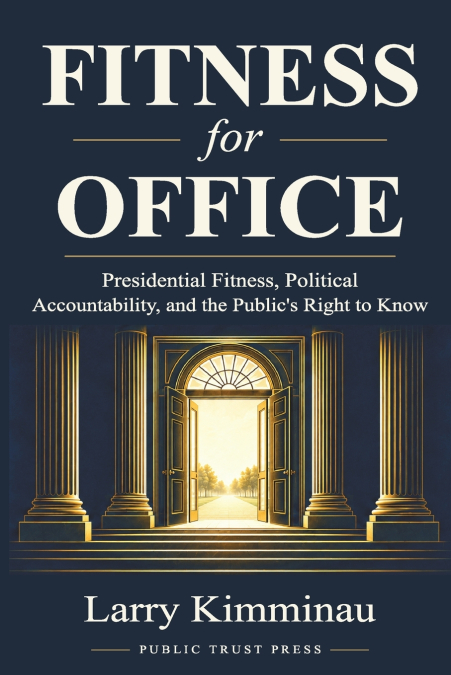
What should citizens reasonably expect from the people and institutions responsible for informing their electoral decisions? Fitness for Office: Presidential Fitness, Political Accountability, and the Public’s Right to Know examines the standards of honesty, transparency, and accountability that should govern candidates, elected officials, political parties, and news organizations in a functioning democracy. Using Joe Biden’s presidency and the 2024 presidential election as its central case study, the book investigates how voters assess a candidate’s fitness for office when important information may be incomplete, disputed, selectively presented, or unavailable to the public. Drawing on official records, medical disclosures, public appearances, polling, congressional testimony, and contemporaneous reporting, the investigation distinguishes documented facts from reasonable inferences, speculation, and competing explanations. It examines not only what the public could observe, but also the limits of what could reasonably be known. The book explores the responsibilities of political leaders to provide accurate information, the obligations of political parties to evaluate and represent their candidates honestly, and the role of news organizations in independently scrutinizing claims made by those seeking or holding public office. It also considers the difficult questions that arise when institutional assurances conflict with public observations, when information is filtered through competing political narratives, and when citizens must make consequential judgments without access to all relevant evidence. Beyond the circumstances surrounding Biden’s candidacy, Fitness for Office addresses fundamental questions about institutional credibility, political accountability, the reliability of public information, and the public’s right to know. Rather than asking readers to accept a predetermined conclusion, the book offers an evidence-based framework for evaluating competing claims and considering what standards of honesty, disclosure, and accountability citizens should expect from the institutions that shape democratic elections. The central question extends beyond any one president or election: How can democratic accountability function when the information citizens need to exercise it is incomplete, contested, or controlled by the very institutions they are expected to trust?





