

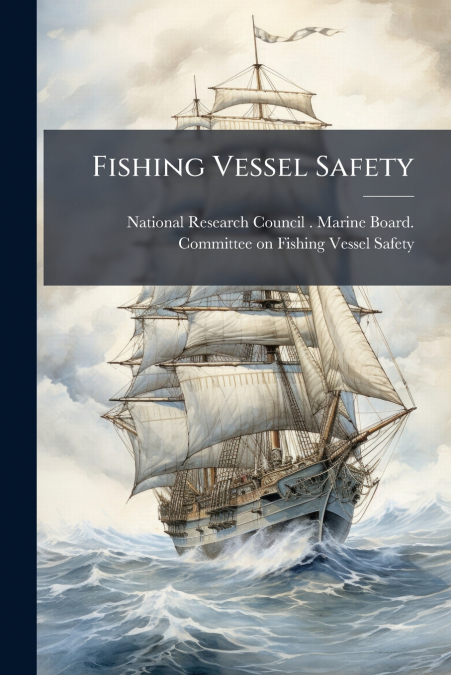
National Research Council (U.S.). Marine
 Librería Samer Atenea
 Kálamo Books
 Librería Elías (Asturias)
 Librería Kolima (Madrid)
 Librería Proteo (Málaga)
Fishing Vessel Safety: Blueprint for a National Program addresses the critical issue of safety in the U.S. fishing industry. This comprehensive report, prepared by the National Research Council’s Marine Board, examines the factors contributing to the high rate of accidents and fatalities in this sector. It provides a detailed analysis of existing safety measures and identifies areas where improvements are needed. The report proposes a national program aimed at enhancing the safety of fishing vessels and their crews. This blueprint includes recommendations for improved training, vessel design, regulatory oversight, and the promotion of a safety culture within the industry. It is an invaluable resource for policymakers, industry professionals, and anyone concerned with the well-being of those who work in this hazardous occupation. The 'Fishing Vessel Safety' report offers a pathway towards a safer and more sustainable future for the U.S. fishing fleet.This work has been selected by scholars as being culturally important, and is part of the knowledge base of civilization as we know it. This work was reproduced from the original artifact, and remains as true to the original work as possible. Therefore, you will see the original copyright references, library stamps (as most of these works have been housed in our most important libraries around the world), and other notations in the work.This work is in the public domain in the United States of America, and possibly other nations. Within the United States, you may freely copy and distribute this work, as no entity (individual or corporate) has a copyright on the body of the work.As a reproduction of a historical artifact, this work may contain missing or blurred pages, poor pictures, errant marks, etc. Scholars believe, and we concur, that this work is important enough to be preserved, reproduced, and made generally available to the public. We appreciate your support of the preservation process, and thank you for being an important part of keeping this knowledge alive and relevant.





