Film and the Holocaust

Film and the Holocaust

Aaron Kerner

59,72 €
IVA incluido
Disponible
Editorial:
Bloomsbury Publishing plc
Año de edición:
2011
Materia
Teoría y crítica cinematográficas
ISBN:
9781441124180
59,72 €
IVA incluido
Disponible

Selecciona una librería:

  • Librería Samer Atenea
  • Librería Aciertas (Toledo)
  • Kálamo Books
  • Librería Perelló (Valencia)
  • Librería Elías (Asturias)
  • Donde los libros
  • Librería Kolima (Madrid)
  • Librería Proteo (Málaga)

When representing the Holocaust, the slightest hint of narrative embellishment strikes contemporary audiences as somehow a violation against those who suffered under the Nazis. This anxiety is, at least in part, rooted in Theodor Adorno’s dictum that 'To write poetry after Auschwitz is barbaric.' And despite the fact that he later reversed his position, the conservative opposition to all 'artistic' representations of the Holocaust remains powerful, leading to the insistent demand that it be represented, as it really was. And yet, whether it’s the girl in the red dress or a German soldier belting out Bach on a piano during the purge of the ghetto in Schindler’s List, or the use of tracking shots in the documentaries Shoah and Night and Fog, all genres invent or otherwise embellish the narrative to locate meaning in an event that we commonly refer to as 'unimaginable.' This wide-ranging book surveys and discusses the ways in which the Holocaust has been represented in cinema, covering a deep cross-section of both national cinemas and genres.
Artículos relacionados

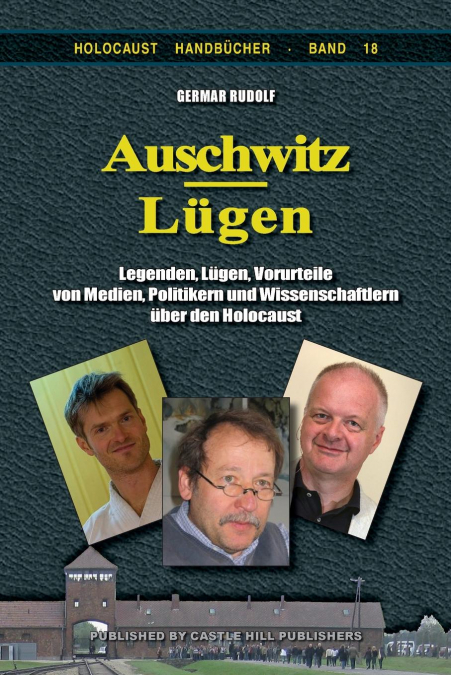
  • Auschwitz-Lügen
    Germar Rudolf
    'Das Institut für Zeitgeschichte hat den Leuchter-Bericht widerlegt, der die Existenz der Gaskammern von Auschwitz leugnet' – das ist eine Lüge. 'Der Historiker Jean-Claude Pressac und der Sozialoberrat Werner Wegner haben die technischen Argumente der Revisionisten widerlegt' – das stimmt nicht, denn weder Pressac noch Wegner argumentierten je technisch. 'Der französische ...
    Disponible

    23,07 €

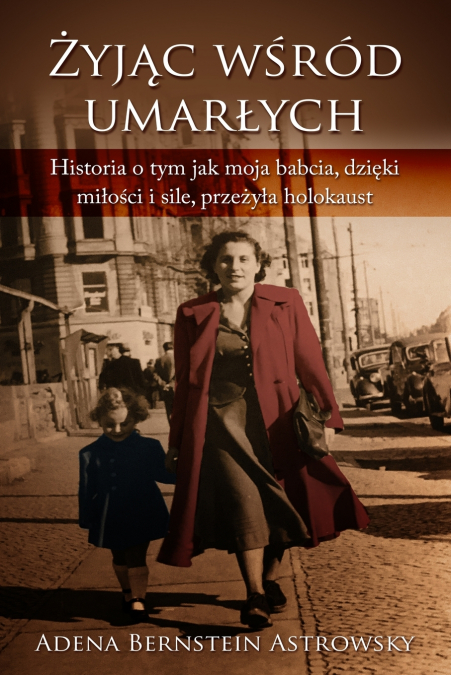
  • Żyjąc pośród umarłych or Żyjąc wśród umarłych
    Adena Bernstein Astrowsky
    Jest to opowieść o niezwykłej młodej kobiecie i nieprawdopodobnej podróży odbytej podczas nazistowskiego reżimu, w trakcie II wojny światowej i jej następstwach. Dramatyczna historia przetrwania Manii Lichtenstein jest narracją jej wnuczki, a wspomnienia bubi (babci) splatają się z pięknymi fragmentami poezji i refleksji osobistej.Ocalała z Holokaustu, Mania Lichtenstein używał...
    Disponible

    17,69 €

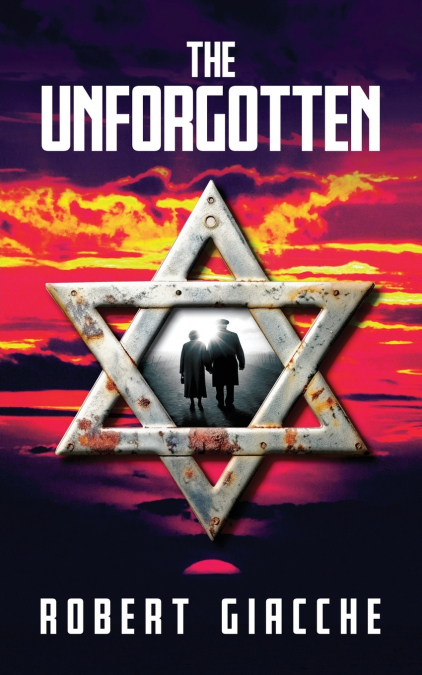
  • The Unforgotten
    Robert Giacche
    A true and inspring story of a woman facing troubling times during WW2 and continuing lifes journey with strengh courage and determination after the loss of her parentd to Auschwitz. Staying focused and grounded whilst raising a family and helping others. Showing us all that life has many challanges along the way. ...
    Disponible

    13,61 €

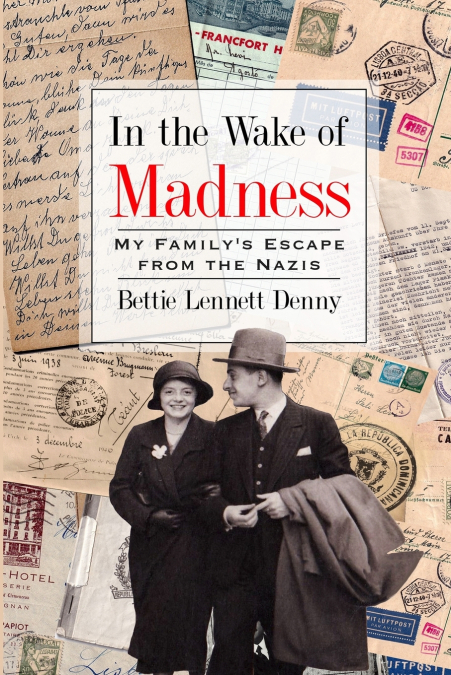
  • In the Wake of Madness
    Bettie Lennett Denny
    A cache of poignant lettersA narrow escape from Nazi-occupied EuropeA family scattered and forever changed by warIn 1940, thousands of Jewish refugees descended upon sunny Lisbon, desperately scrambling to acquire visas to escape Nazi-occupied Europe. Among them were Elsa and Saly Levi, a young German-Jewish couple who thought they had found safety in neutral Belgium-until Nazi...
    Disponible

    24,72 €

  • My Battle Against Hitler
    Dietrich von Hildebrand / John Henry Crosby
    ...
    Disponible

    19,23 €

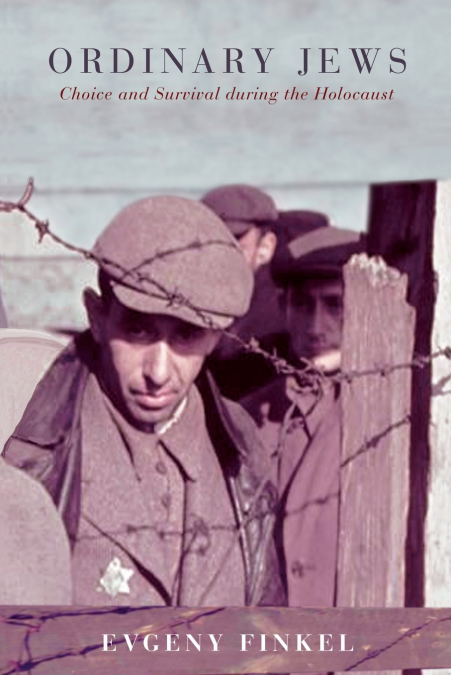
  • Ordinary Jews
    Evgeny Finkel
    How Jewish responses during the Holocaust shed new light on the dynamics of genocide and political violenceFocusing on the choices and actions of Jews during the Holocaust, Ordinary Jews examines the different patterns of behavior of civilians targeted by mass violence. Relying on rich archival material and hundreds of survivors’ testimonies, Evgeny Finkel presents a new framew...
    Disponible

    30,62 €

Otros libros del autor

  • Film and the Holocaust
    Aaron Kerner
    When representing the Holocaust, the slightest hint of narrative embellishment strikes contemporary audiences as somehow a violation against those who suffered under the Nazis. This anxiety is, at least in part, rooted in Theodor Adorno’s dictum that "To write poetry after Auschwitz is barbaric." And despite the fact that he later reversed his position, the conservative opposit...