Female Desire in Chaucer’s Legend of Good Women and Middle English Romance

Female Desire in Chaucer’s Legend of Good Women and Middle English Romance

Lucy M. Allen-Goss

26,59 €
IVA incluido
Disponible
Editorial:
Boydell & Brewer Ltd
Año de edición:
2023
Materia
Estudios literarios: clásicos, primitivos y medievales
ISBN:
9781843846796
26,59 €
IVA incluido
Disponible

Selecciona una librería:

  • Librería Samer Atenea
  • Librería Aciertas (Toledo)
  • Kálamo Books
  • Librería Perelló (Valencia)
  • Librería Elías (Asturias)
  • Donde los libros
  • Librería Kolima (Madrid)
  • Librería Proteo (Málaga)

An examination of female same-sex desire in Chaucer and medieval romance.In both medieval and modern contexts, women who do not desire men invite awkward silences. Men’s dissident sexual practices have been discussed energetically by writers of law and religion, medicine and morality; reams of medieval texts are devoted to horrified or fascinated references to men’s deviant intimacies with men. Yet women - despite the best efforts of recent scholars - remain at the margins of this picture, especially in studies of literature. This book aims to re-centre female desire. Identifying a feminine or lesbian hermeneutic in late-medieval English literature, it offers new approaches to medieval texts often denigrated for their omissions and fragmentation, their violence and uneven poetic texture. The hermeneutic tradition Chaucer inherited, stretching from Jerome to Jean de Meun, represents female bodies as blank tablets awaiting masculine inscription, rather than autonomous agents. In the Legend, Chaucer considers the unspoken problem of female desires and bodies that resist, evade, and orient themselves away from such a position. Can women take on hermeneutic authority, that phallic capacity, without rendering themselves monstrous or self-defeating? This question resonates through three Middle English romances succeeding the Legend: the alliterative Morte Arthure, the Sowdone of Babylon, and Undo Your Door. With combative innovation, they repurpose the hermeneutic tradition and Chaucer’s use of it to celebrate an array of audacious female desires and embodiments which cross and re-cross established categories of masculine and feminine, licit and illicit, animate and inanimate. Together, these texts make visible the desires and the embodiments of women who otherwise slip out of visibility, in both medieval and post-medieval contexts.

Artículos relacionados

  • Cultura y literatura en los cuentos de Gabriel García Márquez
    Carmiña Navia / Edgar Rey / Gesine Müller / Hernán Toro / Julio Olaciregui
    Cultura y literatura en los cuentos de Gabriel García Márquez reúne seis ensayos sobre diferentes aspectos del género en que se reveló la genial escritura del nobel colombiano. Temas como la representación del afrocolombiano y la mujer, el trasfondo de la cultura magdalenense en las tramas narradas, la influencia de François Rabelais y la relación entre la oniromancia garciamar...
    Disponible

    19,71 €

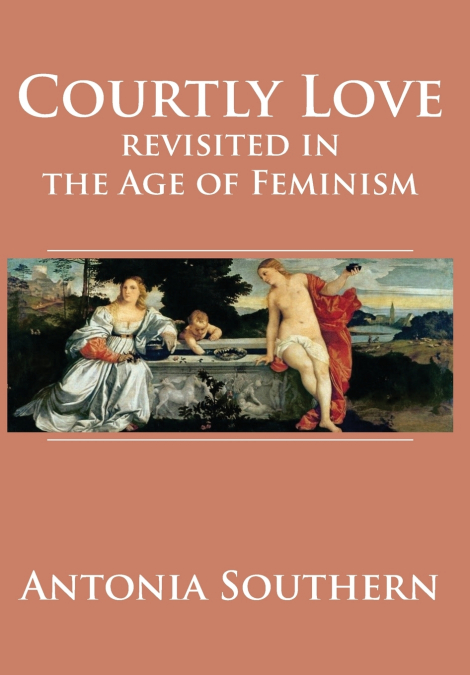
  • Courtly Love revisited in the Age of Feminism
    Antonia Southern
    Courtly love and feminism are strange bedfellows, the one a controversial literary concept, and the other a continuing crusade. Both can be taken seriously or ridiculed. In this incisive book, Antonia Southern tries to do both with both. Courtly Love focuses a feminist lens on fourteen authors, some well-known and some less so. They aimed variously to entertain, amuse, instruct...
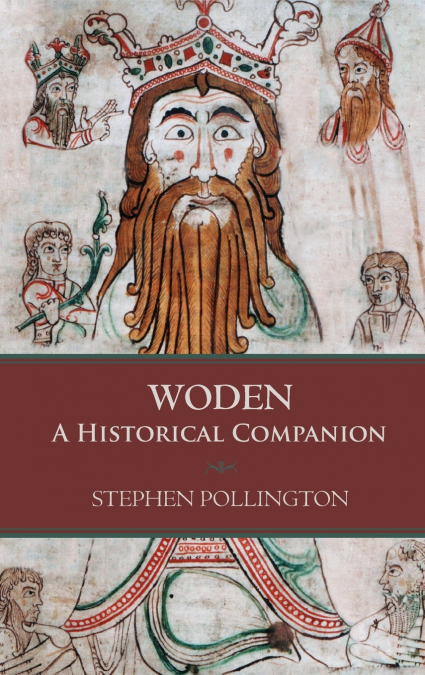
  • Woden
    Stephen Pollington
    All-father, warlord, runemaster, kingmaker, healer-manifold aspects, numerous stories. This book brings together the written and physical evidence for the god called Woden or Óðinn (Odin) in his many guises spanning more than a thousand years. Drawing on the latest interpretations of literary evidence and recent archaeological discoveries, Pollington assembles an impressive arr...
  • The Soul as Virgin Wife
    Amy Hollywood
    The Soul as Virgin Wife presents the first book-length study to give a detailed account of the theological and mystical teachings written by women themselves, especially by those known as beguines, which have been especially neglected. Hollywood explicates the difference between the erotic and imagistic mysticism, arguing that Mechthild, Porete, and Eckhart challenge the sexua...
  • Living Dangerously
    This interesting read explores different marginalized populations in medieval and early modern European society, from prostitutes to writers of satire and reveals how the dominant culture needs its margins. ...
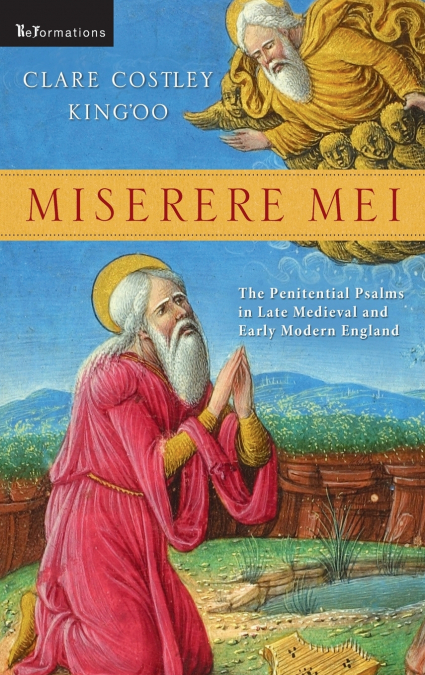
  • Miserere Mei
    Clare Costley King’oo
    King’oo examines the critical importance of the Penitential Psalms in England between the end of the fourteenth and the beginning of the seventeenth century. ...