Existentialism

Existentialism

Pons Malleus

13,27 €
IVA incluido
Disponible
Editorial:
Pons Malleus
Año de edición:
2025
Materia
Ética y filosofía moral
ISBN:
9798232580605
13,27 €
IVA incluido
Disponible

Selecciona una librería:

  • Librería Samer Atenea
  • Kálamo Books
  • Librería Elías (Asturias)
  • Librería Kolima (Madrid)
  • Librería Proteo (Málaga)

Existentialism is not merely a philosophical doctrine but a living, breathing confrontation with what it means to be human. It is a call to face the raw realities of existence-freedom, responsibility, anxiety, alienation, and ultimately, death-without retreating into comforting illusions. This book is born out of that call: to explore, unpack, and wrestle with the core ideas of existentialist thought, not from the distance of academic abstraction, but from within the very questions that define our lives.The existentialist tradition is broad, diverse, and sometimes internally contradictory. It includes thinkers as different in style and emphasis as Søren Kierkegaard, Friedrich Nietzsche, Jean-Paul Sartre, Simone de Beauvoir, Albert Camus, Martin Heidegger, and Maurice Merleau-Ponty. Some rooted their reflections in theology; others were staunch atheists. Some spoke of absurdity, others of transcendence. But what unites them is a shared concern: the centrality of individual existence in an often indifferent or unknowable universe.Existentialism arose in a modern world disoriented by the collapse of traditional values, the disintegration of religious authority, the trauma of war, and the alienation of industrial society. It gave voice to a generation asking not 'What should I believe?' but 'How should I live?' and 'Who am I when all the roles and certainties fall away?' These are not questions with definitive answers. They are lived questions-answers are provisional, contingent, and must be earned through experience, not received by doctrine.This book does not pretend to provide the final word on existentialism. Instead, it aims to guide readers through its major themes and figures, to offer a map for navigating its often challenging terrain. From Kierkegaard’s leap of faith and Nietzsche’s proclamation of the death of God, to Sartre’s radical freedom and Camus’s myth of Sisyphus, we will examine how existentialists have approached the problem of meaning in a world where meaning is not given.Existentialism is sometimes caricatured as dark, nihilistic, or pessimistic. Certainly, it does not flinch from despair. But at its heart, existentialism is profoundly liberating. It tells us that though we are thrown into a world not of our choosing, we are not defined by our circumstances. We are free-and with that freedom comes the burden and the beauty of shaping a life that is authentically our own. In this sense, existentialism is not a philosophy of defeat but one of courage.As you read, you may find that existentialism doesn’t offer comfort-but it does offer clarity. It asks you to look honestly at yourself and your condition, to resist the seductions of evasion and bad faith, and to take responsibility for the shape of your life. That is its enduring power and its enduring challenge.Whether you are encountering these ideas for the first time or returning to them with new eyes, I invite you to read this book not only with the intellect but with the whole of your being. Existentialism is not just something to be studied; it is something to be lived.
Artículos relacionados

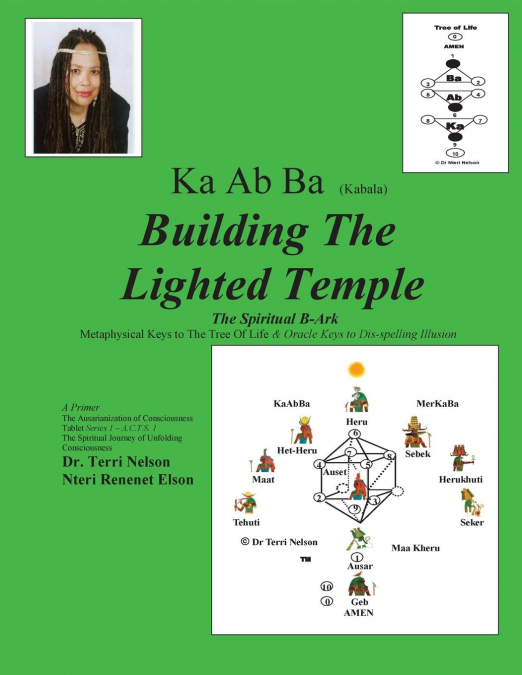
  • Ka Ab Ba Building The Lighted Temple
    Dr Terri R. Nelson / Dr Terri RNelson
    The book KaAbBa Building The Lighted Temple/Metaphysical Keys to the Tree of Life draws a circle that is inclusive of the Afrikan origin of the Ancient Kemetic/Egyptian wisdom. It reveals the undeniable root and link of Ancient Africa to all the religious systems that would develop worldwide. This book is explosive in its power to convey the meaning of KaAbBa, the Medu Neter  (...
    Disponible

    37,41 €

  • Technoethics and the Evolving Knowledge Society
    Rocci Luppicini
    Recently, there has been a major push to rediscover the ethical dimension of technology across the sciences, social sciences, and humanities. Technoethics and the Evolving Knowledge Society: Ethical Issues in Technological Design, Research, Development, and Innovation examines human processes and practices connected to technology embedded within social, political, and moral sph...
  • Kant
    Immanuel Kant
    Kant’s Groundwork of the Metaphysics of Morals is one of the most important works in modern moral philosophy. It belongs beside Plato, Aristotle, Machiavelli, and Hobbes. Here Kant sets out to articulate and defend the Categorical Imperative - the fundamental principle that underlies moral reasoning - and to lay the foundation for a comprehensive account of justice and human vi...
  • On the Duty of Civil Disobedience
    HENRY DAVID THOREAU
    Civil Disobedience argues that citizens should not permit their governments to overrule their consciences, and that they have a duty to avoid allowing their acquiescence to enable the government to make them the agents of injustice. Thoreau was motivated in part by his disgust with slavery and the Mexican-American War, but the sentiments he expresses here are just as pertinent ...
  • Beyond Good and Evil
    Friedrich Nietzsche
    Nietzsche, though primarily a philosopher, wrote widely on art, philology, history, religion, tragedy, culture, and science.  In 1886, at the height of his powers, he published Beyond Good and Evil.  Here he examines much of the best of human thought--dogmatic philosophy, Judeo-Christian morality, science and democracy – and finds it lacking.  Rejecting “slave-morality” he pres...
  • Beyond Good and Evil
    Friedrich Nietzsche
    Nietzsche, though primarily a philosopher, wrote widely on art, philology, history, religion, tragedy, culture, and science.  In 1886, at the height of his powers, he published Beyond Good and Evil.  Here he examines much of the best of human thought--dogmatic philosophy, Judeo-Christian morality, science and democracy – and finds it lacking.  Rejecting “slave-morality” he pres...
    Disponible

    9,99 €

Otros libros del autor

  • Platonismo
    Pons Malleus
    O platonismo, uma das tradições filosóficas mais duradouras e influentes do pensamento ocidental, teve início há mais de dois milênios no fervor intelectual da Atenas Clássica. O que começou como os ensinamentos de um único homem - Platão - logo se transformou em uma rica e complexa linhagem de investigação que atravessou séculos, inspirou gerações e deixou uma marca indelével ...
    Disponible

    13,09 €

  • Peripatetismo
    Pons Malleus
    O peripatetismo - derivado da palavra grega peripatos, que significa 'andar por aí' - era mais do que um método de ensino ou uma nota histórica na vida de Aristóteles; era uma tradição filosófica dinâmica que buscava o conhecimento em movimento, a discussão ao ar livre e a sabedoria fundamentada tanto na razão quanto na experiência. A escola peripatética, fundada por Aristótele...
    Disponible

    13,06 €

  • Escolástica
    Pons Malleus
    Este livro é um convite a uma jornada por uma das tradições intelectuais mais formidáveis ​​e duradouras da filosofia ocidental: a escolástica. Surgida no início da Idade Média e florescendo durante os períodos da Alta e Baixa Idade Média, a escolástica não era meramente um método de discurso acadêmico ou um estilo de ensino - era uma profunda tentativa de reconciliar fé com ra...
    Disponible

    13,12 €

  • Pós-Estruturalismo
    Pons Malleus
    Este livro é um convite a um dos movimentos filosóficos mais desafiadores, provocativos e duradouros do final do século XX: o pós-estruturalismo. Surgindo na esteira da abordagem sistemática do estruturalismo à linguagem, cultura e sociedade, o pós-estruturalismo não rejeitou seu predecessor, mas questionou suas certezas fundamentais. Reorientou a investigação filosófica para a...
    Disponible

    11,72 €

  • Estruturalismo
    Pons Malleus
    Este livro explora um dos movimentos mais influentes, porém frequentemente mal compreendidos, da filosofia e das ciências humanas do século XX: o estruturalismo. Nascido da intersecção da linguística, antropologia, psicanálise e teoria literária, o estruturalismo é menos uma doutrina rígida do que um modo de investigação - uma forma de ver o mundo que privilegia sistemas, relaç...
    Disponible

    13,12 €

  • Racionalismo
    Pons Malleus
    O racionalismo é um dos grandes pilares da investigação filosófica. Em sua essência, reside uma afirmação ousada e duradoura: a de que a razão, independente da experiência sensorial, é a principal fonte e o teste do conhecimento. Para o racionalista, a verdade não é algo meramente visto ou sentido, mas algo que pode ser apreendido pelo intelecto - algo deduzido, explicado e com...
    Disponible

    13,03 €