
Inicio > Humanidades > Filosofía > Ética y filosofía moral > Exercises in Constructive Imagination
Exercises in Constructive Imagination

Exercises in Constructive Imagination

Ermanno Bencivenga

134,23 €
IVA incluido
Disponible
Editorial:
Springer Nature B.V.
Año de edición:
2012
Materia
Ética y filosofía moral
ISBN:
9789401038010
134,23 €
IVA incluido
Disponible

Selecciona una librería:

  • Librería Samer Atenea
  • Librería Aciertas (Toledo)
  • Kálamo Books
  • Librería Perelló (Valencia)
  • Librería Elías (Asturias)
  • Donde los libros
  • Librería Kolima (Madrid)
  • Librería Proteo (Málaga)

Philosophy in this century has often self-consciously presented itself as aiming at the destruction or deconstruction of the philosophical tradition or even of theorizing as such. The basis for such self-description may well be a deep-seated anxiety about death; but whatever its grounds, the procession of distinguished intellectuals who seem mostly concerned with who gets to turn off the light on philosophy on his/her way out is one main reason why philosophy seems to have lost its grip on public opinion and public policy. Which is ironical, because there is often considerable constructive work going on under the pretence of all this `destruction’, but the superficial rhetoric has more currency and impact than the substance of that work. This book brings back the spirit of bold, imaginative, even outrageous theorizing into philosophy, and contains a series of examples of it, venturing playfully into quantum mechanics and political theory, psychoanalysis and environmental ethics, philosophy of language and sociology, without any attempt at `systematically exhausting’ these disparate fields but rather using them as suggestive excuses and arenas for the display of intellectual creativity. There are numerous echoes among the various pieces, and between them and other works by the same author; but again these resonances are not systematized. The result is more to be seen as a collection of snapshots of an intellectual landscape than as a hierarchical regimentation of it.


Artículos relacionados

  • Ka Ab Ba Building The Lighted Temple
    Dr Terri R. Nelson / Dr Terri RNelson
    The book KaAbBa Building The Lighted Temple/Metaphysical Keys to the Tree of Life draws a circle that is inclusive of the Afrikan origin of the Ancient Kemetic/Egyptian wisdom. It reveals the undeniable root and link of Ancient Africa to all the religious systems that would develop worldwide. This book is explosive in its power to convey the meaning of KaAbBa, the Medu Neter  (...
    Disponible

    37,41 €

  • Technoethics and the Evolving Knowledge Society
    Rocci Luppicini
    Recently, there has been a major push to rediscover the ethical dimension of technology across the sciences, social sciences, and humanities. Technoethics and the Evolving Knowledge Society: Ethical Issues in Technological Design, Research, Development, and Innovation examines human processes and practices connected to technology embedded within social, political, and moral sph...
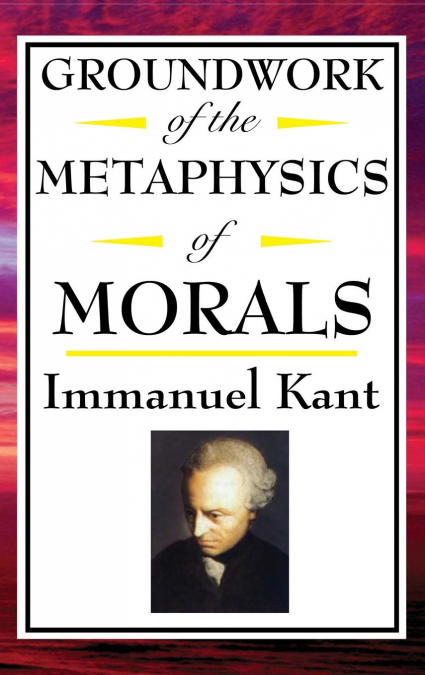
  • Kant
    Immanuel Kant
    Kant’s Groundwork of the Metaphysics of Morals is one of the most important works in modern moral philosophy. It belongs beside Plato, Aristotle, Machiavelli, and Hobbes. Here Kant sets out to articulate and defend the Categorical Imperative - the fundamental principle that underlies moral reasoning - and to lay the foundation for a comprehensive account of justice and human vi...
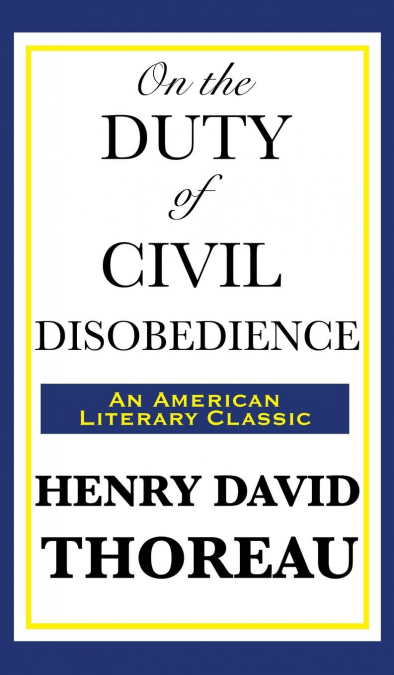
  • On the Duty of Civil Disobedience
    HENRY DAVID THOREAU
    Civil Disobedience argues that citizens should not permit their governments to overrule their consciences, and that they have a duty to avoid allowing their acquiescence to enable the government to make them the agents of injustice. Thoreau was motivated in part by his disgust with slavery and the Mexican-American War, but the sentiments he expresses here are just as pertinent ...
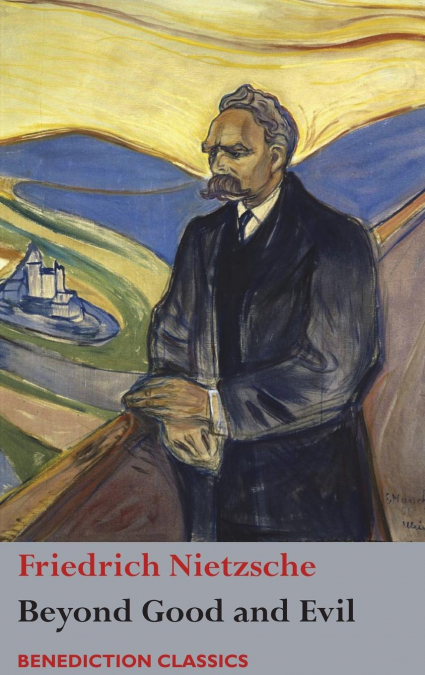
  • Beyond Good and Evil
    Friedrich Nietzsche
    Nietzsche, though primarily a philosopher, wrote widely on art, philology, history, religion, tragedy, culture, and science.  In 1886, at the height of his powers, he published Beyond Good and Evil.  Here he examines much of the best of human thought--dogmatic philosophy, Judeo-Christian morality, science and democracy – and finds it lacking.  Rejecting “slave-morality” he pres...
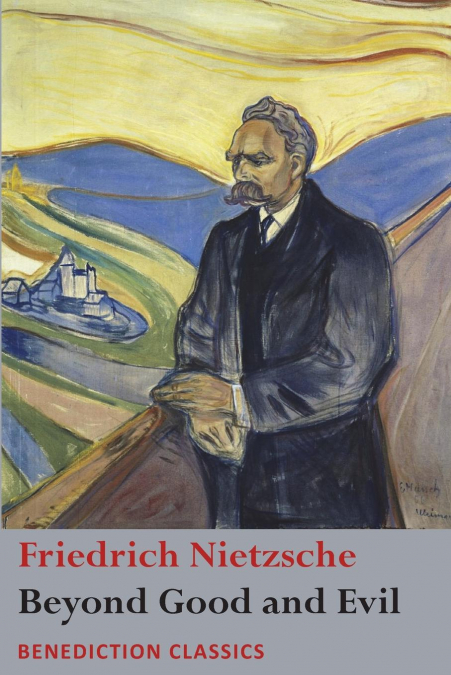
  • Beyond Good and Evil
    Friedrich Nietzsche
    Nietzsche, though primarily a philosopher, wrote widely on art, philology, history, religion, tragedy, culture, and science.  In 1886, at the height of his powers, he published Beyond Good and Evil.  Here he examines much of the best of human thought--dogmatic philosophy, Judeo-Christian morality, science and democracy – and finds it lacking.  Rejecting “slave-morality” he pres...
    Disponible

    9,99 €

Otros libros del autor

  • Theories of the Logos
    Ermanno Bencivenga
    This book offers insight into the nature of meaningful discourse. It presents an argument of great intellectual scope written by an author with more than four decades of experience. Readers will gain a deeper understanding into three theories of the logos: analytic, dialectical, and oceanic. The author first introduces and contrasts these three theories. He then assesses them w...
    Disponible

    122,18 €

  • Theories of the Logos
    Ermanno Bencivenga
    This book offers insight into the nature of meaningful discourse. It presents an argument of great intellectual scope written by an author with more than four decades of experience. Readers will gain a deeper understanding into three theories of the logos: analytic, dialectical, and oceanic. The author first introduces and contrasts these three theories. He then assesses them w...
  • The Discipline of Subjectivity
    Ermanno Bencivenga
    Through an interpretation of Montaigne’s philosophical vision as expressed in his Essays, Ermanno Bencivenga contributes to the current debate about the 'death of the subject' by developing a view of the self as a project of continuous construction rather than the source and foundation of knowledge. This latter, Cartesian conception of self-consciousness as a logical and episte...
  • The Discipline of Subjectivity
    Ermanno Bencivenga
    Through an interpretation of Montaigne’s philosophical vision as expressed in his Essays, Ermanno Bencivenga contributes to the current debate about the 'death of the subject' by developing a view of the self as a project of continuous construction rather than the source and foundation of knowledge. This latter, Cartesian conception of self-consciousness as a logical and episte...
    Disponible

    47,78 €

  • Return From Exile
    Ermanno Bencivenga
    Return from Exile: A Theory of Possibility challenges the modern understanding of possibility, which dates back to Leibniz and sees possibility as evasion, as irrelevant to the actual world. It offers an alternative account where reality is literally constituted of multiple possibilities. ...
  • Ethics Vindicated
    Ermanno Bencivenga
    ...