 Librería Samer Atenea
 Kálamo Books
 Librería Elías (Asturias)
 Librería Kolima (Madrid)
 Librería Proteo (Málaga)
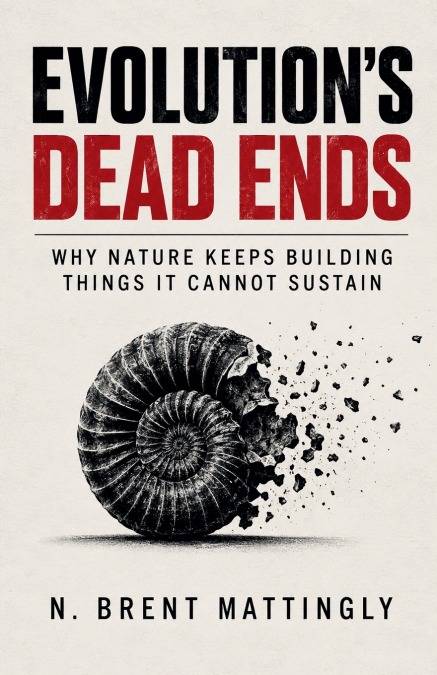
Evolution does not design. It revises. Every organism alive is a modified remnant of earlier forms, built from inherited genes, inherited developmental pathways, and inherited compromises that selection can adjust but rarely erase. Evolution’s Dead Ends is a tour of what that constraint costs.Across twenty eight chapters, the book follows the recurring pattern by which adaptive success becomes vulnerability. Specialization wins in stable environments and strands lineages when conditions change. Arms races and runaway sexual selection push traits past the point of usefulness. Flexibility is spent buying present fitness. Small populations fall into the extinction vortex. Tight mutualisms couple the fates of species that cannot survive alone. Complexity multiplies the ways a system can fail. Ecological success degrades the very conditions that sustained it. Each mechanism is examined on its own terms, then traced to the same root.The fossil record supplies the demonstrations: the end Permian catastrophe, the asteroid that closed the age of dinosaurs, the Pleistocene losses, and the filtering that decides which lineages survive a mass extinction and which do not. The final chapters turn to the present: domesticated species that can no longer live without human care, invasive species, and the question of a sixth mass extinction.The conclusion is unsentimental. Nature is not trying to improve, and it is not efficient. It selects for what works now, using what existed before, under conditions that may not exist tomorrow.