
Evaluating the Effectiveness of Fish Stock Rebuilding Plans in the United States

Evaluating the Effectiveness of Fish Stock Rebuilding Plans in the United States

AA.VV

45,24 €
IVA incluido
Disponible
Editorial:
National Academies Press
Año de edición:
2014
ISBN:
9780309292306
45,24 €
IVA incluido
Disponible

Selecciona una librería:

  • Librería Samer Atenea
  • Librería Aciertas (Toledo)
  • Kálamo Books
  • Librería Perelló (Valencia)
  • Librería Elías (Asturias)
  • Donde los libros
  • Librería Kolima (Madrid)
  • Librería Proteo (Málaga)

In the United States (U.S.), the Fishery Conservation and Management Act of 1976, now known as the Magnuson-Stevens Fishery Conservation and Management Act (MSFCMA), was the first major legislation to regulate federal fisheries in the U.S. Fishery Conservation Zone (later designated as the U.S. exclusive economic zone). The re-authorization of the MSFCMA passed by Congress in 2006 included additional mandates for conserving and rebuilding fish stocks and strengthening the role of scientific advice in fisheries management. Approximately 20% of the fisheries that have been assessed are considered overfished according to the September 2012 stock status Report to Congress prepared by the U.S. National Oceanic and Atmospheric Administration (NOAA). Overfished refers to a stock that is below the minimum stock size threshold, commonly set to half the stock size at which maximum sustainable yield (MSY) is achieved. Under the provisions of the MSFCMA, rebuilding plans for overfished stocks should take no more than 10 years, except when certain provisions apply. Rebuilding mandates have led to substantial reductions in catch and effort for many fisheries, raising concerns about the consequent social and economic impacts to the fishing communities and industry. Evaluating the Effectiveness of Fish Stock Rebuilding Plans in the United States reviews the technical specifications that underlie current federally-implemented rebuilding plans, and the outcomes of those plans. According to this report, fisheries management has evolved substantially since 1977 when the U.S. extended its jurisdiction to 8 200 miles, in the direction of being more prescriptive and precautionary in terms of preventing overfishing and rebuilding overfished fisheries. However, the trade-offs between precaution and yield have not been fully evaluated. Evaluating the Effectiveness of Fish Stock Rebuilding Plans in the United States discusses the methods and criteria used to set target fishing mortality and biomass levels for rebuilding overfished stocks, and to determine the probability that a particular stock will rebuild by a certain date. This report will be of interest to the fishing industry, ecology professionals, and members of Congress as they debate the renewal of the Magnuson-Stevens Fishery Conservation and Management Act.


Artículos relacionados

  • Advances in Aquatic Ecology Vol. 3
    Vishwas B. Sakhare
    The present book is compendium of recent original research in the field of aquatic ecology. It is an assemblage of up-to-date information of rapid advances and developments taking place in the field of aquatic ecology. The book is a unique compilation of 21 chapters which discusses exhaustive studies on planktonology physico-chemical environment fisheries toxicology physiology ...
    Disponible

    83,20 €

  • A Manual of Aquatic Fungi: Chytridiomycetes and Oomycetes
    R D Khulbe
    Aquatic fungi contribute to the energy flow and productivity of an aquatic and semi aquatic ecosystems by their active role in the utilization and biodeterioration of organic materials. These fungi also possess the ability to parasitize aquatic plants and animals including fishes under certain conditions. Physiology environmental needs and activity of these fungi vary with thei...
    Disponible

    72,80 €

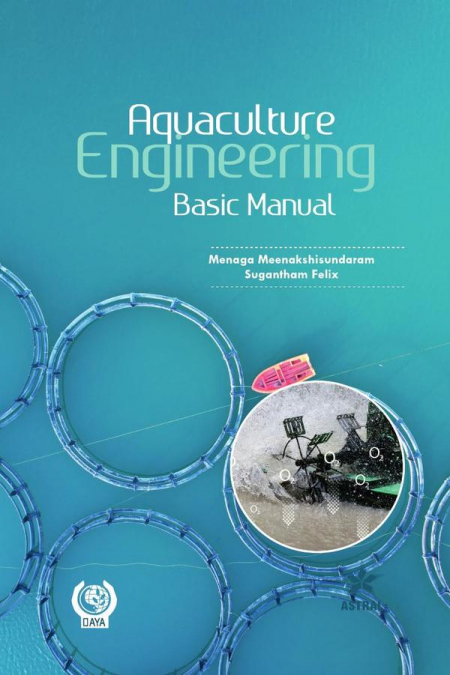
  • Aquaculture Engineering: Basic Manual
    Menaga Meenakshisundaram
    This textbook gives a fresh approach to an introductory course in Aquaculture Engineering. Its unique feature is based on the collation of the existing books to provide ready to read content for the easy understanding of the students. The authors’ primary goal is to teach the aspiring aquaculture student all fundamental tools needed to understand analyse and design a wide range...
    Disponible

    42,12 €

  • Aquaculture Technology
    B. Chaudhuri Hiralal
    The book focuses a realistic and factual account on the resurgence of aquaculture and birth of blue (protein) revolution. The resurgence got a booming start on the success of induced breeding of carps in mid 1957. Thereafter further research successes gained momentum year after year in the fields of high fish seed production integrated polyculture hybridization training of pers...
    Disponible

    83,20 €

  • Biotechnology and Genetics in Fisheries and Aquaculture
    Bradley Brooks
    It is written in a lucid style with the most recent advances and with theoretical discussions for easy understanding of the subject. Well labelled illustrations diagrams tables and figures amply support the text wherever necessary. It provides basic principles of biotechnology and fish genetics in a simple and easy language. The book is also supported with a comprehensive gloss...
    Disponible

    176,28 €

  • Fish Nutrition and Feed Technology
    Yushinta Muskar
    Fundamentals of Fish Nutrition : Provide a comprehensive overview of the basic principles of fish nutrition including the nutritional requirements of different fish species essential nutrients (proteins lipids carbohydrates vitamins and minerals) and their roles in growth health and reproduction.Feed Formulation and Ingredients: Explore the formulation of fish feed including th...
    Disponible

    182,00 €