Inicio > Humanidades > Filosofía > Ética y filosofía moral > Euthanasie - aktive Sterbehilfe
Euthanasie - aktive Sterbehilfe

Euthanasie - aktive Sterbehilfe

Mandy Beyer

25,24 €
IVA incluido
Disponible
Editorial:
GRIN Verlag
Año de edición:
2008
Materia
Ética y filosofía moral
ISBN:
9783640108640
25,24 €
IVA incluido
Disponible

Selecciona una librería:

  • Librería Samer Atenea
  • Librería Aciertas (Toledo)
  • Kálamo Books
  • Librería Perelló (Valencia)
  • Librería Elías (Asturias)
  • Donde los libros
  • Librería Kolima (Madrid)
  • Librería Proteo (Málaga)

Studienarbeit aus dem Jahr 2001 im Fachbereich Ethik, Note: 1,1, Berufsakademie Sachsen in Breitenbrunn (FB Sozialpädagogik), Veranstaltung: Ethik, Sprache: Deutsch, Abstract: Der Begriff Euthanasie ist aus dem griechischen hergeleitet und bedeutet soviel wie: 'einen leichten, schönen Tod haben'. Euthanasie ist das aktive, bewußte ärztliche Eingreifen zur Beendigung des Lebens auf ausdrücklichen Wunsch des Patienten. Ziel der Handlung ist es, den schnellen Tod des Patienten herbeizuführen - zu töten. Geht man in der Geschichte zurück, so stellt man fest, das der Begriff Euthanasie eine andere Bedeutung hat als aktive Sterbehilfe. Der Begriff Euthanasie könnte ein Synonym sein für das Anliegen der Hospizbewegung.Hierbei wird von den Mitgliedern dieser Bewegung immer wieder betont, daß sie Sterbehilfe grundsätzlich ablehnen und in ihrer eigenen Aktivität eine Alternative zur aktiven Sterbehilfe sehen. In Deutschland wird besonders heftig über das Thema aktive Sterbehilfe diskutiert. Vielmals liegt es daran, daß viele Menschen vor und während des letzten Krieges von deutschen Ärzten umgebracht wurden - ihrer Rasse, ihrer Hautfarbe, einer Diagnose wegen oder weil sie physisch oder psychisch behindert waren.Obwohl die Niederlande als sehr humanitär gelten, haben sie die Sterbehilfe in den letzten Jahren zunehmend legalisiert. Sie gilt zwar immer noch als verboten, wird aber von der Justiz unter bestimmten Voraussetzungen geduldet.In der Auseinandersetzung um Sterbehilfe und Euthanasie wird von den Befürwortern dieser Maßnahmen mit dem Mitleid argumentiert, das man gegenüber todkranken und schwer leidenden Menschen haben müsse. Das Schicksal solcher Menschen, die auch selbst diese Hilfe zum Sterben begehrten, weil Sie ihre Schmerzen und ihre Abhängigkeit von anderen nicht mehr ertragen könnten, müsse so erleichtert werden. Eine Variante dieser Haltung stellt beispielsweise die Forderung nach der Tötung von schwerstbehinderten Neugeborenen nach der Geburt dar. Beide


Artículos relacionados

  • Ka Ab Ba Building The Lighted Temple
    Dr Terri R. Nelson / Dr Terri RNelson
    The book KaAbBa Building The Lighted Temple/Metaphysical Keys to the Tree of Life draws a circle that is inclusive of the Afrikan origin of the Ancient Kemetic/Egyptian wisdom. It reveals the undeniable root and link of Ancient Africa to all the religious systems that would develop worldwide. This book is explosive in its power to convey the meaning of KaAbBa, the Medu Neter  (...
    Disponible

    37,41 €

  • Technoethics and the Evolving Knowledge Society
    Rocci Luppicini
    Recently, there has been a major push to rediscover the ethical dimension of technology across the sciences, social sciences, and humanities. Technoethics and the Evolving Knowledge Society: Ethical Issues in Technological Design, Research, Development, and Innovation examines human processes and practices connected to technology embedded within social, political, and moral sph...
  • Kant
    Immanuel Kant
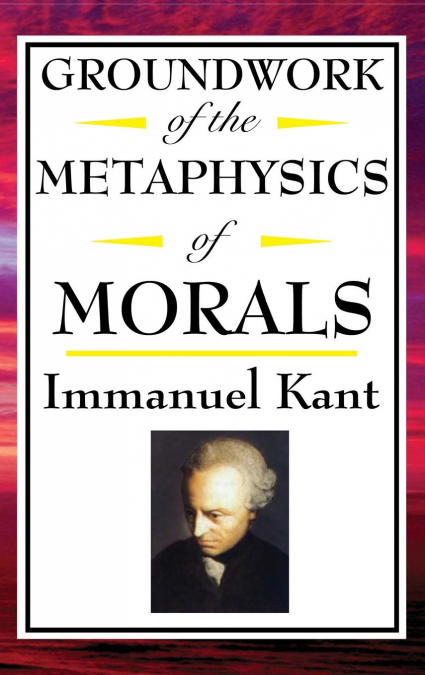
    Kant’s Groundwork of the Metaphysics of Morals is one of the most important works in modern moral philosophy. It belongs beside Plato, Aristotle, Machiavelli, and Hobbes. Here Kant sets out to articulate and defend the Categorical Imperative - the fundamental principle that underlies moral reasoning - and to lay the foundation for a comprehensive account of justice and human vi...
  • On the Duty of Civil Disobedience
    HENRY DAVID THOREAU
    Civil Disobedience argues that citizens should not permit their governments to overrule their consciences, and that they have a duty to avoid allowing their acquiescence to enable the government to make them the agents of injustice. Thoreau was motivated in part by his disgust with slavery and the Mexican-American War, but the sentiments he expresses here are just as pertinent ...
  • Beyond Good and Evil
    Friedrich Nietzsche
    Nietzsche, though primarily a philosopher, wrote widely on art, philology, history, religion, tragedy, culture, and science.  In 1886, at the height of his powers, he published Beyond Good and Evil.  Here he examines much of the best of human thought--dogmatic philosophy, Judeo-Christian morality, science and democracy – and finds it lacking.  Rejecting “slave-morality” he pres...
  • Beyond Good and Evil
    Friedrich Nietzsche
    Nietzsche, though primarily a philosopher, wrote widely on art, philology, history, religion, tragedy, culture, and science.  In 1886, at the height of his powers, he published Beyond Good and Evil.  Here he examines much of the best of human thought--dogmatic philosophy, Judeo-Christian morality, science and democracy – and finds it lacking.  Rejecting “slave-morality” he pres...
    Disponible

    9,99 €

Otros libros del autor

  • Sozialarbeit und Demenz
    Mandy Beyer
    Inhaltsangabe:Einleitung: Die vorliegende Arbeit beschreibt Aspekte, in Zusammenhang mit der Konzeptionsentwicklung für eine solches Pflegezentrum betrachtet werden müssen. Die Betrachtung beginnt bei grundlegenden allgemeinen Punkten zum Thema Demenz und endet bei der spezifischen Betrachtung des institutionellen Lebensraumes. Weiterhin werden verschiedene Therapieformen besc...
    Disponible

    58,06 €