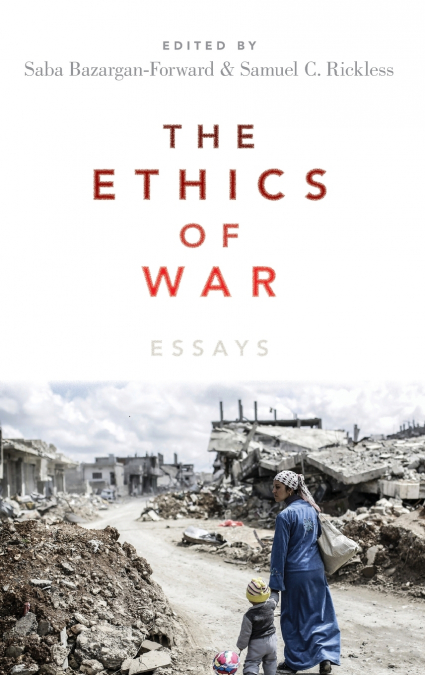

Ethics of War

Ethics of War


173,62 €
IVA incluido
Consulta disponibilidad
Editorial:
Oxford University Press
Año de edición:
2017
Materia
Ética y filosofía moral
ISBN:
9780199376148

Selecciona una librería:

  • Librería Samer Atenea
  • Librería Aciertas (Toledo)
  • Kálamo Books
  • Librería Perelló (Valencia)
  • Librería Elías (Asturias)
  • Donde los libros
  • Librería Kolima (Madrid)
  • Librería Proteo (Málaga)

Just War theory - as it was developed by the Catholic theologians of medieval Europe and the jurists of the Renaissance - is a framework for the moral and legal evaluation of armed conflicts. To this day, Just War theory informs the judgments of ethicists, government officials, international lawyers, religious scholars, news coverage, and perhaps most importantly, the public as a whole. The influence of Just War theory is as vast as it is subtle - we have been socialized into evaluating wars largely according to the principles of this medieval theory, which, according to the eminent philosopher David Rodin, is 'one of the few basic fixtures of medieval philosophy to remain substantially unchallenged in the modern world'. Some of the most basic assumptions of Just War Theory have been dismantled in a barrage of criticism and analysis in the first dozen years of the 21st century. 'The Ethics of War' continues and pushes past this trend. This anthology is an authoritative treatment of the ethics and law of war by both the eminent scholars who first challenged the orthodoxy of Just War theory, as well as by new thinkers. The twelve original essays span both foundational and topical issues in the ethics of war, including an investigation of: whether there is a 'greater-good' obligation that parallels the canonical lesser-evil justification in war; the conditions under which citizens can wage war against their own government; whether there is a limit to the number of combatants on the unjust side who can be permissibly killed; whether the justice of the cause for which combatants fight affects the moral permissibility of fighting; whether duress ever justifies killing in war; the role that collective liability plays in the ethics of war; whether targeted killing is morally and legally permissible; the morality of legal prohibitions on the use of indiscriminate weapons; the justification for the legal distinction between directly and indirectly harming civilians; whether human rights of unjust combatants are more prohibitive than have been thought; the moral repair of combatants suffering from PTSD; and the moral categories and criteria needed to understand the proper justification for ending war.
Artículos relacionados

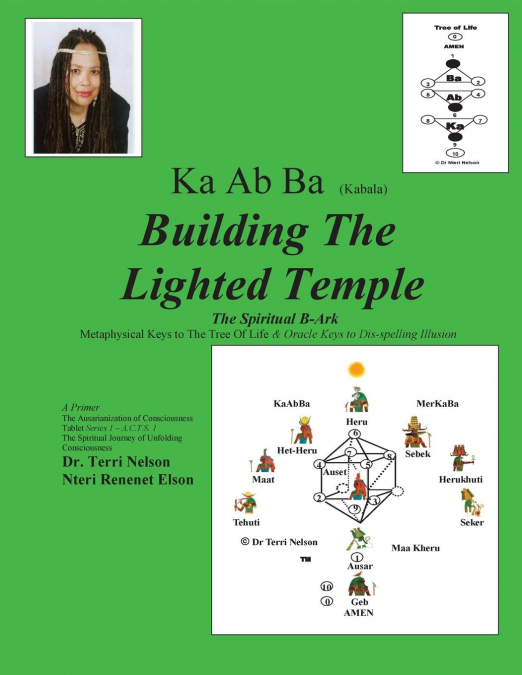
  • Ka Ab Ba Building The Lighted Temple
    Dr Terri R. Nelson / Dr Terri RNelson
    The book KaAbBa Building The Lighted Temple/Metaphysical Keys to the Tree of Life draws a circle that is inclusive of the Afrikan origin of the Ancient Kemetic/Egyptian wisdom. It reveals the undeniable root and link of Ancient Africa to all the religious systems that would develop worldwide. This book is explosive in its power to convey the meaning of KaAbBa, the Medu Neter  (...
    Disponible

    37,41 €

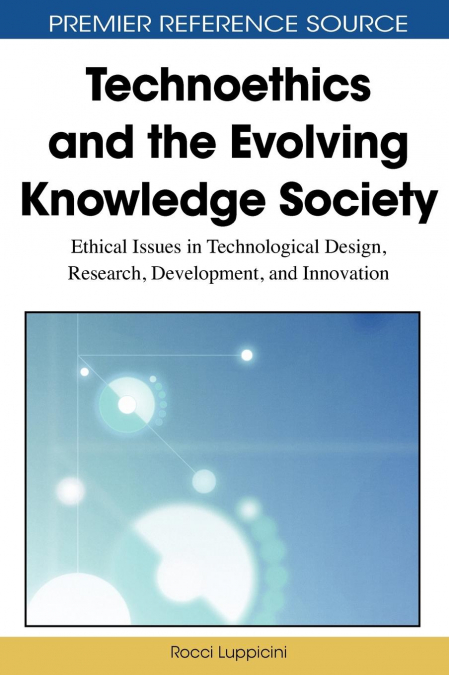
  • Technoethics and the Evolving Knowledge Society
    Rocci Luppicini
    Recently, there has been a major push to rediscover the ethical dimension of technology across the sciences, social sciences, and humanities. Technoethics and the Evolving Knowledge Society: Ethical Issues in Technological Design, Research, Development, and Innovation examines human processes and practices connected to technology embedded within social, political, and moral sph...
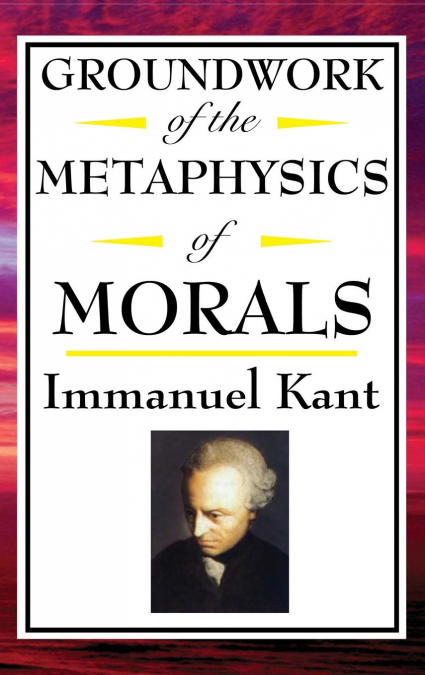
  • Kant
    Immanuel Kant
    Kant’s Groundwork of the Metaphysics of Morals is one of the most important works in modern moral philosophy. It belongs beside Plato, Aristotle, Machiavelli, and Hobbes. Here Kant sets out to articulate and defend the Categorical Imperative - the fundamental principle that underlies moral reasoning - and to lay the foundation for a comprehensive account of justice and human vi...
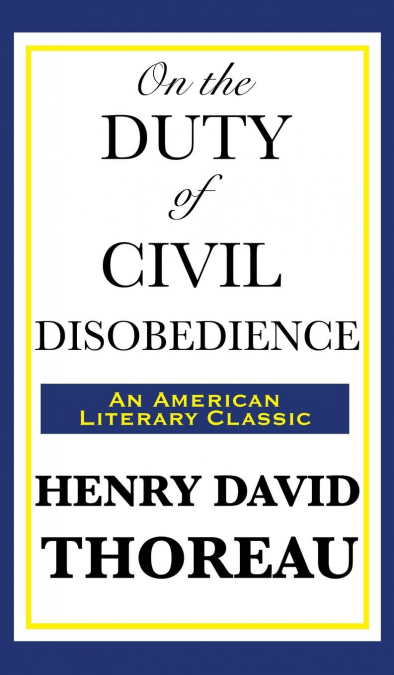
  • On the Duty of Civil Disobedience
    HENRY DAVID THOREAU
    Civil Disobedience argues that citizens should not permit their governments to overrule their consciences, and that they have a duty to avoid allowing their acquiescence to enable the government to make them the agents of injustice. Thoreau was motivated in part by his disgust with slavery and the Mexican-American War, but the sentiments he expresses here are just as pertinent ...
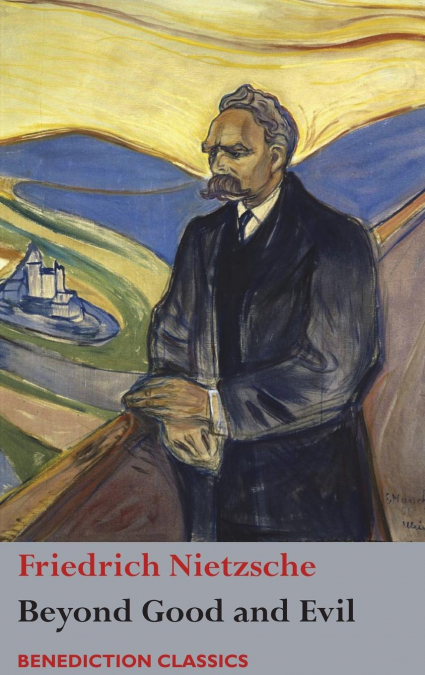
  • Beyond Good and Evil
    Friedrich Nietzsche
    Nietzsche, though primarily a philosopher, wrote widely on art, philology, history, religion, tragedy, culture, and science.  In 1886, at the height of his powers, he published Beyond Good and Evil.  Here he examines much of the best of human thought--dogmatic philosophy, Judeo-Christian morality, science and democracy – and finds it lacking.  Rejecting “slave-morality” he pres...
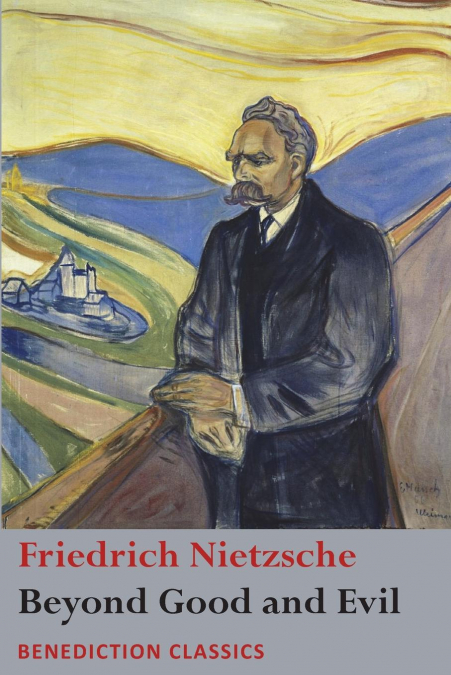
  • Beyond Good and Evil
    Friedrich Nietzsche
    Nietzsche, though primarily a philosopher, wrote widely on art, philology, history, religion, tragedy, culture, and science.  In 1886, at the height of his powers, he published Beyond Good and Evil.  Here he examines much of the best of human thought--dogmatic philosophy, Judeo-Christian morality, science and democracy – and finds it lacking.  Rejecting “slave-morality” he pres...
    Disponible

    9,99 €