
Ethics of Information

Ethics of Information

Luciano Floridi

140,61 €
IVA incluido
Consulta disponibilidad
Editorial:
Oxford University Press
Año de edición:
2013
Materia
Ética y filosofía moral
ISBN:
9780199641321

Selecciona una librería:

  • Librería Samer Atenea
  • Librería Aciertas (Toledo)
  • Kálamo Books
  • Librería Perelló (Valencia)
  • Librería Elías (Asturias)
  • Donde los libros
  • Librería Kolima (Madrid)
  • Librería Proteo (Málaga)

Luciano Floridi develops an original ethical framework for dealing with the new challenges posed by Information and Communication Technologies (ICTs). ICTs have profoundly changed many aspects of life, including the nature of entertainment, work, communication, education, health care, industrial production and business, social relations, and conflicts. They have had a radical and widespread impact on our moral lives and on contemporary ethical debates. Privacy, ownership, freedom of speech, responsibility, technological determinism, the digital divide, and pornography online are only some of the pressing issues that characterise the ethical discourse in the information society. They are the subject of Information Ethics (IE), the new philosophical area of research that investigates the ethical impact of ICTs on human life and society. Since the seventies, IE has been a standard topic in many curricula. In recent years, there has been a flourishing of new university courses, international conferences, workshops, professional organizations, specialized periodicals and research centres. However, investigations have so far been largely influenced by professional and technical approaches, addressing mainly legal, social, cultural and technological problems. This book is the first philosophical monograph entirely and exclusively dedicated to it. Floridi lays down, for the first time, the conceptual foundations for IE. He does so systematically, by pursuing three goals: a) a metatheoretical goal: it describes what IE is, its problems, approaches and methods;b) an introductory goal: it helps the reader to gain a better grasp of the complex and multifarious nature of the various concepts and phenomena related to computer ethics;c) an analytic goal: it answers several key theoretical questions of great philosophical interest, arising from the investigation of the ethical implications of ICTs. Although entirely independent of The Philosophy of Information (OUP, 2011), Floridi’s previous book, The Ethics of Information complements it as new work on the foundations of the philosophy of information.

Artículos relacionados

  • Ka Ab Ba Building The Lighted Temple
    Dr Terri R. Nelson / Dr Terri RNelson
    The book KaAbBa Building The Lighted Temple/Metaphysical Keys to the Tree of Life draws a circle that is inclusive of the Afrikan origin of the Ancient Kemetic/Egyptian wisdom. It reveals the undeniable root and link of Ancient Africa to all the religious systems that would develop worldwide. This book is explosive in its power to convey the meaning of KaAbBa, the Medu Neter  (...
    Disponible

    37,41 €

  • Technoethics and the Evolving Knowledge Society
    Rocci Luppicini
    Recently, there has been a major push to rediscover the ethical dimension of technology across the sciences, social sciences, and humanities. Technoethics and the Evolving Knowledge Society: Ethical Issues in Technological Design, Research, Development, and Innovation examines human processes and practices connected to technology embedded within social, political, and moral sph...
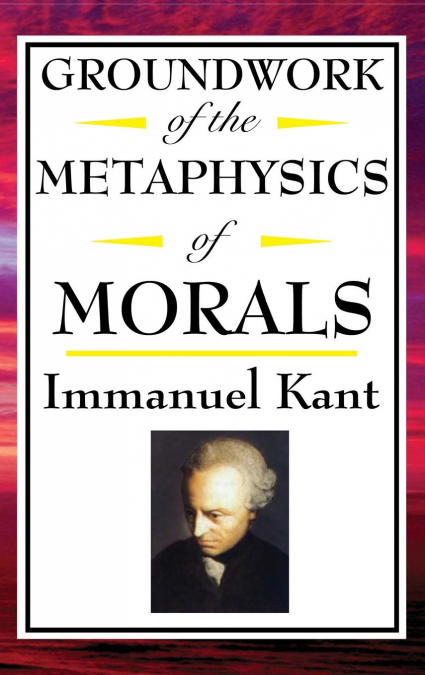
  • Kant
    Immanuel Kant
    Kant’s Groundwork of the Metaphysics of Morals is one of the most important works in modern moral philosophy. It belongs beside Plato, Aristotle, Machiavelli, and Hobbes. Here Kant sets out to articulate and defend the Categorical Imperative - the fundamental principle that underlies moral reasoning - and to lay the foundation for a comprehensive account of justice and human vi...
  • On the Duty of Civil Disobedience
    HENRY DAVID THOREAU
    Civil Disobedience argues that citizens should not permit their governments to overrule their consciences, and that they have a duty to avoid allowing their acquiescence to enable the government to make them the agents of injustice. Thoreau was motivated in part by his disgust with slavery and the Mexican-American War, but the sentiments he expresses here are just as pertinent ...
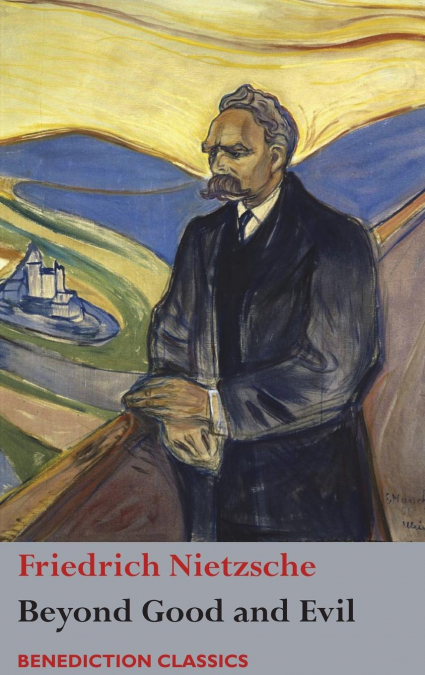
  • Beyond Good and Evil
    Friedrich Nietzsche
    Nietzsche, though primarily a philosopher, wrote widely on art, philology, history, religion, tragedy, culture, and science.  In 1886, at the height of his powers, he published Beyond Good and Evil.  Here he examines much of the best of human thought--dogmatic philosophy, Judeo-Christian morality, science and democracy – and finds it lacking.  Rejecting “slave-morality” he pres...
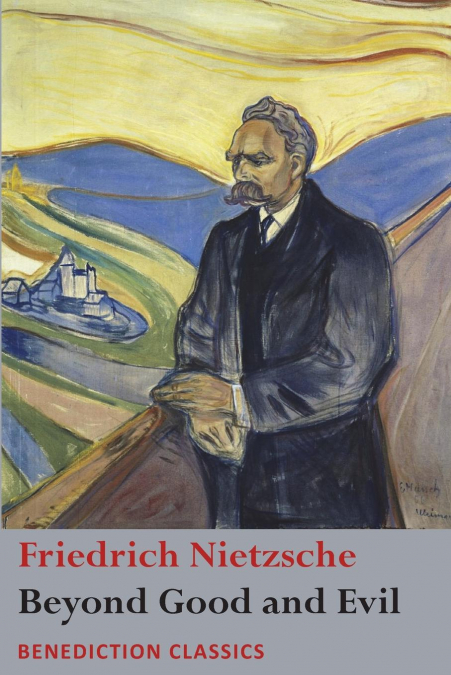
  • Beyond Good and Evil
    Friedrich Nietzsche
    Nietzsche, though primarily a philosopher, wrote widely on art, philology, history, religion, tragedy, culture, and science.  In 1886, at the height of his powers, he published Beyond Good and Evil.  Here he examines much of the best of human thought--dogmatic philosophy, Judeo-Christian morality, science and democracy – and finds it lacking.  Rejecting “slave-morality” he pres...
    Disponible

    9,99 €

Otros libros del autor

  • Logic of Information
    Luciano Floridi
    Luciano Floridi presents an innovative approach to philosophy, conceived as conceptual design. He explores how we make, transform, refine, and improve the objects of our knowledge. His starting point is that reality provides the data, to be understood as constraining affordances, and we transform them into information, like semantic engines. Such transformation or repurposing i...
  • The Routledge Handbook of Philosophy of Information
    Luciano Floridi
    The Routledge Handbook of Philosophy of Information is an outstanding reference source to the key topics and debates in this exciting subject. Essential reading for students and researchers in philosophy, computer science and communication studies. ...
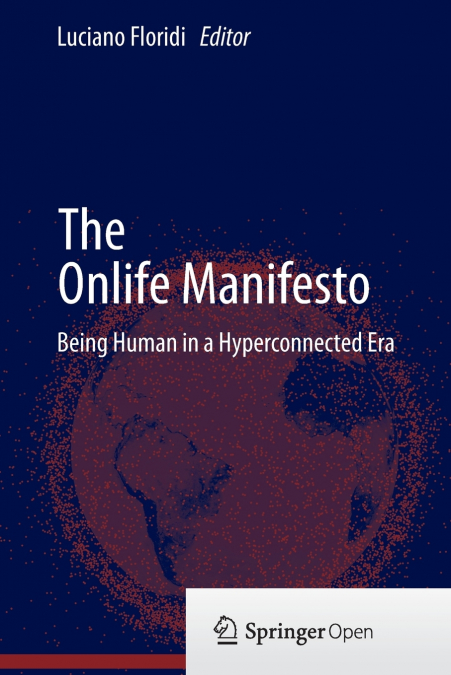
  • The Onlife Manifesto
    Luciano Floridi
    ...
    Disponible

    72,49 €

  • The Onlife Manifesto
    Luciano Floridi
    What is the impact of information and communication technologies (ICTs) on the human condition? In order to address this question, in 2012 the European Commission organized a research project entitled The Onlife Initiative: concept reengineering for rethinking societal concerns in the digital transition. This volume collects the work of the Onlife Initiative. It explores how th...
  • The Onlife Manifesto
    Luciano Floridi
    What is the impact of information and communication technologies (ICTs) on the human condition? In order to address this question, in 2012 the European Commission organized a research project entitled The Onlife Initiative: concept reengineering for rethinking societal concerns in the digital transition. This volume collects the work of the Onlife Initiative. It explores how th...
    Disponible

    47,89 €

  • The Fourth Revolution
    Luciano Floridi
    Who are we, and how do we relate to each other? Luciano Floridi, one of the leading figures in contemporary philosophy, argues that the explosive developments in Information and Communication Technologies (ICTs) is changing the answer to these fundamental human questions.As the boundaries between life online and offline break down, and we become seamlessly connected to each oth...