
Inicio > Humanidades > Filosofía > Ética y filosofía moral > Ethical Materialities in Art and Moving Images
Ethical Materialities in Art and Moving Images

Ethical Materialities in Art and Moving Images

Silke Panse

50,81 €
IVA incluido
Disponible
Editorial:
Bloomsbury Publishing plc
Año de edición:
2026
Materia
Ética y filosofía moral
ISBN:
9781350427181
50,81 €
IVA incluido
Disponible

Selecciona una librería:

  • Librería Samer Atenea

  • Kálamo Books
  • Librería Elías (Asturias)
  • Librería Kolima (Madrid)
  • Librería Proteo (Málaga)

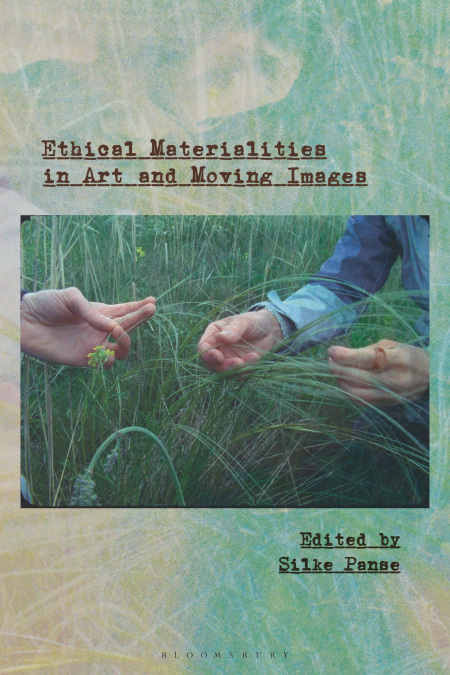
Starting from the premise that after modernism and postmodernism - in the Anthropocene - an artwork cannot rest upon its separation from the planet, this volume developsnew ethical practice and thought with respect to art, philosophy and moving images. Practitioners and theorists examine how the relations between the ethical and the material figure in a context in which a dearth of ethical practice and thought has caused the materialities of the Anthropocene and the climate catastrophe.Ethics are generally regarded as constituted through immaterial relations guided by moral imperatives. By contrast, this volume argues that the singular ethicalities that are manifested in a work cannot be captured by abstract ethics. The explorations of the ethical here are not prescriptive, but creative. Through artistic and philosophical thought and practice,the contributions move beyond the division between an active practice of ethics and a contemplative theory of aesthetics. They ask what ethicalities and materialities are at play in the relations between the artist, the art, their worlds and the planet after new materialism and posthumanism.Rather than transcending the ethical through the material or the material through the ethical, the contributions articulate the singular relations between them and consider the inter- and intra-active ethical and material relations of art and images in biodiverse environments. They suggest that to bring out the ethical dimensions of the material and the material dimension of the ethical - without identifying one with the other -is a responsibility of art and images. 6

Artículos relacionados

  • Ka Ab Ba Building The Lighted Temple
    Dr Terri R. Nelson / Dr Terri RNelson
    The book KaAbBa Building The Lighted Temple/Metaphysical Keys to the Tree of Life draws a circle that is inclusive of the Afrikan origin of the Ancient Kemetic/Egyptian wisdom. It reveals the undeniable root and link of Ancient Africa to all the religious systems that would develop worldwide. This book is explosive in its power to convey the meaning of KaAbBa, the Medu Neter  (...
    Disponible

    37,41 €

  • Technoethics and the Evolving Knowledge Society
    Rocci Luppicini
    Recently, there has been a major push to rediscover the ethical dimension of technology across the sciences, social sciences, and humanities. Technoethics and the Evolving Knowledge Society: Ethical Issues in Technological Design, Research, Development, and Innovation examines human processes and practices connected to technology embedded within social, political, and moral sph...
  • Kant
    Immanuel Kant
    Kant’s Groundwork of the Metaphysics of Morals is one of the most important works in modern moral philosophy. It belongs beside Plato, Aristotle, Machiavelli, and Hobbes. Here Kant sets out to articulate and defend the Categorical Imperative - the fundamental principle that underlies moral reasoning - and to lay the foundation for a comprehensive account of justice and human vi...
  • On the Duty of Civil Disobedience
    HENRY DAVID THOREAU
    Civil Disobedience argues that citizens should not permit their governments to overrule their consciences, and that they have a duty to avoid allowing their acquiescence to enable the government to make them the agents of injustice. Thoreau was motivated in part by his disgust with slavery and the Mexican-American War, but the sentiments he expresses here are just as pertinent ...
  • Beyond Good and Evil
    Friedrich Nietzsche
    Nietzsche, though primarily a philosopher, wrote widely on art, philology, history, religion, tragedy, culture, and science.  In 1886, at the height of his powers, he published Beyond Good and Evil.  Here he examines much of the best of human thought--dogmatic philosophy, Judeo-Christian morality, science and democracy – and finds it lacking.  Rejecting “slave-morality” he pres...
  • Beyond Good and Evil
    Friedrich Nietzsche
    Nietzsche, though primarily a philosopher, wrote widely on art, philology, history, religion, tragedy, culture, and science.  In 1886, at the height of his powers, he published Beyond Good and Evil.  Here he examines much of the best of human thought--dogmatic philosophy, Judeo-Christian morality, science and democracy – and finds it lacking.  Rejecting “slave-morality” he pres...
    Disponible

    9,99 €