

 Librería Samer Atenea
 Kálamo Books
 Librería Elías (Asturias)
 Librería Kolima (Madrid)
 Librería Proteo (Málaga)
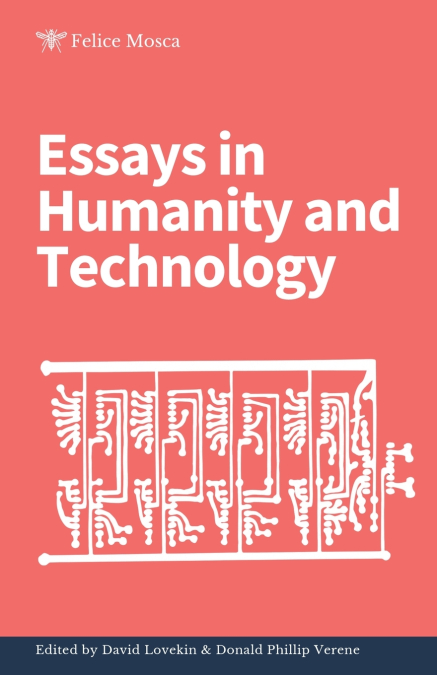
These essays were presented at a conference at Sauk Valley College, Dixon, Illinois, in 1977. Five decades later, the relation they examine between technology and what it means to be human has not changed. Today they stand in the same light. They are as if just written.The oldest instruction in Western consciousness given to human beings is the inscription placed in the pronaos of the temple of Apollo at Delphi-gnothi seauton, 'know thyself.' The visitor entering the temple faced this precept. It was one of the sententiae of the Seven Sages, likely from Thales of Miletus, known for his discovery of water as the first element of the natural world.The French philosophic thinker Jacques Ellul is the Thales of modern society. Ellul discovered that the modern world is based wholly on technique and the desire for the technical. Ellul said: 'Technique has only one principle: efficient ordering.' Furthermore, 'when technique enters into every area of life, including the human, it ceases to be external to human beings and becomes their very substance.' Left out of this substance is the attainment of self-knowledge. There is no technique for self-knowledge.The question that the Platonic Socrates states to Phaedrus as they walk outside the boundaries of Athens is not considered. Socrates asks: 'Am I a beast more complicated and savage than Typhon [a multiform beast with a hundred heads resembling many animal species], or am I a tamer, simpler animal with a share in a divine and gentle nature?' It is our own question, our inheritance from the Delphic inscription. Technology offers us no response. It asks us to look the other way as we find ourselves in 'technique’s filing cabinet.' The thoughts of these essays offer us some consolation that only philosophic thought can give-philosophia, the love of wisdom.Our intention in reissuing this volume is that which Giambattista Vico, in his address to the Academy of Oziosi, takes from Horace: 'Right thinking is the first principle and source of writing, because there is no eloquence without truth and dignity; of these two parts wisdom is composed.' In his seventh oration Vico says 'the whole is the flower of wisdom.' The speech of the whole is driven by eloquence; it always has an aspect of the poetic. In Ars poetica, Horace also says that what is poetic aims 'either to benefit, or to amuse, or to utter words at once both pleasing and helpful to life.' These essays aim, to an extent, to approach Horace’s criteria. Above all, they endorse human dignity in a world that overlooks it.





