 Librería Samer Atenea
 Kálamo Books
 Librería Elías (Asturias)
 Librería Kolima (Madrid)
 Librería Proteo (Málaga)
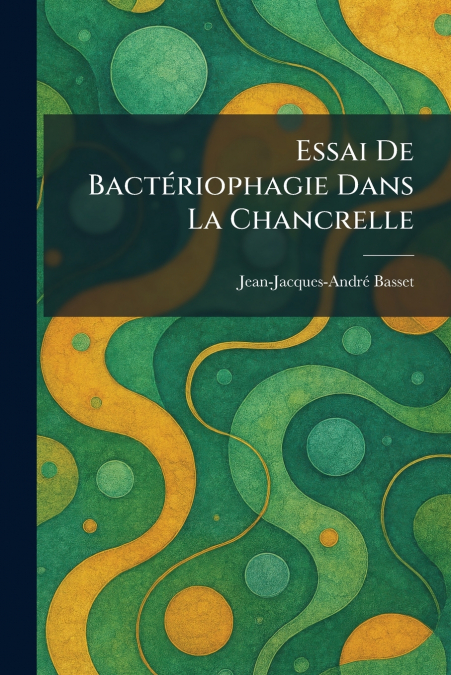
'Essai De Bactériophagie Dans La Chancrelle' est une étude scientifique rigoureuse présentée comme thèse de médecine par Jean-Jacques-André Basset. Cet ouvrage se penche sur l’application thérapeutique de la bactériophagie - l’utilisation de virus infectant les bactéries - pour traiter la chancrelle, une infection bactérienne transmise sexuellement et causée par l’Hémaphilus ducreyi.Dans le contexte médical de 1930, période précédant la généralisation des antibiotiques, ce travail représente une exploration pionnière de solutions biologiques face aux maladies infectieuses. L’auteur y détaille les processus microbiologiques et les observations cliniques liés à l’usage des phages, offrant ainsi un témoignage historique crucial sur l’évolution de la recherche en infectiologie et en dermatologie. Cette Åuvre constitue une ressource précieuse pour les historiens de la médecine et les chercheurs s’intéressant aux racines de la thérapie phagique et aux approches médicales du début du XXe siècle. 'Essai De Bactériophagie Dans La Chancrelle' souligne la rigueur académique de l’époque et la quête constante de remèdes innovants contre les pathologies bactériennes complexes.This work has been selected by scholars as being culturally important, and is part of the knowledge base of civilization as we know it. This work was reproduced from the original artifact, and remains as true to the original work as possible. Therefore, you may see the original copyright references, library stamps (as most of these works have been housed in our most important libraries around the world), and other notations in the work.This work is in the public domain in the United States of America, and possibly other nations. Within the United States, you may freely copy and distribute this work, as no entity (individual or corporate) has a copyright on the body of the work.As a reproduction of a historical artifact, this work may contain missing or blurred pages, poor pictures, errant marks, etc. Scholars believe, and we concur, that this work is important enough to be preserved, reproduced, and made generally available to the public. We appreciate your support of the preservation process, and thank you for being an important part of keeping this knowledge alive and relevant.