 Librería Samer Atenea
 Kálamo Books
 Librería Elías (Asturias)
 Librería Kolima (Madrid)
 Librería Proteo (Málaga)
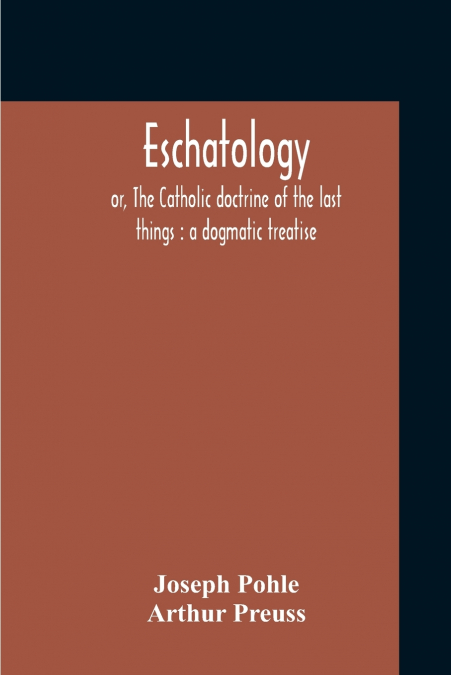
Confronts the last questions with austere clarity. This is theology made urgent.Joseph Pohle’s Eschatology offers a disciplined, systematic presentation of the Catholic last things doctrine. As a catholic eschatology treatise and a thoughtful christian theology book, Pohle guides the reader through the core affirmations and controversies surrounding immortality and resurrection, the principles of judgment and afterlife, and the traditional accounts of heaven, hell and purgatory. The style is clinical yet humane: arguments are laid out step by step, theological categories are explained with care, and pastoral implications are consistently foregrounded. That combination makes the work an effective seminary study resource and a dependable catholic scholar reference; it suits classroom use, sermon preparation and private study by lay readers seeking explicit and sober explication of traditional catholic teachings.Rooted in early 20th century theology, the treatise reflects a moment when doctrinal precision was paired with pastoral seriousness. Its measured prose and rigorous method secure its literary and historical significance, and it stands among important joseph pohle works that aided formation in Catholic thought. Readers interested in the intellectual history of doctrine will find the book a succinct window onto the period’s priorities, while those tracing the development of dogmatic argument will value its systematic clarity. Out of print for decades and now republished by Alpha Editions. Restored for today’s and future generations. More than a reprint - a collector’s item and a cultural treasure.Accessible to curious readers and classic-literature collectors alike, this volume bridges devotional reading and scholarly reference. Whether used as a seminary text, a source for theological research, or a companion for personal reflection on destiny and hope, it rewards careful reading and repeated return. For anyone assembling a dogmatic theology collection or simply wishing to engage with enduring questions of life after death, judgment and the promise of resurrection, Pohle’s Eschatology remains a necessary voice.