
Inicio > Derecho > Derecho internacional > Equitable Framework for Humanitarian Intervention
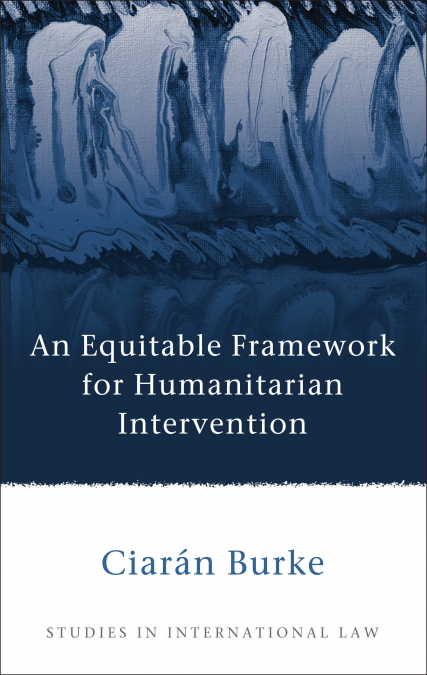
Equitable Framework for Humanitarian Intervention

Equitable Framework for Humanitarian Intervention

Ciaran Burke

173,18 €
IVA incluido
Consulta disponibilidad
Editorial:
Bloomsbury Publishing plc
Año de edición:
2013
Materia
Derecho internacional
ISBN:
9781849464048

Selecciona una librería:

  • Librería Samer Atenea
  • Librería Aciertas (Toledo)
  • Kálamo Books
  • Librería Perelló (Valencia)
  • Librería Elías (Asturias)
  • Donde los libros
  • Librería Kolima (Madrid)
  • Librería Proteo (Málaga)

Can there be a resolution as to whether armed intervention is ever legally justified as a response to gross human rights violations without UN Security Council authorization? Thus far, international lawyers have been caught between giving a negative answer on the basis of the UN Charter’s rules (’positivists’) and a ’turn to ethics, ’ declaring intervention legitimate on moral grounds while eschewing legal analysis (’moralists’). In this book, a third solution is proposed. The idea is presented that many equitable principles may qualify as ’general principles of law recognized by civilized nations’ - one of the three principal sources of international law (though a category that is often overlooked) - a conclusion based upon detailed research of both national legal systems and international law. These principles, having normative force in international law, are then used to craft an equitable framework for humanitarian intervention. It is argued that the dynamics of their operation allow them to interact with the Charter and customary law in order to fill gaps in the existing legal structure and soften the rigors of strict law in certain circumstances. It is posited that many of the moralists’ arguments are justified, albeit based upon firm legal principles rather than ethical theory. The equitable framework proposed is designed to provide an answer to the question of how humanitarian intervention may be integrated into the legal realm. Certainly, this will not mean an end to controversies regarding concrete cases of humanitarian intervention. However, it will enable the framing of such controversies in legal terms, rather than as a choice between the law and morality. The book contains an interesting and unique point of reference for all those interested in the field of humanitarian intervention. (Series: Studies in International Law - Vol. 45

Artículos relacionados

  • Comparative regulation, economic analysis, and applications of private equity in the united states and european union
    Irini Liakopoulou
    The present work examines the economics and legal doctrine of private equity. After a consideration of private equity’s origins, the book will explore the evolution of private equity in the United States and Europe. The reference economic model then will be reconstructed, with particular attention to financial flows to and from private equity firms and funds. This reconstructio...
  • Complicity in International Law
    Dimitris Liakopoulous
    Complicity in International Law aims to analyze questions arising from a state’s complicity in conflict with another state or an international organization. On the basis of international legal provisions, a state that assists the illicit fact of another state or an international organization in turn commits an offense if it is aware of the main fact and is bound by the same obl...
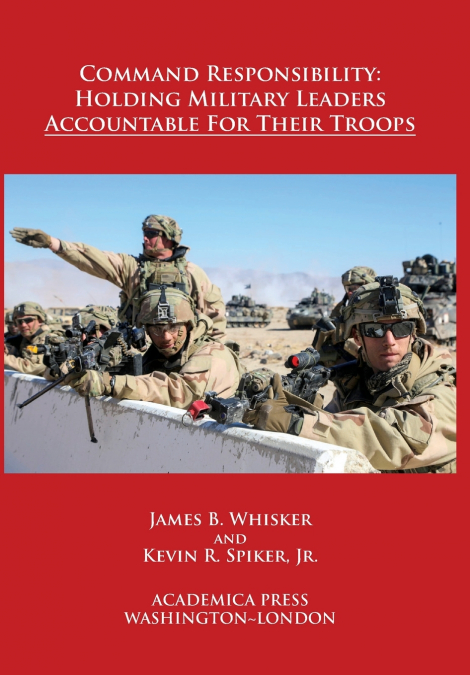
  • Command responsibility
    James B Whisker / Kevin R Spiker
    Command responsibility, or executive accountability, assumes that leaders are responsible for the actions of their subordinates. If subordinates misbehave, violate basic moral laws, transgress international law, or thwart international standards of behavior, their leader may be called before to justice. Standards that set the boundaries of human action have been evolving for ma...
  • International Organizations and Reparations
    Dimitris Liakopoulos
    In the first part of this book, noted legal scholar Dimtris Liakopoulos deals with reconstructing the legal regulatory framework governing human rights violations in the activities of organizations. After identifying rules that are generally applicable to organizations’ offenses and govern the profile of reparations, this study assesses primary rules that guarantee the right to...
  • International Organizations and Legal Sanctions Against Governments
    Dimitris Liakopoulos
    This book examines the relationship between governments and international organizations under international law. After surveying the policing powers of international organizations under international law, it illustrates some normative aspects of law that distinguish regulation from enforcement via study of recent legal cases before international judicial bodies. According to Di...
  • The EU Foreign Subsidies Regulation
    Andreas Reindl / Isabelle Van Damme
    'The EU Foreign Subsidies Regulation' is a pioneering manual authored by legal experts Andreas Reindl and Isabelle Van Damme. This essential guide, the first of its kind, is tailored for legal practitioners, offering a thorough exploration of the tools and mechanisms embedded within this novel European regulatory framework. The authors meticulously dissect the EU Foreign Subsid...

Otros libros del autor

  • Culture, Capitals and Graduate Futures
    Ciaran Burke
    The idea of a linear progression from higher education to graduate employment is the basis on which policies such as widening participation and increase in tuition fees have been predicated. However, there is a disconnect between policy and experience as issues of social and class barriers into graduate employment have consistently persisted, with graduates facing an unemployme...