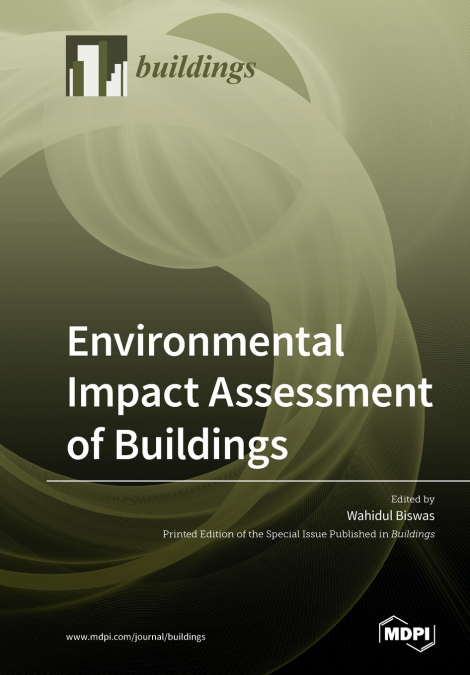

Environmental Impact Assessment of Buildings

Environmental Impact Assessment of Buildings

Environmental Impact Assessment of Buildings

Wahidul Biswas

51,75 €
IVA incluido
Disponible
Editorial:
MDPI AG
Año de edición:
2020
Materia
Tecnología: cuestiones generales
ISBN:
9783039282432
51,75 €
IVA incluido
Disponible

Selecciona una librería:

  • Librería Samer Atenea
  • Librería Aciertas (Toledo)
  • Kálamo Books
  • Librería Perelló (Valencia)
  • Librería Elías (Asturias)
  • Donde los libros
  • Librería Kolima (Madrid)
  • Librería Proteo (Málaga)

This Special Issue covers a wide range of areas—including building orientation, service life, use of photocatalytically active structures and PV facades, implications of transportation system, building types (i.e., high rise, multilevel, commercial, residential), life cycle assessment, and structural engineering—that need to be considered in the environmental impact assessment of buildings, and the chapters include case studies across the globe. Consideration of these strategies would help reduce energy and material consumption, environmental emissions, and waste generation associated with all phases of a building’s life cycle. Chapter 1 demonstrates that green star concrete exhibits the same structural properties as conventional concrete in Australia. Chapter 2 showed that the use of TiO2 as a photocatalyst on the surface of construction materials with a suitable stable binding agent, such as aggregates, would enable building walls to absorb NOx from air. This study found that TiO2 has the potential to reduce ambient concentrations of NOx from areas where this pollutant becomes concentrated under solar irradiation. Chapter 3 presents the life cycle assessment of architecturally integrated glass–glass photovoltaics in building facades to find the appropriate material composition for a multicolored PV façade offering improved environmental performance. Chapter 4 shows that urban office buildings lacking appropriate orientation experienced indoor overheating. Chapter 5 details four modeling approaches that were implemented to estimate buildings’ response towards load shedding. Chapter 6 covers the life cycle GHG emissions of high-rise residential housing block to discover opportunities for environmental improvement. Chapter 7 discusses an LCA framework that took into account variation in the service life of buildings associated with the use of different types of materials. Chapter 8 presents a useful data mining algorithm to conduct life cycle asset management in residential developments built on transport systems.
Artículos relacionados

  • Science and the Big Issues of Our Time
    Martin Gellender
    Within the last few generations, our world has been shaped by technological change enabled by scientific advances. This is particularly evident to the 'baby boomer' generation, who have lived through and witnessed huge changes in society over the course of their lifetimes. Although many have little education in science, or have forgotten what they learned in high school, they u...
    Disponible

    26,58 €

  • Statics+++
    James W Dally / Robert J Bonenberger
    This textbook has been prepared to support a course offering for Statics at the University of Nevada at Reno.  Statics provides the first exposure of engineering students to the study of mechanics.  While Statics is a relatively simple subject, many students find it difficult, and they often perform far below our expectations.  In an effort to improve the curriculum, several me...
    Disponible

    101,22 €

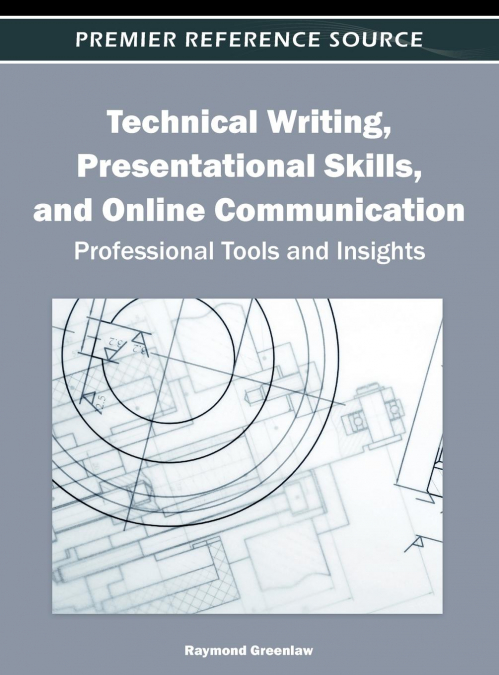
  • Technical Writing, Presentational Skills, and Online Communication
    Raymond Greenlaw
    This book addresses four main topics: professional ethics, technical writing, presentation skills, and online writing. These topics are woven throughout the book and some of them are the main subjects of one or more chapters. The overarching theme of this book is to provide well-tested, best-practice techniques and strategies for main topic areas while focusing on information t...
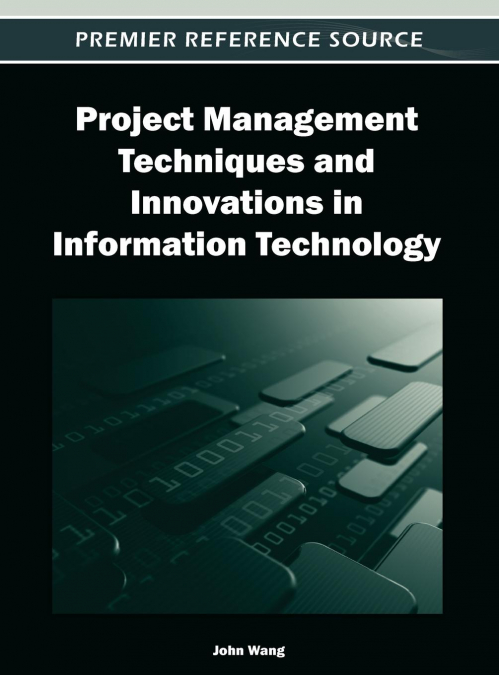
  • Project Management Techniques and Innovations in Information Technology
    John Wang
    Managing cost, time, and quality of a project can be a challenging task for any project manager, but especially in times of an ever-changing and burgeoning field of IT. Project Management Techniques and Innovations in Information Technology offers a vital compendium of the latest research, case studies, best practices, and methodologies within the field of IT project management...
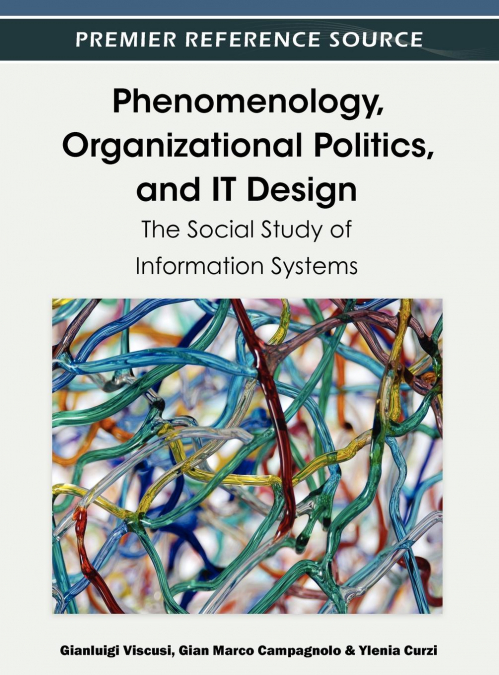
  • Phenomenology, Organizational Politics, and IT Design
    Information systems are researched, published on, and utilized as an extremely broad and vital sector of current technology development, usually studied from the scientific or technological viewpoints therein. Phenomenology, Organizational Politics, and IT Design: The Social Study of Information Systems offers a new look at the latest research and critical issues within the fie...
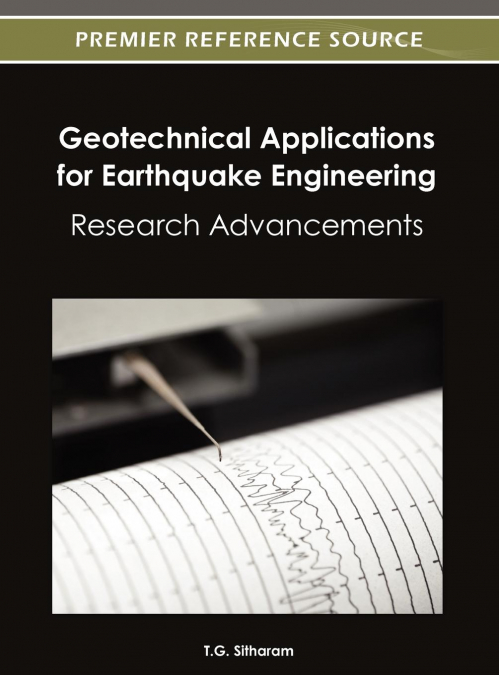
  • Geotechnical Applications for Earthquake Engineering
    Disaster preparedness and response management is a burgeoning field of technological research, and staying abreast of the latest developments within the field is a difficult task. Geotechnical Applications for Earthquake Engineering: Research Advancements has collected chapters from experts from around the world in a variety of applications, frameworks, and methodologies, and p...