
Environmental Geochemistry of Potentially Toxic Metals

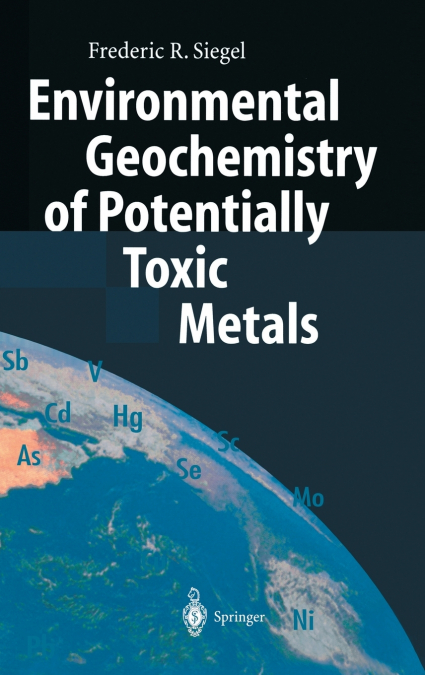
Environmental Geochemistry of Potentially Toxic Metals

Frederic R. Siegel

66,56 €
IVA incluido
Disponible
Editorial:
Springer Nature B.V.
Año de edición:
2010
Materia
Geología y la litosfera
ISBN:
9783642075544
66,56 €
IVA incluido
Disponible

Selecciona una librería:

  • Librería Samer Atenea
  • Librería Aciertas (Toledo)
  • Kálamo Books
  • Librería Perelló (Valencia)
  • Librería Elías (Asturias)
  • Donde los libros
  • Librería Kolima (Madrid)
  • Librería Proteo (Málaga)

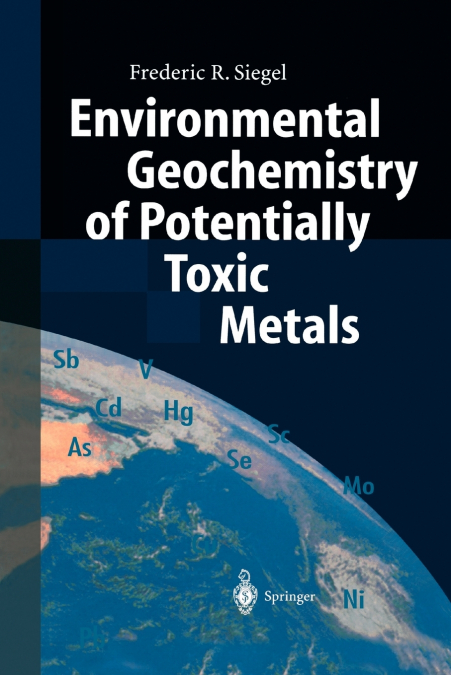
Contamination of the earth’s ecosystems by potentially toxie metalsl metalloids is a global problem. It will likely grow with our planet’s increasing populations and their requirements for natural resources (e. g. , water, food, energy, waste-disposal sites) and metals-based goods. The health impacts of pollution from the ingestion of heavy metals/metalloids via respiration, food, and drinking water are most often long-term and manifest themselves in many ways. These include, for example, disminution of mental acuity, loss of motor control, critieal organ dysfunction, cancer, chronie illnesses and con­ comitant suffering, incapacitation, and finally death. The incidence and geographie distribution of disease (epidemiology) has been well-documented historieally and in modern times for toxic metals­ triggered diseases in humans, animals and vegetation. The role of the environmental geochemist and colleagues in environ­ mental sciences is to scientifically evaluate how to manage metalsl metalloids at sources or in-situ so as to alleviate or eliminate their negative health impacts on living populations. This is initiated by identifying sources and by developing models of the physieal, chem­ ieal and biologieal controls on mobilization, interaction, deposition and accumulation of potentially toxie metals/metalloids in source systems and earth ecosystems. Prom this knowledge base, environ­ mental scientists (e. g. , geologists, chemists, biologists, environmen­ tal engineers, physicists/meteorologists) work together to develop Preface VI concepts and technologieal methodologies to preserve global eco­ systems. Their concerted efforts are equally focussed on devising strategems to remediate ecosystems still carrying heavy metals/metal­ loids pollutant burdens from ancient and modern societies.
Artículos relacionados

  • Exploration Science
    Dr Peter T Scott
    About Exploration ScienceHave you wondered what the science of geology is all about?Together we will explore of the surface and sub-surface of the Earth, the sub-branches of geology, including mineralogy, petrology (rocks), palaeontology (fossils), geochemistry, seismology (earthquakes), engineering geology, and many more.The scientific method used by all scientists as well as ...
    Disponible

    30,12 €

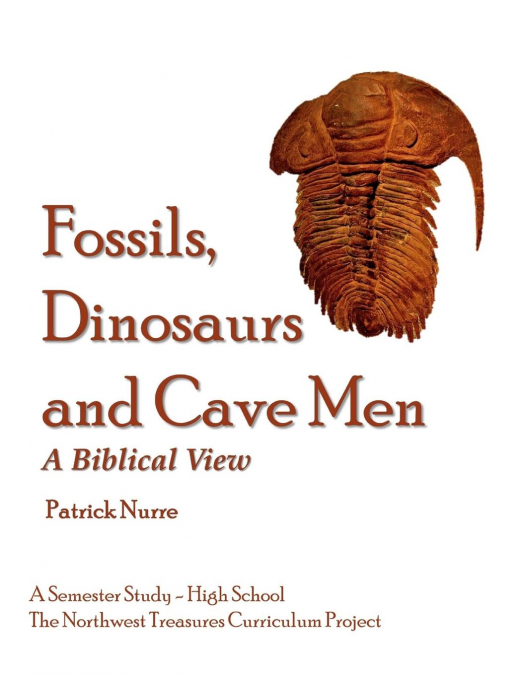
  • Fossils, Dinosaurs and Cave Men
    Patrick Nurre
    This textbook is a high school, semester study of the differences between the Biblcal and secular views of fossils, dinosaurs, and cave men.  Topics include the cause and mechanism for a global flood, the geologic time table, living fossils, the Tower of Babel, modern classification of dinosaurs, and more.  Students will also learn to interpret the geologic column from a Biblic...
    Disponible

    43,86 €

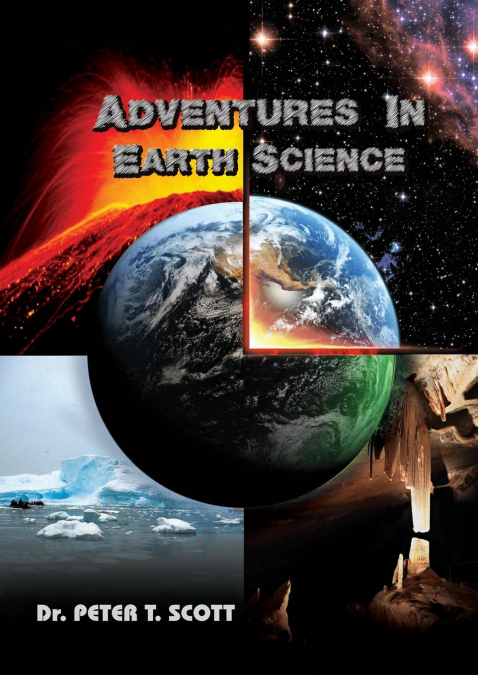
  • Adventures in Earth Science
    Dr Peter T Scott
    ADVENTURES in EARTH SCIENCE is not just an in-depth textbook but a series of adventures across seven continents and beyond in the sciences of astronomy, geology, meteorology and oceanography. It has been written with over forty years of experience in studying, researching and teaching earth science. Whilst it has been designed for senior high school and junior university or col...
    Disponible

    142,25 €

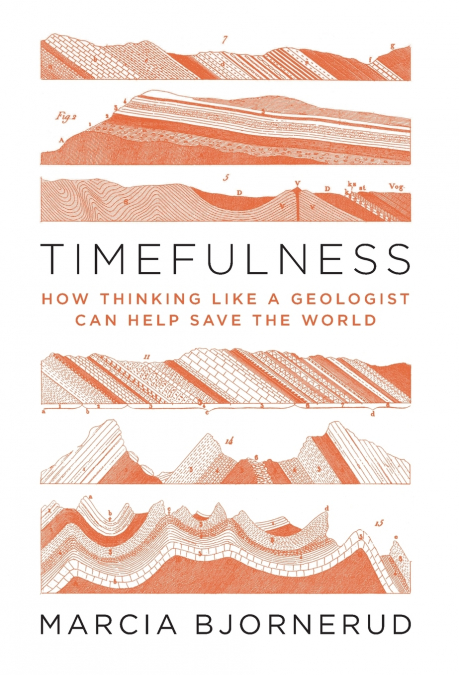
  • Timefulness
    Marcia Bjornerud
    Why an awareness of Earth’s temporal rhythms is critical to our planetary survivalFew of us have any conception of the enormous timescales in our planet’s long history, and this narrow perspective underlies many of the environmental problems we are creating for ourselves. The passage of nine days, which is how long a drop of water typically stays in Earth’s atmosphere, is somet...
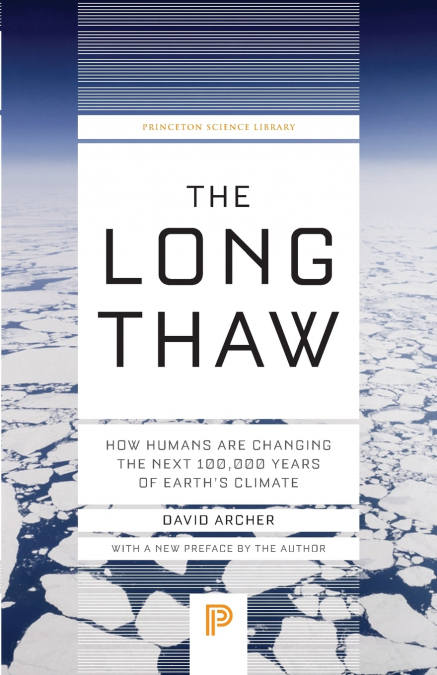
  • The Long Thaw
    David Archer
    Why a warmer climate may be humanity’s longest-lasting legacyThe human impact on Earth’s climate is often treated as a hundred-year issue lasting as far into the future as 2100, the year in which most climate projections cease. In The Long Thaw, David Archer, one of the world’s leading climatologists, reveals the hard truth that these changes in climate will be 'locked in,' ess...
    Disponible

    24,10 €

  • THE EPEMBE CARBONATITE DYKE, NORTH-WEST NAMIBIA
    Kamuhitua Humavindu
    This book gives a bright perspective on the nature of carbonatites along with different magmatic and hydrothermal processes that affect the distribution of these dykes. In the past there has been several debates on the enrichment mechanisms of rare-earth elements, making it a significant book especially now with the increase in technology. The research is filled with exciting f...
    Disponible

    75,64 €

Otros libros del autor

  • The Earth’s Human Carrying Capacity
    Frederic R. Siegel
    This book focuses on the Earth’s carrying capacity to service the needs of its human populations as well as preserve the ecosystems that provide natural resources that sustain life and support human activities in 2020 and later in the century (2050 and beyond). It addresses the two principal factors that challenge the limits of the carrying capacity: growing populations/demogra...
    Disponible

    160,45 €

  • The Earth’s Human Carrying Capacity
    Frederic R. Siegel
    This book focuses on the Earth’s carrying capacity to service the needs of its human populations as well as preserve the ecosystems that provide natural resources that sustain life and support human activities in 2020 and later in the century (2050 and beyond). It addresses the two principal factors that challenge the limits of the carrying capacity: growing populations/demogra...
  • Demands of Expanding Populations and Development Planning
    Frederic R. Siegel
    The Ecosystem and Development.- Populations: Growth, Braking, Contraction.- Population Needs for Well-Being.- The Surface/Near-Surface Atmosphere.- Water: An Essential, Limited, Renewable Resource.- Soil Formation, Quality, Sustainability.- 'Green' Legislation: Now for the Future.- Proactive Planning in Industrial/Agricultural Development: Minimizing Chemical Pollution.- Remedi...
    Disponible

    171,00 €

  • Demands of Expanding Populations and Development Planning
    Frederic R. Siegel
    Population: Answering the Needs and Demands The world’s human populationis 6. 6+ billion people and growing(by 80 million in 2005). Most of the growth is in less developed nations. The Population Reference Bureau (2006) estimates that the global population will reach 7. 9 billion people by 2025. It is projected to stabilize at 9. 2+ billion people by ...
  • Environmental Geochemistry of Potentially Toxic Metals
    Frederic R. Siegel
    Contamination of the earth’s ecosystems by potentially toxie metalsl metalloids is a global problem. It will likely grow with our planet’s increasing populations and their requirements for natural resources (e. g. , water, food, energy, waste-disposal sites) and metals-based goods. The health impacts of pollution from the ingestion of heavy metals/met...