
Inicio > > Programación informática/desarrollo de software > Enterprise Architecture, Integration and Interoperability
Enterprise Architecture, Integration and Interoperability

Enterprise Architecture, Integration and Interoperability


131,80 €
IVA incluido
Consulta disponibilidad
Editorial:
Springer Nature B.V.
Año de edición:
2010
Materia
Programación informática/desarrollo de software
ISBN:
9783642155086

Selecciona una librería:

  • Librería Samer Atenea
  • Librería Aciertas (Toledo)
  • Kálamo Books
  • Librería Perelló (Valencia)
  • Librería Elías (Asturias)
  • Donde los libros
  • Librería Kolima (Madrid)
  • Librería Proteo (Málaga)

Enterprise Architecture, Integration, and Interoperability and the Networked enterprise have become the theme of many conferences in the past few years. These conferences were organised by IFIP TC5 with the support of its two working groups: WG 5. 12 (Architectures for Enterprise Integration) and WG 5. 8 (Enterprise Interoperability), both concerned with aspects of the topic: how is it possible to architect and implement businesses that are flexible and able to change, to interact, and use one another’s s- vices in a dynamic manner for the purpose of (joint) value creation. The original qu- tion of enterprise integration in the 1980s was: how can we achieve and integrate - formation and material flow in the enterprise? Various methods and reference models were developed or proposed - ranging from tightly integrated monolithic system - chitectures, through cell-based manufacturing to on-demand interconnection of bu- nesses to form virtual enterprises in response to market opportunities. Two camps have emerged in the endeavour to achieve the same goal, namely, to achieve interoperability between businesses (whereupon interoperability is the ability to exchange information in order to use one another’s services or to jointly implement a service). One school of researchers addresses the technical aspects of creating dynamic (and static) interconnections between disparate businesses (or parts thereof).


Artículos relacionados

  • SPARK 2014 Reference Manual
    AdaCore / Altran UK Ltd
    SPARK 2014 is a programming language and a set of verification tools designed to meet the needs of high-assurance software development. SPARK 2014 is based on Ada 2012, both subsetting the language to remove features that defy verification, but also extending the system of contracts and aspects to support modular, formal verification.This manual is available online for free at ...
    Disponible

    19,91 €

  • Software and Intelligent Sciences
    Yingxu Wang
    The junction of software development and engineering combined with the study of intelligence has created a bustling intersection of theory, design, engineering, and conceptual thought. Software and Intelligent Sciences: New Transdisciplinary Findings sits at a crossroads and informs advanced researchers, students, and practitioners on the developments in computer science, theor...
  • Power System Planning Technologies and Applications
    Fawwaz Elkarmi / Nazih Abu Shikhah / Nazih Abu-Shikhah
    Planning is an important function of the management of any business, providing knowledge of future prospects and enabling prudent and appropriate decision-making. Planning is especially critical for power systems, since electricity is a fundamental part of modern societies and many conventional electrical energy resources currently in use are limited. Power System Planning Tech...
  • Concept Parsing Algorithms (CPA) for Textual Analysis and Discovery
    Masha Etkind / Uri Shafrir
    Text analysis tools aid in extracting meaning from digital content. As digital text becomes more and more complex, new techniques are needed to understand conceptual structure. Concept Parsing Algorithms (CPA) for Textual Analysis and Discovery: Emerging Research and Opportunities provides an innovative perspective on the application of algorithmic tools to study unstructured d...
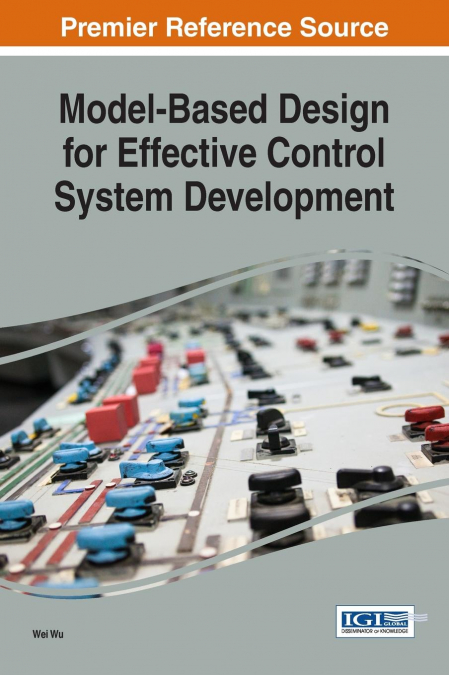
  • Model-Based Design for Effective Control System Development
    Wei Wu
    Control systems are an integral aspect of modern society and exist across numerous domains and applications. As technology advances more and more, the complexity of such systems continues to increase exponentially. Model-Based Design for Effective Control System Development is a critical source of scholarly information on model-centric approaches and implementations for control...
  • Verification, Validation and Testing in Software Engineering
    ...