Inicio > > Redes y comunicaciones informáticas > Energy Efficiency in WSN by Employing Cluster to Head Noise Protocol
Energy Efficiency in WSN by Employing Cluster to Head Noise Protocol

Energy Efficiency in WSN by Employing Cluster to Head Noise Protocol

Khushboo Pachori / Nagendra Kumar / Yasharth Shukla

55,40 €
IVA incluido
Disponible
Editorial:
KS OmniScriptum Publishing
Año de edición:
2024
Materia
Redes y comunicaciones informáticas
ISBN:
9786208064310
55,40 €
IVA incluido
Disponible

Selecciona una librería:

  • Librería Samer Atenea
  • Librería Aciertas (Toledo)
  • Kálamo Books
  • Librería Perelló (Valencia)
  • Librería Elías (Asturias)
  • Donde los libros
  • Librería Kolima (Madrid)
  • Librería Proteo (Málaga)

The wireless sensor networks is the decentralized and self configuring type of network in which senor nodes can sense information and pass it to base station. Due to decentralized nature and far deployment energy consumption is the major issues of wireless sensor networks. To reduce energy consumption of wireless sensor hierarchal clustering is the efficient type of clustering technique. In this scheme whole network will be divided into fixed size clusters and cluster heads are selected in each cluster. The cluster heads are selected on the basis of energy and distance from base station. The sensor node which has least distance from the base station and has maximum energy is selected as cluster head. In this research work, WEMER protocol is implemented and improved to increase lifetime of wireless sensor networks. In the WEMER protocol, whole network is divided into clusters and cluster heads are selected in each cluster. The leader nodes are also selected in the network which take data from the cluster heads and pass it to base station.

Artículos relacionados

  • Next Generation Search Engines
    Recent technological progress in computer science, Web technologies, and the constantly evolving information available on the Internet has drastically changed the landscape of search and access to information. Current search engines employ advanced techniques involving machine learning, social networks, and semantic analysis. Next Generation Search Engines: Advanced Models for ...
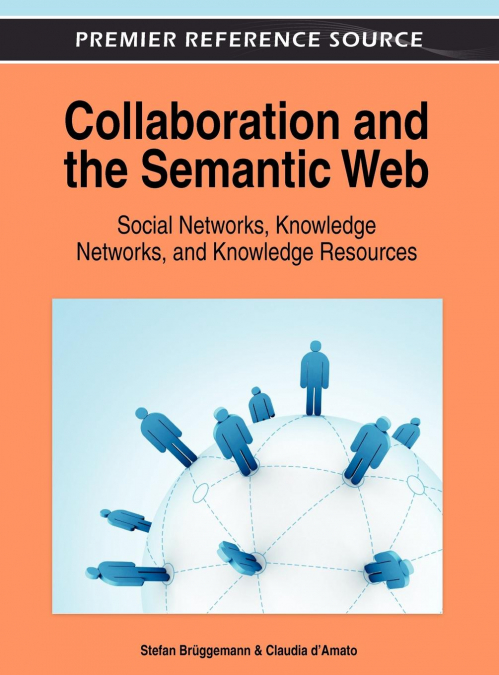
  • Collaboration and the Semantic Web
    Collaborative working has been increasingly viewed as a good practice for organizations to achieve efficiency. Organizations that work well in collaboration may have access to new sources of funding, deliver new, improved, and more integrated services, make savings on shared costs, and exchange knowledge, information and expertise. Collaboration and the Semantic Web: Social Net...
  • Resource Allocation in Next-Generation Broadband Wireless Access Networks
    With the growing popularity of wireless networks in recent years, the need to increase network capacity and efficiency has become more prominent in society. This has led to the development and implementation of heterogeneous networks. Resource Allocation in Next-Generation Broadband Wireless Access Networks is a comprehensive reference source for the latest scholarly research o...
  • Advanced Topics in Information Technology Standards and Standardization Research, Volume 1
    Kai Jakobs
    ...
  • Data Warehouses and OLAP
    ...
  • Selected Readings on Database Technologies and Applications
    Terry Halpin
    Education and research in the field of database technology can prove problematic without the proper resources and tools on the most relevant issues, trends, and advancements. Selected Readings on Database Technologies and Applications supplements course instruction and student research with quality chapters focused on key issues concerning the development, design, and analysis ...

Otros libros del autor

  • Energieeffizienz in WSN durch Einsatz von Cluster to Head Rauschprotokoll
    Khushboo Pachori / Nagendra Kumar / Yasharth Shukla
    Die drahtlosen Sensornetzwerke sind dezentralisierte und selbstkonfigurierende Netzwerke, in denen die Sensorknoten Informationen erfassen und an die Basisstation weiterleiten können. Aufgrund der dezentralen Natur und der weiten Verbreitung ist der Energieverbrauch das Hauptproblem der drahtlosen Sensornetzwerke. Um den Energieverbrauch drahtloser Sensornetzwerke zu reduzieren...
    Disponible

    55,54 €

  • Efficacité énergétique dans les WSN par l’utilisation du protocole de bruit de tête de grappe Cluster to Head Noise Protocol
    Khushboo Pachori / Nagendra Kumar / Yasharth Shukla
    Les réseaux de capteurs sans fil sont un type de réseau décentralisé et auto-configurant dans lequel les nœuds de capteurs peuvent détecter des informations et les transmettre à la station de base. En raison de la nature décentralisée et du déploiement lointain, la consommation d’énergie est le principal problème des réseaux de capteurs sans fil. Pour réduire la consommation d’...
    Disponible

    55,46 €

  • Eficiência energética em RSSF empregando o Protocolo de Ruído Cluster to Head
    Khushboo Pachori / Nagendra Kumar / Yasharth Shukla
    As redes de sensores sem fios são o tipo de rede descentralizada e auto-configurável em que os nós sensores podem detetar informações e transmiti-las à estação de base. Devido à natureza descentralizada e à implantação distante, o consumo de energia é o principal problema das redes de sensores sem fios. Para reduzir o consumo de energia dos sensores sem fios, o agrupamento hier...
    Disponible

    55,46 €

  • Efficienza energetica nelle WSN attraverso il Protocollo Cluster to Head Noise
    Khushboo Pachori / Nagendra Kumar / Yasharth Shukla
    Le reti di sensori wireless sono un tipo di rete decentralizzata e autoconfigurante in cui i nodi sensori possono rilevare informazioni e trasmetterle alla stazione base. A causa della natura decentralizzata e dell’ampia diffusione, il consumo energetico è il problema principale delle reti di sensori wireless. Per ridurre il consumo energetico dei sensori wireless, il clusterin...
    Disponible

    55,46 €