
Energy and the Financial System

Energy and the Financial System

Roger Boyd

74,11 €
IVA incluido
Disponible
Editorial:
Springer Nature B.V.
Año de edición:
2014
Materia
Finanzas
ISBN:
9783319042374
74,11 €
IVA incluido
Disponible

Selecciona una librería:

  • Librería Samer Atenea
  • Librería Aciertas (Toledo)
  • Kálamo Books
  • Librería Perelló (Valencia)
  • Librería Elías (Asturias)
  • Donde los libros
  • Librería Kolima (Madrid)
  • Librería Proteo (Málaga)

The modern financial system was developed to support the rapid economic growth that took off about 200 years ago with the phenomenal amounts of cheap energy made available through the exploitation of fossil fuels. As a result, its viability is completely dependent upon the continuation of that growth. Unfortunately, the more recent fossil fuel discoveries, especially for oil, have tended to have lower production levels than earlier ones. In addition, greater amounts of energy are required to extract the fossil fuels leading to less net energy available for society. The Energy Return On Investment (EROI) for oil has fallen from 30:1 in the 1970’s to 10:1 today. Thus, newer energy finds produce lower extraction rates and more of the energy provided is offset by the energy used in the extraction processes. The result has been economic stagnation or even contraction, with growth in China and India etc. only possible due to the extensive use of local coal reserves, and recession-induced drops in OECD country energy use. Renewable sources of energy will not be able to expand fast enough to replace the 87% of energy supplies provided by fossil fuels, and apart from hydro and wind, tend to have very low EROI rates. They are also critically dependent upon the cheap energy infrastructure provided by fossil fuels. The phenomenal amounts of path-dependent energy infrastructure will also greatly inhibit any move away from fossil fuels.Without continued economic growth there will not be the extra output to fund loan interest payments, nor the revenue and profit growth to support share price/earnings multiples. The financial system acts as a time machine, creating asset prices based upon perceptions of the future. As an increasing percentage of investors come to accept the future reality of at best, financial asset prices will fall to reflect a realistic future. The resulting crash will remove the underpinnings of the banking, brokerage, mutual fund, pension fund, and insurance industries. The comfortable futures of many will be shown to have been based upon a mirage of future growth that will not take place. With the financial system acting as the critical coordination system of the global economy, its crash will also intensify economic problems. Written by a retired financial industry executive with over 25 years of experience, this book describes how the crisis will affect different regions and industries to help identify the career and investment choices which may provide a relative safe harbour.
Artículos relacionados

  • Global Perspectives on Risk Management and Accounting in the Public Sector
    The effects of recent economic and financial crises have reached an international scale; a number of different nations have experienced the fallout of these events, calling into question issues of accountability and reform in public management. Global Perspectives on Risk Management and Accounting in the Public Sector is a pivotal reference source for the latest research on cur...
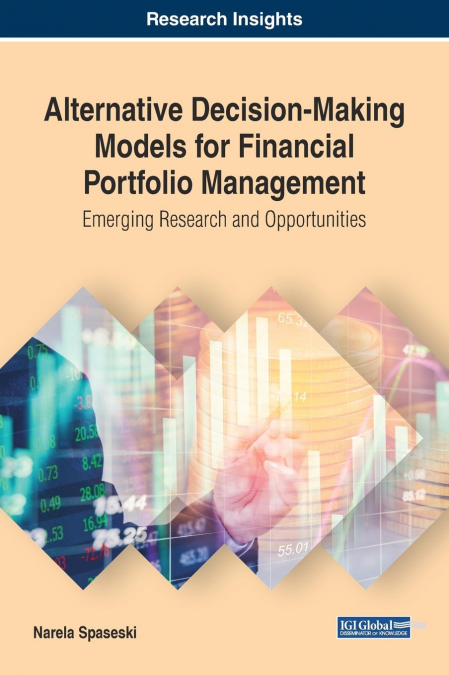
  • Alternative Decision-Making Models for Financial Portfolio Management
    Narela Spaseski
    Economics is an integral aspect to every successful society, yet basic financial practices have gone unchanged for decades. Analyzing unconventional finance methods can provide new ways to ensure personal financial futures on an individual level, as well as boosting international economies. Alternative Decision-Making Models for Financial Portfolio Management: Emerging Research...
  • Multi-Sided Platforms (MSPs) and Sharing Strategies in the Digital Economy
    Sergey Yablonsky
    Rapid technological advancements have the ability to positively or negatively impact corporate growth and success. Professional leaders and decision makers must consider such advancements when designing and implementing new policies in preparation for the sustainable future of the business environment. Multi-Sided Platforms (MSPs) and Sharing Strategies in the Digital Economy: ...
  • The Complete Penny Stock Course
    Jamil Ben Alluch
    You can learn trading penny stocks from the masses and become part of the 90% of traders who lose money in the stock market, or you can learn from the Best. The Complete Penny Stock Course is based on Timothy Sykes’, various training programs. His strategies have helped individuals like Tim Grittani, Michael Goode and Stephen Dux become millionaires within a couple of years.Thi...
    Disponible

    37,63 €

  • ADVANCED FINANCE THEORIES
    POON SER-HUANG / Ser-Huang Poon
    For PhD finance courses in business schools, there is equal emphasis placed on mathematical rigour as well as economic reasoning. Advanced Finance Theories provides modern treatments to five key areas of finance theories in Merton's collection of continuous time work, viz. portfolio selection and capital market theory, optimum consumption and intertemporal portfolio selecti...
  • Jefferson's Nightmare
    William O. Joseph
    Common working people have been getting screwed by the banking industry for hundreds of years. In the United States over 21 million family members have lost their homes since 2007. Millions more have watched their careers go up in smoke. If you think there is nothing wrong with such a system then don't bother to read this book.   Two hundred years ago, Thomas Jefferson ha...
    Disponible

    12,42 €