Inicio > Humanidades > Historia > Historia militar > Ends, Means, Ideology, and Pride
Ends, Means, Ideology, and Pride

Ends, Means, Ideology, and Pride

Ends, Means, Ideology, and Pride

Jeffrey Record

5,46 €
IVA incluido
Disponible
Editorial:
Alpha Editions
Año de edición:
2018
Materia
Historia militar
ISBN:
9789387513976
5,46 €
IVA incluido
Disponible

Selecciona una librería:

  • Librería Samer Atenea
  • Librería Aciertas (Toledo)
  • Kálamo Books
  • Librería Perelló (Valencia)
  • Librería Elías (Asturias)
  • Donde los libros
  • Librería Kolima (Madrid)
  • Librería Proteo (Málaga)

Why did the Axis Powers lose World War II, and what can we learn from its defeat? The Axis seemed on top of the world until 1941, when it added to its list of enemies the United States and the Soviet Union. The entry of Russia and America into the war decisively tipped the balance against Germany, Italy, and Japan. Resource-rich Russia and the United States were prepared for protracted conflict, whereas the Axis was not. From Pearl Harbor onward, it is difficult to imagine how the Axis could have avoided the fate that befell it, short of Stalin's defection from the Allied side. Material weakness should have imposed strategic discipline on Axis territorial ambitions, but none of the three major Axis states seemed to recognize the limits of their power. Imperial ambitions, fueled by extreme ideologies, held sway over a realistic grasp of what was possible and what was not. An examination of World War II's outcome reveals three lessons. First, numbers still matter. The best strategy is to be strong. The strong sometimes lose, but the weak lose more often. Second, ideology can distort sound strategic thinking. Both Germany and Japan were victimized by extreme racial ideologies that prompted them to overestimate their own fighting power and underestimate that of their enemies. Third, operational and tactical superiority cannot redeem a faulty strategy. Throughout the war, Germany outperformed its enemies on the battlefield; however, it was still crushed strategically.

Artículos relacionados

  • Waterloo Betrayed
    Stephen M. Beckett / Stephen MBeckett
    THIS BOOK HAS BEEN SUPERCEDEDSee Operations of the Armée du Nord : 1815, The Analysis for the definitive guide of French operations in 1815.   Discover why Napoleon really lost the Waterloo Campaign Napoleon was betrayed during 1815 There is no doubt of this. The Traitors admitted as much, and the Allied powers documented their acts. In the immediate aftermath of Napoleon's...
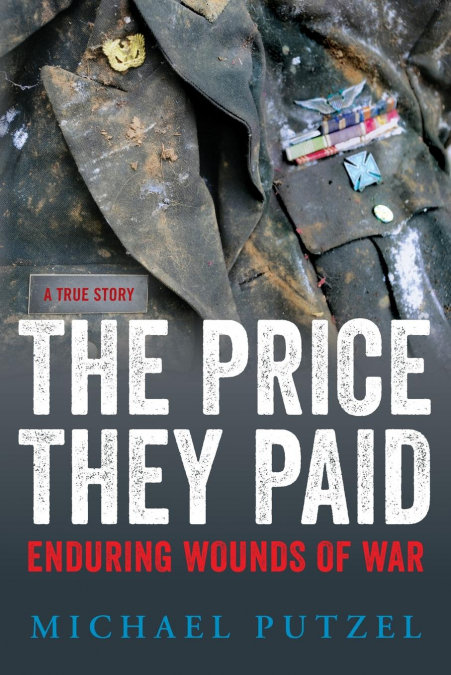
  • The Price They Paid
    Michael Putzel
    The Price They Paid is the stunning and dramatic true story of a legendary helicopter commander in Vietnam and the flight crews that followed him into the most intensive helicopter warfare ever-and how that brutal experience has changed their lives in the forty years since the war ended. ...
    Disponible

    11,07 €

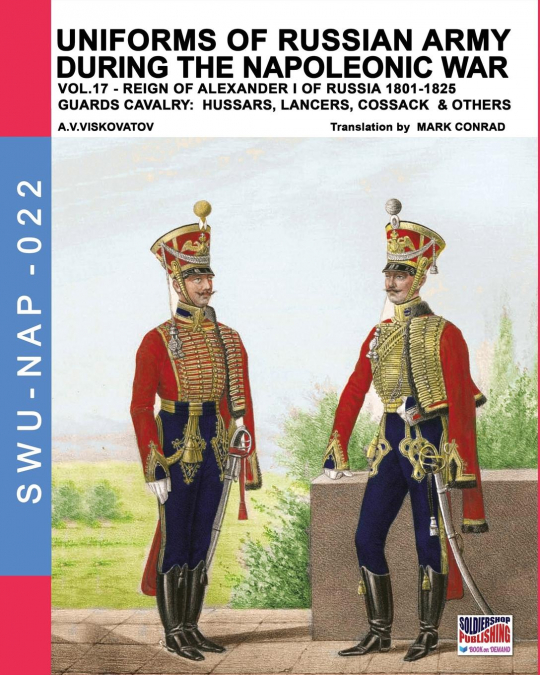
  • Uniforms of Russian army during the Napoleonic war vol.17
    Aleksandr Vasilevich Viskovatov / Mark Conrad
    This volume is related to the Russian Army during the zar Alexander I era, and are about the Guard cavalry regiments (part 1). Compiled at Saint Petersburg during the year from 1837 and 1851, the Historical Description of the Clothing and Arms of the Russian Army has had an enormous impact and great importance for the study on the history of Russian costume and uniformology dev...
    Disponible

    40,78 €

  • Cyber Warfare and Cyber Terrorism
    ...
  • Armed Robotic Systems Emergence
    Robert j. Bunker / Robert jBunker
    The fielding of armed robotic systems--droids and drones that are teleoperated, semi-autonomous, and even autonomous--has been slowly but surely transitioning from pure science fiction into military reality on the battlefields of the early 21st century. These systems currently have no artificial intelligence (AI) whatsoever and, in most cases, are simply operated by soldiers (a...
    Disponible

    8,64 €

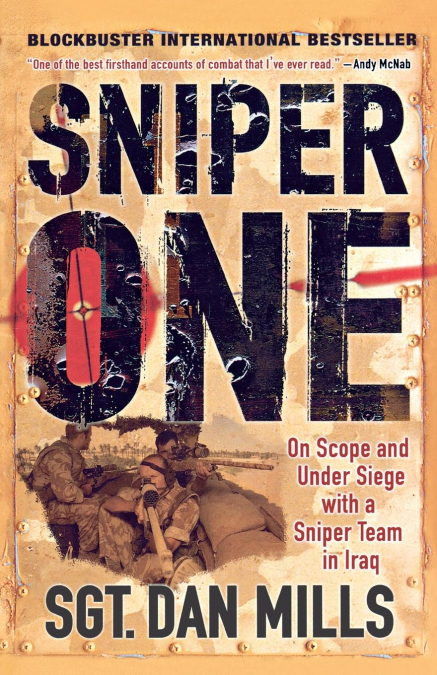
  • SNIPER ONE
    DAN MILLS
    ...
    Disponible

    18,71 €

Otros libros del autor

  • Failed States and Casualty Phobia
    Jeffrey Record
    The emergence of failed states as the principal source of international political instability and the appearance of mounting casualty phobia among U.S. political and military elites have significant force structure and technology implications. Overseas, intra-state and often irregular warfare is displacing large-scale inter-state conventional combat. At home, there has arisen a...
    Disponible

    15,76 €

  • Serbia and Vietnam
    Jeffrey Record
    Preface NATO`s controversial decision to attack Serbia in March 1999 because of its behavior in Kosovo prompted considerable criticism in the United States. Some critics faulted the United States and its NATO allies for selecting military means incompatible with the political objective sought. Others contended that the alliance had misjudged Belgrade`s strength of interest in K...
    Disponible

    15,72 €