 Librería Samer Atenea
 Kálamo Books
 Librería Elías (Asturias)
 Librería Kolima (Madrid)
 Librería Proteo (Málaga)
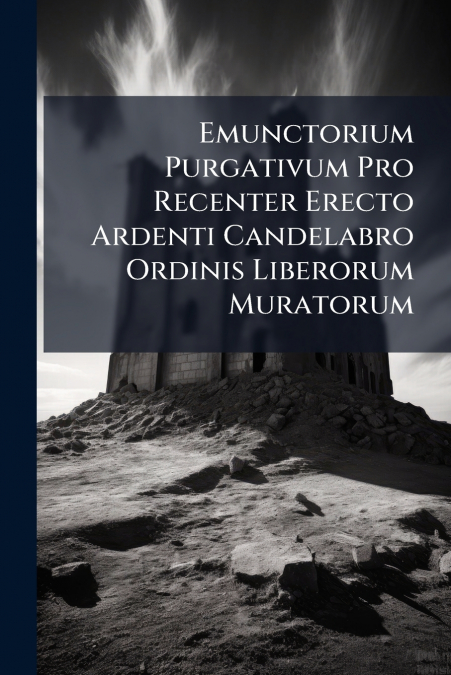
Emunctorium Purgativum Pro Recenter Erecto Ardenti Candelabro Ordinis Liberorum Muratorum offers a fascinating glimpse into the world of Freemasonry. This intriguing text, likely originating in the 18th century, explores the rituals, symbols, and philosophical underpinnings of this secretive brotherhood. While its authorship remains anonymous, the work provides valuable insights into the practices and beliefs of early Masonic orders. Its historical significance lies in its depiction of a particular Masonic rite or ceremony, offering researchers and enthusiasts a rare opportunity to study the evolution of Freemasonry. Whether you are a historian of secret societies or simply curious about the mysteries of Freemasonry, 'Emunctorium Purgativum Pro Recenter Erecto Ardenti Candelabro Ordinis Liberorum Muratorum' is a valuable addition to any collection.This work has been selected by scholars as being culturally important, and is part of the knowledge base of civilization as we know it. This work was reproduced from the original artifact, and remains as true to the original work as possible. Therefore, you will see the original copyright references, library stamps (as most of these works have been housed in our most important libraries around the world), and other notations in the work.This work is in the public domain in the United States of America, and possibly other nations. Within the United States, you may freely copy and distribute this work, as no entity (individual or corporate) has a copyright on the body of the work.As a reproduction of a historical artifact, this work may contain missing or blurred pages, poor pictures, errant marks, etc. Scholars believe, and we concur, that this work is important enough to be preserved, reproduced, and made generally available to the public. We appreciate your support of the preservation process, and thank you for being an important part of keeping this knowledge alive and relevant.