
Emotion and Value

Emotion and Value

Sabine Roeser

134,59 €
IVA incluido
Consulta disponibilidad
Editorial:
Oxford University Press
Año de edición:
2015
Materia
Ética y filosofía moral
ISBN:
9780199686094

Selecciona una librería:

  • Librería Samer Atenea
  • Librería Aciertas (Toledo)
  • Kálamo Books
  • Librería Perelló (Valencia)
  • Librería Elías (Asturias)
  • Donde los libros
  • Librería Kolima (Madrid)
  • Librería Proteo (Málaga)

This volume brings together new work by leading philosophers on the topics of emotion and value, and explores issues at their intersection. Philosophers and psychologists working on the emotions have reached something of a consensus about the complex, inter-related nature of the affective and cognitive components of emotions, and have increasingly focussed on the important epistemological role that emotions play in giving us access to values. At the same time, an increasing number of philosophers have become attracted to analyses of value that give emotions a prominent place in evaluative judgements and experiences. The work undertaken in each of these areas has important implications for current research on topics such as the role that emotions play in practical rationality and moral psychology, the connection between imagination and emotion in the appreciation of fiction, and more generally with the ability of emotions to discern axiological saliences and to ground (or fail to ground) the objectivity of ethical or aesthetic value judgements. This volume makes a unique contribution to scholarship on emotion and value by bringing together top authors from these lines of research. In addition, the volume contains a number of contributions that explore various links between the emotions and self-understanding, touching on a range of themes that include depression, empathy, agency, guilt, and self-trust. All of these issues are approached from a number of different perspectives in order to present the reader with a wide view of this extremely rich terrain and to demonstrate how the latest thinking in a number of currently intensive areas of research is deeply interconnected.

Artículos relacionados

  • Ka Ab Ba Building The Lighted Temple
    Dr Terri R. Nelson / Dr Terri RNelson
    The book KaAbBa Building The Lighted Temple/Metaphysical Keys to the Tree of Life draws a circle that is inclusive of the Afrikan origin of the Ancient Kemetic/Egyptian wisdom. It reveals the undeniable root and link of Ancient Africa to all the religious systems that would develop worldwide. This book is explosive in its power to convey the meaning of KaAbBa, the Medu Neter  (...
    Disponible

    37,41 €

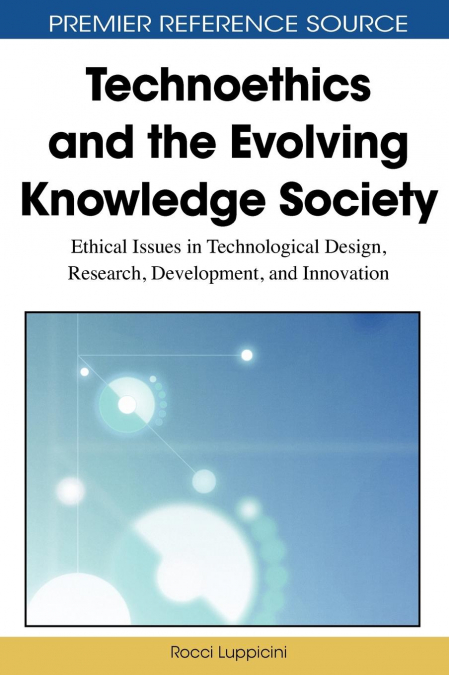
  • Technoethics and the Evolving Knowledge Society
    Rocci Luppicini
    Recently, there has been a major push to rediscover the ethical dimension of technology across the sciences, social sciences, and humanities. Technoethics and the Evolving Knowledge Society: Ethical Issues in Technological Design, Research, Development, and Innovation examines human processes and practices connected to technology embedded within social, political, and moral sph...
  • Kant
    Immanuel Kant
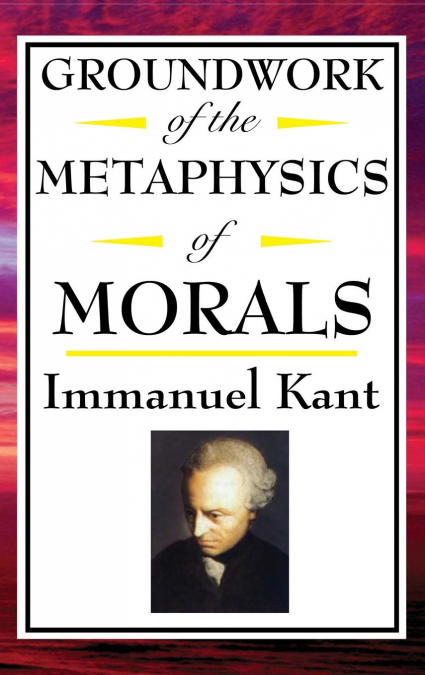
    Kant’s Groundwork of the Metaphysics of Morals is one of the most important works in modern moral philosophy. It belongs beside Plato, Aristotle, Machiavelli, and Hobbes. Here Kant sets out to articulate and defend the Categorical Imperative - the fundamental principle that underlies moral reasoning - and to lay the foundation for a comprehensive account of justice and human vi...
  • On the Duty of Civil Disobedience
    HENRY DAVID THOREAU
    Civil Disobedience argues that citizens should not permit their governments to overrule their consciences, and that they have a duty to avoid allowing their acquiescence to enable the government to make them the agents of injustice. Thoreau was motivated in part by his disgust with slavery and the Mexican-American War, but the sentiments he expresses here are just as pertinent ...
  • Beyond Good and Evil
    Friedrich Nietzsche
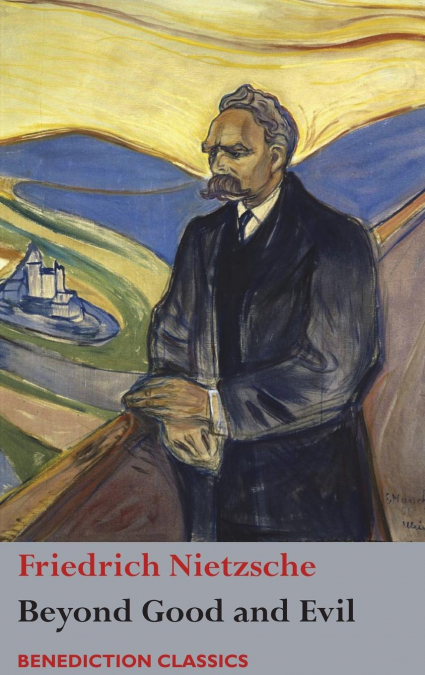
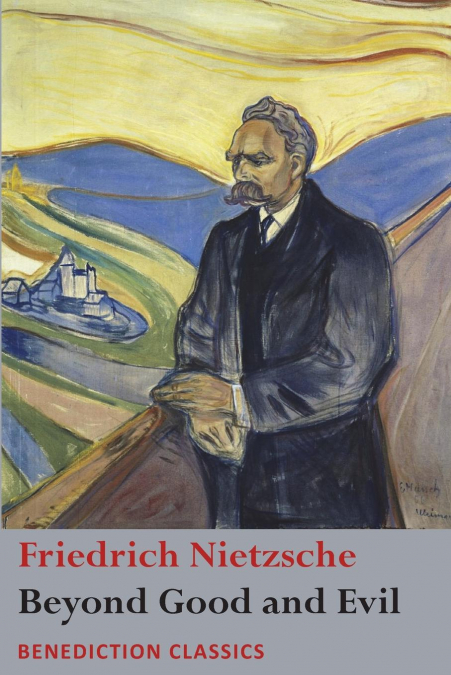
    Nietzsche, though primarily a philosopher, wrote widely on art, philology, history, religion, tragedy, culture, and science.  In 1886, at the height of his powers, he published Beyond Good and Evil.  Here he examines much of the best of human thought--dogmatic philosophy, Judeo-Christian morality, science and democracy – and finds it lacking.  Rejecting “slave-morality” he pres...
  • Beyond Good and Evil
    Friedrich Nietzsche
    Nietzsche, though primarily a philosopher, wrote widely on art, philology, history, religion, tragedy, culture, and science.  In 1886, at the height of his powers, he published Beyond Good and Evil.  Here he examines much of the best of human thought--dogmatic philosophy, Judeo-Christian morality, science and democracy – and finds it lacking.  Rejecting “slave-morality” he pres...
    Disponible

    9,99 €

Otros libros del autor

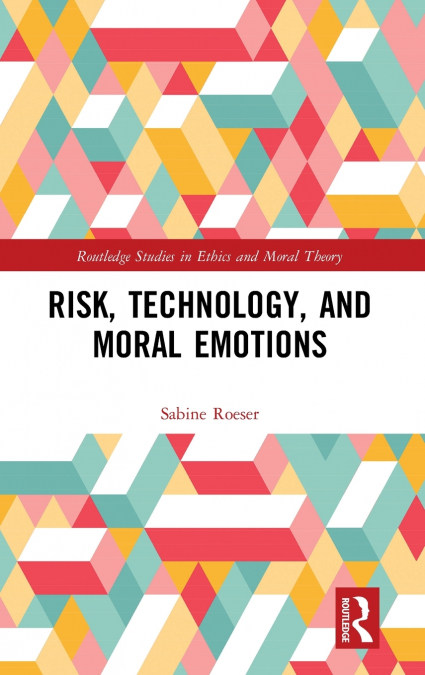
  • Risk, Technology, and Moral Emotions
    Sabine Roeser
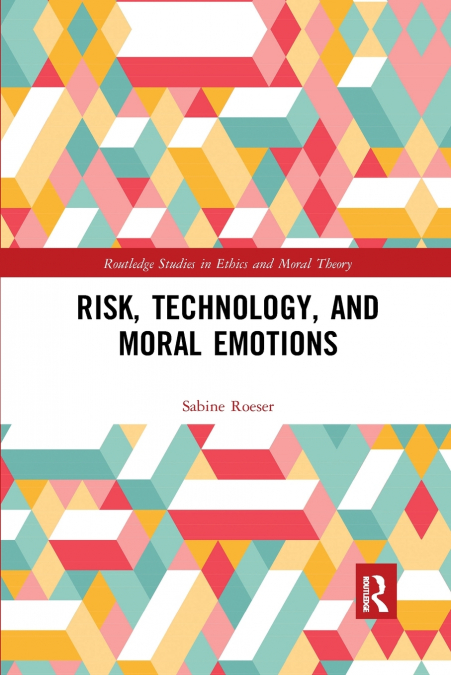
    This book offers a new philosophical theory of risk emotions, arguing why and how moral emotions should play an important role in decisions surrounding risky technologies. ...
    Disponible

    92,38 €

  • Risk, Technology, and Moral Emotions
    Sabine Roeser
    This book offers a new philosophical theory of risk emotions, arguing why and how moral emotions should play an important role in decisions surrounding risky technologies. ...
  • Emotions and Risky Technologies
    Sabine Roeser
    'Acceptable Risk' - On the Rationality (and Irrationality) of Emotional Evaluations of Risk What is 'acceptable risk'? That question is appropriate in a number of different contexts, political, social, ethical, and scienti c. Thus the question might be whether the voting public will support a risky proposal or project, whether people will buy or accept a risky product, whether ...
    Disponible

    136,28 €

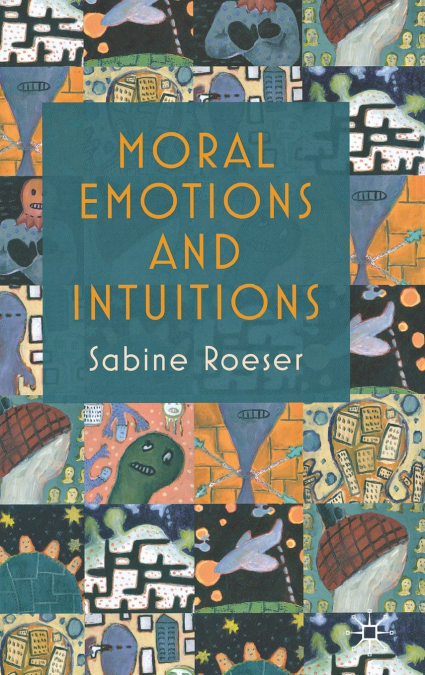
  • Moral Emotions and Intuitions
    Sabine Roeser
    The author presents a new philosophical theory according to which we need intuitions and emotions in order to have objective moral knowledge, which is called affectual intuitionism. Affectual Intuitionism combines ethical intuitionism with a cognitive theory of emotions. ...
  • Emotions and Risky Technologies
    Sabine Roeser
    'Acceptable Risk' - On the Rationality (and Irrationality) of Emotional Evaluations of Risk What is 'acceptable risk'? That question is appropriate in a number of different contexts, political, social, ethical, and scienti c. Thus the question might be whether the voting public will support a risky proposal or project, whether people will buy or accept a risky product, whether ...