 Librería Samer Atenea
 Kálamo Books
 Librería Elías (Asturias)
 Librería Kolima (Madrid)
 Librería Proteo (Málaga)
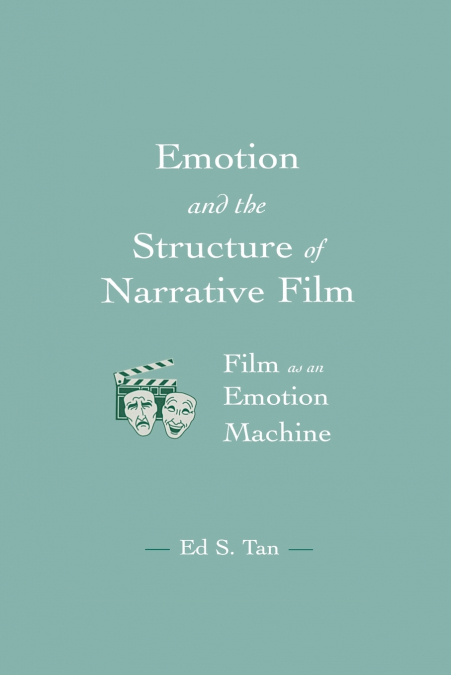
Introduced one hundred years ago, film has since become part of our lives. For the past century, however, the experience offered by fiction films has remained a mystery. Questions such as why adult viewers cry and shiver, and why they care at all about fictional characters -- while aware that they contemplate an entirely staged scene -- are still unresolved. In addition, it is unknown why spectators find some film experiences entertaining that have a clearly aversive nature outside the cinema. These and other questions make the psychological status of emotions allegedly induced by the fiction film highly problematic. Earlier attempts to answer these questions have been limited to a few genre studies. In recent years, film criticism and the theory of film structure have made use of psychoanalytic concepts which have proven insufficient in accounting for the diversity of film induced affect. In contrast, academic psychology -- during the century of its existence -- has made extensive study of emotional responses provoked by viewing fiction film, but has taken the role of film as a natural stimulus completely for granted. The present volume bridges the gap between critical theories of film on the one hand, and recent psychological theory and research of human emotion on the other, in an attempt to explain the emotions provoked by fiction film. This book integrates insights on the narrative structure of fiction film including its themes, plot structure, and characters with recent knowledge on the cognitive processing of natural events, and narrative and person information. It develops a theoretical framework for systematically describing emotion in the film viewer. The question whether or not film produces genuine emotion is answered by comparing affect in the viewer with emotion in the real world experienced by persons witnessing events that have personal significance to them. Current understanding of the psychology of emotions provides the basis for identifying critical features of the fiction film that trigger the general emotion system. Individual emotions are classified according to their position in the affect structure of a film -- a larger system of emotions produced by one particular film as a whole. Along the way, a series of problematic issues is dealt with, notably the reality of the emotional stimulus in film, the identification of the viewer with protagonists on screen, and the necessity of the viewer’s cooperation in arriving at a genuine emotion. Finally, it is argued that film-produced emotions are genuine emotions in response to an artificial stimulus. Film can be regarded as a fine-tuned machine for a continuous stream of emotions that are entertaining after all. The work paves the way for understanding and, in principle, predicting emotions in the film viewer using existing psychological instruments of investigation. Dealing with the problems of film-induced affect and rendering them accessible to formal modeling and experimental method serves a wider interest of understanding aesthetic emotion -- the feelings that man-made products, and especially works of art, can evoke in the beholder.