 Librería Samer Atenea
 Kálamo Books
 Librería Elías (Asturias)
 Librería Kolima (Madrid)
 Librería Proteo (Málaga)
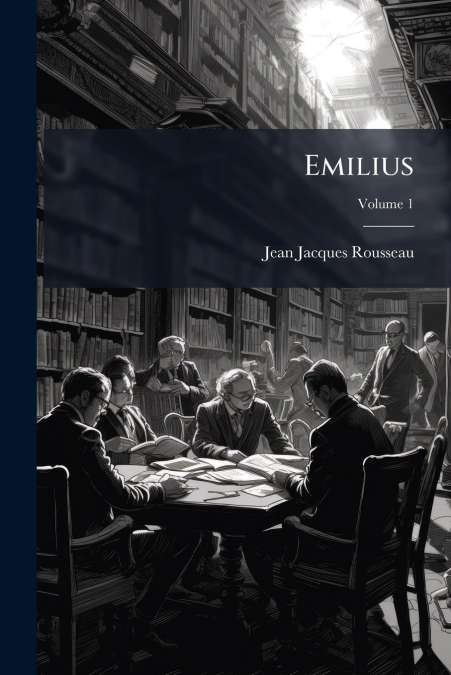
Emilius, Or, An Essay On Education, Volume 1, is a philosophical treatise on the nature of education and of man by Jean-Jacques Rousseau. In it, Rousseau explores his educational theories, arguing for a system of education that fosters natural development and moral autonomy. Through the fictional character of Émile, Rousseau illustrates how education should proceed in harmony with nature, emphasizing experience and individual growth over rote learning. This seminal work, originally published in 1762, challenges conventional educational practices and advocates for a pedagogy that respects the child’s innate capacities. Rousseau’s ideas had a profound influence on educational thought and continue to resonate with educators and philosophers today. This volume provides essential insights into Rousseau’s broader philosophical project and his vision for a more just and enlightened society.This work has been selected by scholars as being culturally important, and is part of the knowledge base of civilization as we know it. This work was reproduced from the original artifact, and remains as true to the original work as possible. Therefore, you will see the original copyright references, library stamps (as most of these works have been housed in our most important libraries around the world), and other notations in the work.This work is in the public domain in the United States of America, and possibly other nations. Within the United States, you may freely copy and distribute this work, as no entity (individual or corporate) has a copyright on the body of the work.As a reproduction of a historical artifact, this work may contain missing or blurred pages, poor pictures, errant marks, etc. Scholars believe, and we concur, that this work is important enough to be preserved, reproduced, and made generally available to the public. We appreciate your support of the preservation process, and thank you for being an important part of keeping this knowledge alive and relevant.