 Librería Samer Atenea
 Kálamo Books
 Librería Elías (Asturias)
 Librería Kolima (Madrid)
 Librería Proteo (Málaga)
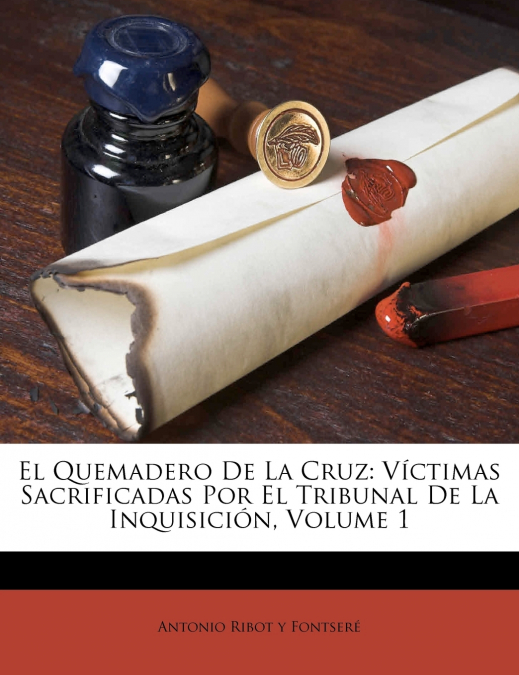
'El Quemadero De La Cruz, Volume 1: Víctimas Sacrificadas Por El Tribunal De La Inquisición' by Antonio Ribot y Fontseré delves into the harrowing history of the Spanish Inquisition. This volume sheds light on the victims who suffered under the Tribunal, offering a detailed account of the persecution and sacrifices made during this dark period. Ribot y Fontseré meticulously documents the trials, tribulations, and ultimate fate of those accused of heresy, providing a stark and unflinching portrayal of the Inquisition’s impact on individuals and society. This historical work serves as a poignant reminder of the importance of religious tolerance and the dangers of unchecked power. Explore the stories of those who faced the Inquisitorial court, and understand the human cost of religious fervor and political maneuvering in this compelling and informative historical account.This work has been selected by scholars as being culturally important, and is part of the knowledge base of civilization as we know it. This work was reproduced from the original artifact, and remains as true to the original work as possible. Therefore, you will see the original copyright references, library stamps (as most of these works have been housed in our most important libraries around the world), and other notations in the work.This work is in the public domain in the United States of America, and possibly other nations. Within the United States, you may freely copy and distribute this work, as no entity (individual or corporate) has a copyright on the body of the work.As a reproduction of a historical artifact, this work may contain missing or blurred pages, poor pictures, errant marks, etc. Scholars believe, and we concur, that this work is important enough to be preserved, reproduced, and made generally available to the public. We appreciate your support of the preservation process, and thank you for being an important part of keeping this knowledge alive and relevant.