
Inicio > Humanidades > Filosofía > El Problema del Fin de la Historia y del Fin del Arte
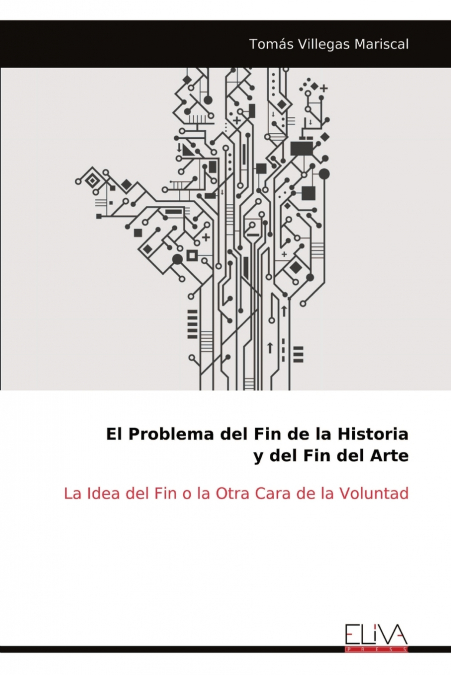
El Problema del Fin de la Historia y del Fin del Arte

El Problema del Fin de la Historia y del Fin del Arte

Tomás Villegas Mariscal

37,78 €
IVA incluido
Disponible
Editorial:
Eliva Press
Año de edición:
2024
Materia
Filosofía
ISBN:
9789999322232
37,78 €
IVA incluido
Disponible

Selecciona una librería:

  • Librería Samer Atenea
  • Librería Aciertas (Toledo)
  • Kálamo Books
  • Librería Perelló (Valencia)
  • Librería Elías (Asturias)
  • Donde los libros
  • Librería Kolima (Madrid)
  • Librería Proteo (Málaga)

El fin de la historia y El fin del arte, son eventos que han visto la luz en las primeras décadas del siglo XIX y mediados del XX; atribuidos de manera indirecta al filósofo alemán G. W. F. Hegel. Prueba de ello es que en la Fenomenología del espíritu al igual que en el resto de su obra, si bien trata de manera extensa los procesos históricos de la filosofía, el ideal del absoluto y el espíritu humano, no plantea concretamente un fin de la historia textual o consecutivo, ni precisa de un apartado que lleve por nombre una proposición estructurada y específicamente bien definida como tal. De igual manera, en las Lecciones sobre la estética no hay nada sugerente sobre el fin del arte. Nos encontramos entonces ante un hecho donde quizá el mismo Hegel no tuvo para bien un interés propio en desarrollar de manera concreta estos dos supuestos ideológicos nada más que como cambio de paradigmas en las formas de producir y argumentar.En El fin de la historia, es Alexander Kojève quien expone el tema de manera objetiva, asumiendo lo que el alemán trata aisladamente en toda su obra. En el caso del El fin del arte, Arthur Danto continuador de la idea hegeliana al asumir el mismo papel que Kojève como intérprete o lector, se apropiaría de este ideal para presupuestar lo que vendrá después de que el arte había llegado a su final. Instala la idea de la muerte del arte en las vanguardias artísticas de mediados del siglo XX donde supondría una ruptura entre las formas de hacer y explicar el arte del pasado con el actual. Desde luego ni una cosa ni la otra dejaron de producirse; lo que quiere decir que, el fin o la muerte del arte debe de tomarse con otra lógica distinta a la de un mero acaecimiento. Precisamente lo que trata este trabajo de investigación es la conexión que hay en la problemática entre estos dos autores respecto del cambio de paradigmas en el arte y la historia.
Artículos relacionados

  • Introduction to a Future Way of Thought
    Kostas Axelos / Kenneth Mills
    'Technologists only change the world in various ways in generalized indifference; the point is to think the world and interpret the changes in its unfathomability, to perceive and experience the difference binding being to the nothing.'Anticipating the age of planetary technology Kostas Axelos, a Greek-French philosopher, approaches the technological question in this book, firs...
    Disponible

    18,58 €

  • Capsule
    John Kenneth Press
    Join John and Adam as they wander the mean streets of Japan on a psychedelic fueled search for identity. While fun for the average reader, this book could also serve as a philosphy textbook because of its ordered exploration of sources of identity. Ultimately this trip through nationalist attacks, sex, and drugs, will take you to a better understanding of yourself and your pl...
    Disponible

    11,51 €

  • If you look at it long enough...
    Paul Hallam
    Originally written for an academic journal, If you look at it long enough... is primarily a personal account of Paul Hallam’s recollections of “self-abuse” through the consumption of porn over several decades. Challenging the familiar form of an “academic essay,” this autobiographical narrative raises several questions in relation to our contemporary morals related to sex in ge...
    Disponible

    11,30 €

  • The Teachers of Gurdjieff
    Rafael Lafort / Rafael Lefort
    When The Teachers of Gurdjieff was first published more than 50 years ago, it made a considerable stir. George Ivanovich Gurdjieff had been one of the most famous mystics in the West in the first half of the 20th century - a teaching master who had many fashionable and influential pupils. He had a striking appearance and manner of teaching, and his teaching proved to be very in...
    Disponible

    20,45 €

  • Manifesto of the Communist Party
    Karl Marx
    The Communist Manifesto was first published on February 21, and it is one of the world’s most influential political tracts. Commissioned by the Communist League and written by communist theorists Karl Marx and Friedrich Engels, it laid out the League’s purposes and program. The Manifesto suggested a course of action for a proletarian (working class) revolution to overthrow the ...
  • The Art of Literature
    Arthur Schopenhauer
    Collected here are eight short essays, On Authorship, On Style, On the Study of Latin, On Men of Learning, On Thinking for Ones Self, On Criticism, On Reputation, On Genius, by the world renowned philosopher Arthur Achopenhauer. ...