 Librería Samer Atenea
 Kálamo Books
 Librería Elías (Asturias)
 Librería Kolima (Madrid)
 Librería Proteo (Málaga)
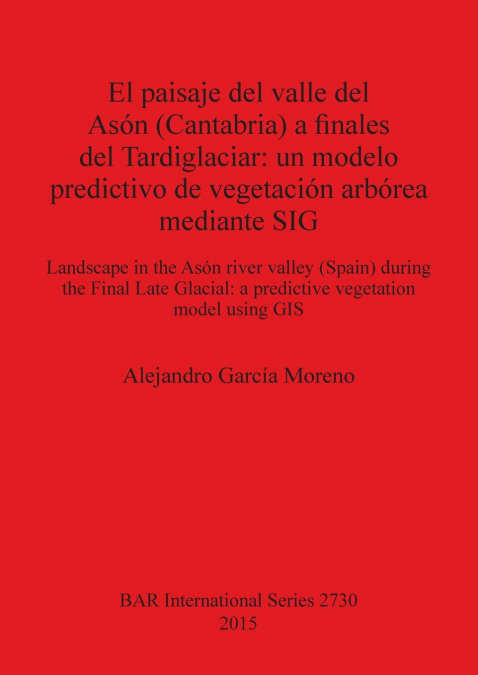
RESUMEN El final del Pleistoceno en la Región Cantábrica (norte de la Península Ibérica) es testigo de una serie de importantes transformaciones ambientales, sociales y culturales. Desde el punto de vista climático y ambiental, el Tardiglaciar se caracteriza por una gran inestabilidad, y supone a grandes rasgos el fin de unas condiciones glaciares y la transición a otras más templadas y húmedas. Esto conlleva el desarrollo de masas forestales caducifolias, principalmente de robledales y bosques mixtos atlánticos, que van desplazando los bosques de pinos dominantes durante el Würm. La progresiva sustitución de bosques de coníferas por otros caducifolios pudo haber influido en los cambios económicos y la organización social de las sociedades del final del Paleolítico. En este trabajo, se analizan los cambios en el paisaje del valle del río Asón (Cantabria) a lo largo del Tardiglaciar. Para ello, se ha desarrollado, mediante el empleo de un Sistema de Información Geográfica (SIG), un modelo predictivo de distribución potencial de la vegetación arbórea. Este modelo, basado en los requerimientos ecológicos de las principales taxa arbóreos identificados en los diagramas políticos de la región, estima las áreas donde mayor probabilidad de desarrollo tendría cada especie. Los resultados obtenidos permiten comprobar un importante cambio en la distribución espacial de las principales masas forestales a lo largo del Tardiglaciar y del Holoceno inicial. Este cambio en el paisaje, y por lo tanto en la distribución de los recursos asociados a los bosques caducifolios, pudo haber influido en los cambios observados en las estrategias de subsistencia y los patrones de asentamiento de los grupos de cazadores y recolectores del Magdaleniense Superior y el Aziliense.ABSTRACT The end of the Pleistocene in the Cantabrian Region (northern Iberia) witnesses a series of major environmental, social and cultural changes. From a climatic and environmental point of view, the Lateglacial is characterized by a high instability, and broadly means the transition from glacial to warmer and milder conditions. This transition implies the development of deciduous forests, mainly oakwoods and Atlantic mixed forests, which displaced the pine forests dominant during the Würm glaciation. The continual substitution of conifers by deciduous forests might have had an influence on the changes in the economy and the social organization of Late Palaeolithic societies. In this work, changes in the landscape of the Asón river valley (Cantabria) during the Lateglacial are analysed. To do this, a GIS-based predictive model for the potential distribution of tree vegetation was developed. This model, based on the ecological requirements of the main taxa identified in pollen diagrams from the region, estimates the areas where each species could have had higher probabilities to develop. The results obtained allow verifying an important change in the spatial distribution of the main forest types during the Lateglacial and the early Holocene. This change in the landscape, and therefore in the distribution of the resources related to deciduous forests, might have had an influenced in the changes observed in the subsistence strategies and the settlement patterns of Upper Magdalenian and Azilian hunter and gatherer communities.