
Inicio > Humanidades > Filosofía > El enigma de la conciencia
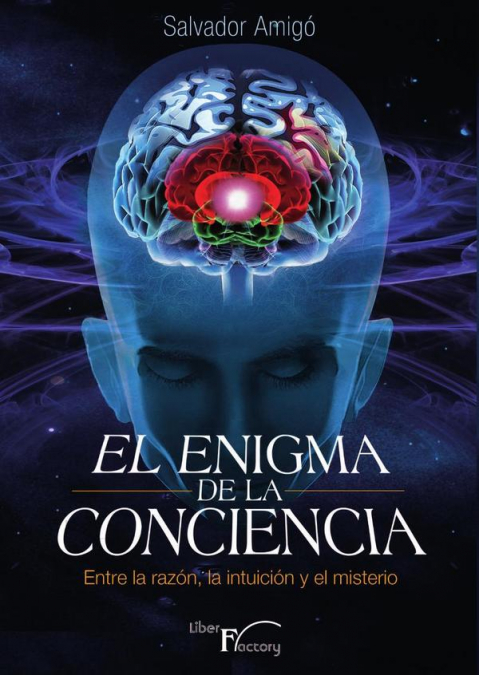
El enigma de la conciencia

El enigma de la conciencia

Salvador Amigó

16,01 €
IVA incluido
Disponible
Editorial:
Límbica Ediciones S.L
Año de edición:
2014
Materia
Filosofía
ISBN:
9788499495101
16,01 €
IVA incluido
Disponible

Selecciona una librería:

  • Librería Samer Atenea
  • Librería Aciertas (Toledo)
  • Kálamo Books
  • Librería Perelló (Valencia)
  • Librería Elías (Asturias)
  • Donde los libros
  • Librería Kolima (Madrid)
  • Librería Proteo (Málaga)

La conciencia es uno de los grandes misterios de todos los tiempos. Este libro pretende alcanzar un conocimiento profundo de la conciencia a partir de reflexiones epistemológicas y filosóficas sobre su naturaleza, y de los estudios de psicología cognitiva y neurociencias. La conciencia explica la dinámica de los dos grandes sistemas de conocimiento del ser humano: la razón y la intuición. Los dos sistemas son complementarios y el ser humano se adapta a su ambiente haciendo un uso selectivo de ambos. Pero también las personas se diferencian por el predominio de uno de ellos, de forma que algunos son racionalistas y otros intuitivos o emocionales. También en las sociedades predomina uno de los dos sistemas y la historia de Occidente refleja una alternancia entre períodos racionalistas (Ilustración, Positivismo) y emocionales (Barroco, Romanticismo). Por otra parte, las leyes de la naturaleza también son la expresión de la dinámica de aspectos complementarios de la realidad, como son la potencia y la acción, el espacio y el tiempo, la estructura y la función. Lo estático está más relacionado con lo racional y lo dinámico con lo intuitivo. Así, es posible que exista una conciencia universal que explique toda la realidad: desde el comportamiento humano hasta las leyes naturales. A esta conclusión se llega a partir del modelo epistemológico integrador que se propone en esta obra para alcanzar el conocimiento profundo de la realidad. Pero esta realidad última es inaprehensible por parte del ser humano, porque nuestra conciencia, si bien nos acerca a la realidad, también impone límites al alcance del conocimiento. Esto lo explica la teoría del extrañamiento, que viene a expresar la imposibilidad de captar la identidad de los objetos y de las personas, lo que convierte a nuestro mundo en un lugar extraño y a nosotros en extraños de nosotros mismos. 10

Artículos relacionados

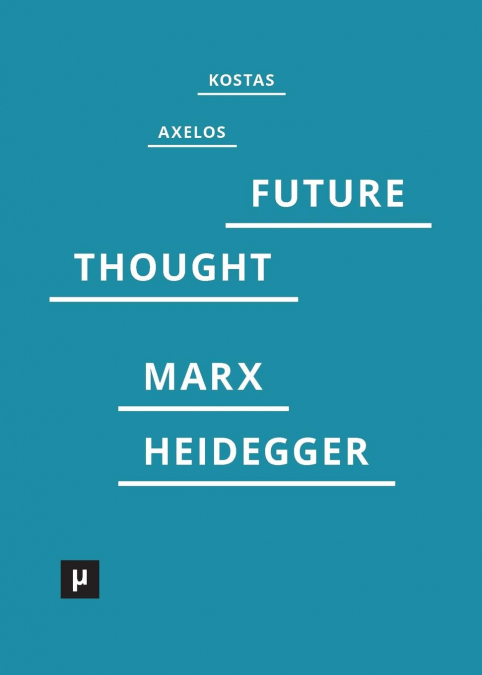
  • Introduction to a Future Way of Thought
    Kostas Axelos / Kenneth Mills
    'Technologists only change the world in various ways in generalized indifference; the point is to think the world and interpret the changes in its unfathomability, to perceive and experience the difference binding being to the nothing.'Anticipating the age of planetary technology Kostas Axelos, a Greek-French philosopher, approaches the technological question in this book, firs...
    Disponible

    18,58 €

  • Capsule
    John Kenneth Press
    Join John and Adam as they wander the mean streets of Japan on a psychedelic fueled search for identity. While fun for the average reader, this book could also serve as a philosphy textbook because of its ordered exploration of sources of identity. Ultimately this trip through nationalist attacks, sex, and drugs, will take you to a better understanding of yourself and your pl...
    Disponible

    11,51 €

  • If you look at it long enough...
    Paul Hallam
    Originally written for an academic journal, If you look at it long enough... is primarily a personal account of Paul Hallam’s recollections of “self-abuse” through the consumption of porn over several decades. Challenging the familiar form of an “academic essay,” this autobiographical narrative raises several questions in relation to our contemporary morals related to sex in ge...
    Disponible

    11,30 €

  • The Teachers of Gurdjieff
    Rafael Lafort / Rafael Lefort
    When The Teachers of Gurdjieff was first published more than 50 years ago, it made a considerable stir. George Ivanovich Gurdjieff had been one of the most famous mystics in the West in the first half of the 20th century - a teaching master who had many fashionable and influential pupils. He had a striking appearance and manner of teaching, and his teaching proved to be very in...
    Disponible

    20,45 €

  • Manifesto of the Communist Party
    Karl Marx
    The Communist Manifesto was first published on February 21, and it is one of the world’s most influential political tracts. Commissioned by the Communist League and written by communist theorists Karl Marx and Friedrich Engels, it laid out the League’s purposes and program. The Manifesto suggested a course of action for a proletarian (working class) revolution to overthrow the ...
  • The Art of Literature
    Arthur Schopenhauer
    Collected here are eight short essays, On Authorship, On Style, On the Study of Latin, On Men of Learning, On Thinking for Ones Self, On Criticism, On Reputation, On Genius, by the world renowned philosopher Arthur Achopenhauer. ...