Fernando de marqués Antón del Olmet
 Librería Samer Atenea
 Kálamo Books
 Librería Elías (Asturias)
 Librería Kolima (Madrid)
 Librería Proteo (Málaga)
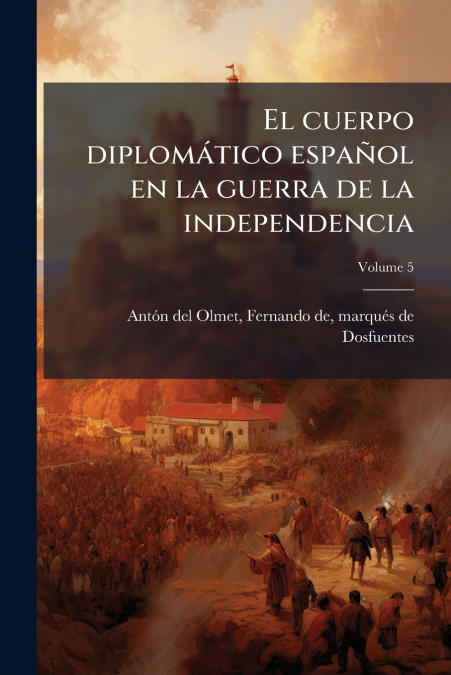
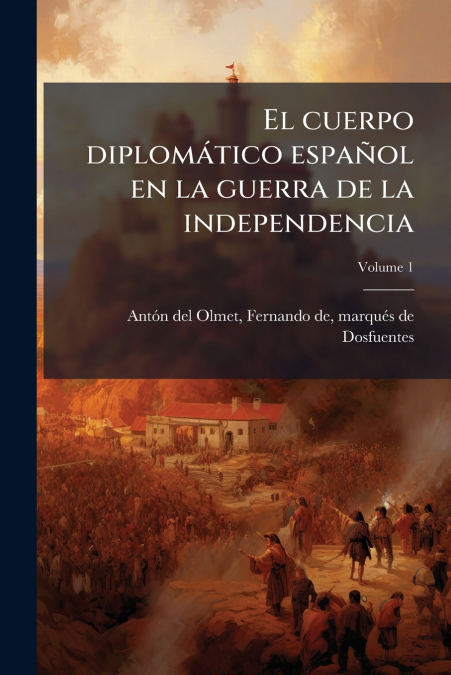
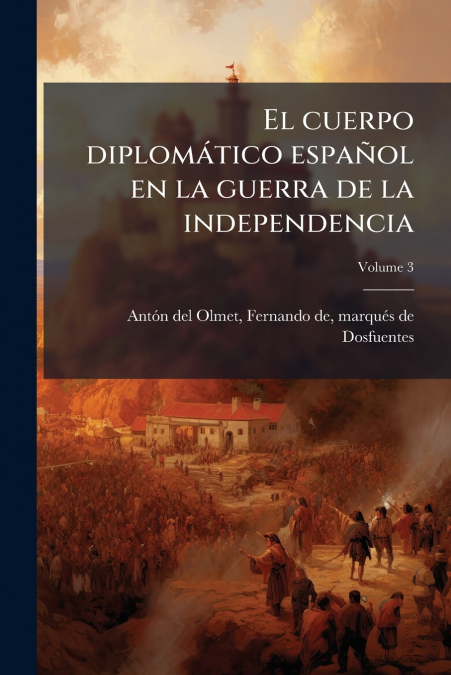
El cuerpo diplomático español en la guerra de la independencia, Volume 3 delves into the crucial role played by Spanish diplomats during the tumultuous period of the War of Independence. This volume, authored by Antón del Olmet, Fernando de, marqués de Dosfuentes, offers a detailed examination of the diplomatic strategies, challenges, and achievements of the Spanish diplomatic corps as they navigated the complex political landscape of early 19th-century Europe. The book sheds light on the individuals who represented Spain on the international stage, providing insights into their efforts to secure alliances, negotiate treaties, and protect Spanish interests amidst the Napoleonic Wars. It explores the intricate web of relationships between Spain and other European powers, offering a valuable contribution to the understanding of this pivotal moment in Spanish and European history. A must-read for scholars and enthusiasts of Spanish history and diplomacy.This work has been selected by scholars as being culturally important, and is part of the knowledge base of civilization as we know it. This work was reproduced from the original artifact, and remains as true to the original work as possible. Therefore, you will see the original copyright references, library stamps (as most of these works have been housed in our most important libraries around the world), and other notations in the work.This work is in the public domain in the United States of America, and possibly other nations. Within the United States, you may freely copy and distribute this work, as no entity (individual or corporate) has a copyright on the body of the work.As a reproduction of a historical artifact, this work may contain missing or blurred pages, poor pictures, errant marks, etc. Scholars believe, and we concur, that this work is important enough to be preserved, reproduced, and made generally available to the public. We appreciate your support of the preservation process, and thank you for being an important part of keeping this knowledge alive and relevant.