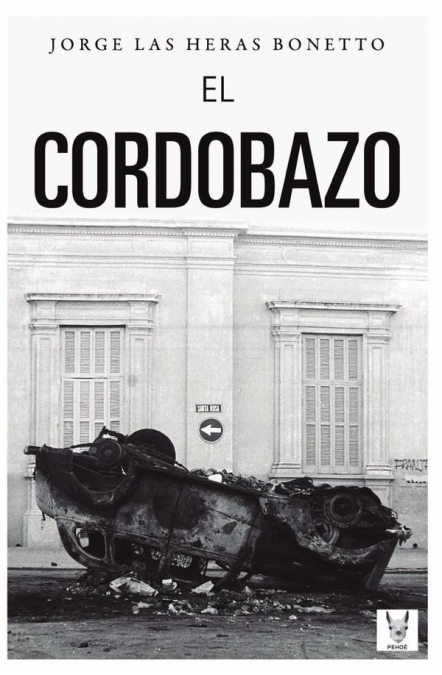

El Cordobazo

El Cordobazo

Jorge Las Heras Bonetto

14,04 €
IVA incluido
Disponible
Editorial:
Pehoé Ediciones
Año de edición:
2017
Materia
Historia
ISBN:
9789569274534
14,04 €
IVA incluido
Disponible

Selecciona una librería:

  • Librería Samer Atenea
  • Librería Aciertas (Toledo)
  • Kálamo Books
  • Librería Perelló (Valencia)
  • Librería Elías (Asturias)
  • Donde los libros
  • Librería Kolima (Madrid)
  • Librería Proteo (Málaga)

¿Qué fue el Cordobazo? Para algunos, protesta obrera u obrero-estudiantil; para otros, rebelión popular o, incluso, intento de insurrección. ¿Predominaron las motivaciones económico-corporativas? ¿las políticas o las ideológicas? ¿Fue su motor la lucha económico-sindical o la lucha política antidictatorial? ¿Fue una acción espontánea o planificada? ¿Cuál fue el peso relativo del peronismo combativo? y ¿cuál el de la izquierda sindical? ¿Cuál fue el verdadero rol del movimiento estudiantil? ¿Se trató de una coyuntura donde convergieron hechos fortuitos o fue un proceso necesario, producto de las contradicciones sociales de tipo estructural? ¿Fue continuación y remate de las luchas obreras que arrancaban de la resistencia peronista o bien fue el principio de un cambio histórico en las lealtades políticas de las masas obreras al peronismo? Cualquiera sea la respuesta a las preguntas anteriores no hay dudas de que el Cordobazo abrió las puertas a una utopía.Permitió no solo mostrar la fuerza para enfrentar el poder militar sino también la pasión para conquistar un sueño. Aquellos obreros, estudiantes y ciudadanos comunes que en mayo del 69 levantaron barricadas humeantes en Córdoba defendían la democracia torturada por una nueva dictadura militar, el salario amenazado, la universidad pública y autónoma. Defendían, en síntesis, los valores del trabajo y del estudio, como metas de ascenso social. Y aunque la izquierda marxista cordobesa intentó apropiarse del Cordobazo para transformarlo en su propio mito legitimador y en un instrumento para disputar ideológicamente con el peronismo las lealtades de la clase obrera, debió aceptar, finalmente, que este movimiento no tenía dueños.El Cordobazo representó una pasión por la unidad nacional y la alianza virtuosa de los trabajadores y la clase media con sus estudiantes, sus artistas y sus intelectuales. Esto ocurrió porque en Córdoba, sede de una antigua universidad y epicentro de un nuevo desarrollo industrial, se conjugaron y se potenciaron un movimiento estudiantil cuyas tradiciones combativas remitían a la Reforma Universitaria de 1918; una nueva clase trabajadora y una intelectualidad crítica que transitaba desde el comunismo ortodoxo hacia la nueva izquierda. Fue la generación de los años 60, forjada en un vertiginoso proceso de modernización cultural y social, la que emergió rebelándose contra el extrañamiento respecto de los valores y las instituciones en las que se había formado. 10

Artículos relacionados

  • Raising Freedom's Banner
    Paul Harris
    World wide history of peaceful street demonstrations from their earliest beginning in eighteenth century England to their use throughout the world in the twenty-first century. Describes why some demonstration movements succeeded and others failed. Contrasts demonstrations within the law with civil disobedience demonstrations. Describes Peterloo, the Chartists, the Suffragettes,...
    Disponible

    23,59 €

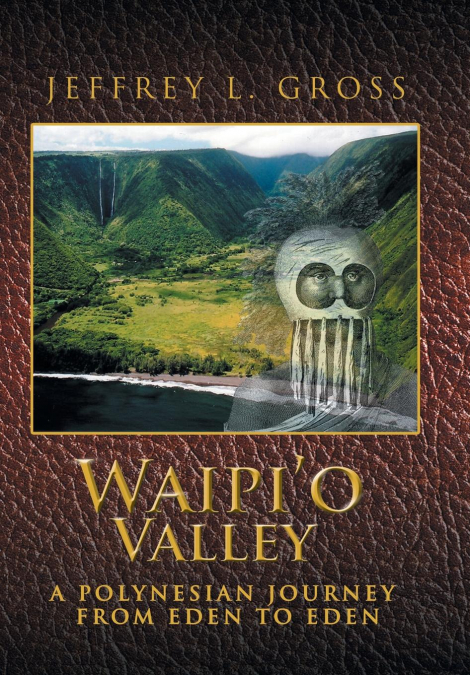
  • Waipi’o Valley
    Jeffrey L. Gross
    Waipi’o Valley: A Polynesian Journey from Eden to Eden recounts the remarkable migrations of the Polynesians across a third of the circumference of the earth. Their amazing journey began from Kalana i Hau’ola, the biblical “Garden of Eden” located along the shore of the Persian Gulf, extended to the Indus River Valley of ancient Vedic India, to Egypt where some ancestors of the...
  • Floralia
    June Rainsford Butler
    A century characterized by a growing interest in science, the opportunity for travel, and leisure for gardening furnishes the setting for Butler’s book. The rise of landscape gardening in England is traced, and the origin and history of its most famous gardens are given. The close relation between England and America in the field of horticulture is also discussed.Originally pub...
    Disponible

    61,20 €

  • President Wilson’s Addresses
    Woodrow Wilson
    'These addresses of President Woodrow Wilson are almost entirely concerned with political affairs, and more specifically with defining Americanism. Yet they also show that even as he moved from academia to the heights of politics, Wilson retained something of the teacher’s interest in showing the relation between specific instances and the general forms of thought or action of ...
  • The Story of my Life
    John Albert Macy
    The Story of My Life, is Helen Keller’s autobiography detailing her early life, especially her experiences with Anne Sullivan. The book is dedicated to inventor Alexander Graham Bell. The dedication reads, 'To ALEXANDER GRAHAM BELL Who has taught the deaf to speak and enabled the listening ear to hear speech from the Atlantic to the Rockies, I dedicate this Story of My Life.' ...
  • The Story of My Life Vol. 6 Spanish Passions
    Giacomo Casanova
    Casanova was an Italian adventurer and author from the Republic of Venice. His autobiography, Histoire de ma vie (Story of My Life), is regarded as one of the most authentic sources of the customs and norms of European social life during the 18th century. He has become so famous for his often complicated and elaborate affairs with women that his name is now synonymous with 'wom...